1971 was a transformational time for Top 40 music in the United States. The songs that became hits that year came from a wide variety of musical genres.
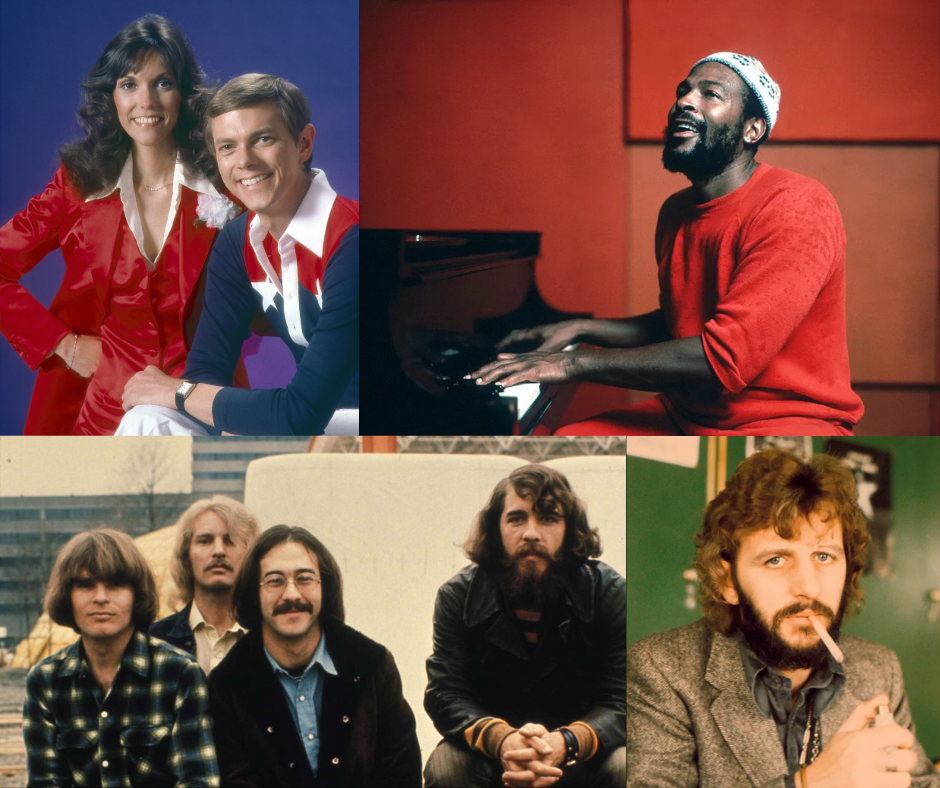
The biggest hits on Top 40 radio from 55 years ago were a combination of pop, rock, soul, country and folk with newer developing genres coming into play: Progressive Rock, Singer-Songwriter Music, Glam Rock, Funk-Soul Fusion and Proto-Disco.
Socially conscious music continued to evolve during 1971. Major social issues like the Vietnam War, racism, and the women’s movement were a part of the musical landscape with some of the biggest hits of 1971.
With this edition of my musical musings, I will be counting down what I consider to be my favorite Top 40 singles of 1971. The songs on my countdown were all national hits in the U.S. and peaked at #30 or higher on charts by Billboard and Cash Box magazines.
By 1971 many folks were discovering new ways to hear music. While AM radio still was the dominant force with Top 40, many new FM music channels were coming into existence.
Especially in major market cities across the United States, people could hear their favorite Top 40 songs on the FM band. In addition, there were many new FM music stations that started playing a new format developed in the late 60s: Album Oriented Rock (AOR).
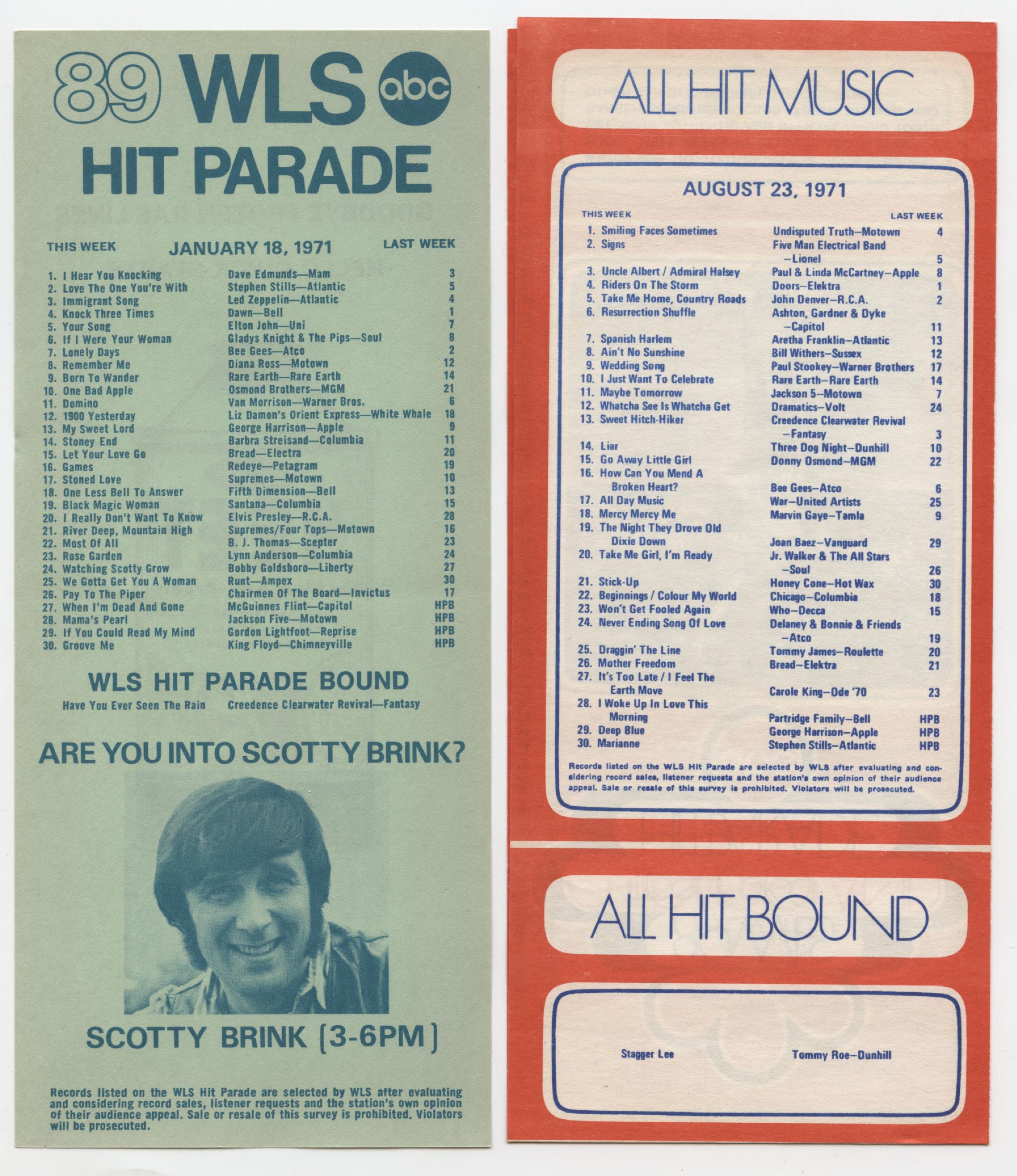
While new FM music stations were starting to take listeners away from AM radio, Top 40 outlets still dominated in major market locations. Three of the most influential stations in 1971 were all Top 40 outlets: WABC 770 AM New York, WLS 890 AM Chicago and KHJ 930 AM Los Angeles.
AM music channels still ruled in most mid to small radio markets 55 years ago. It would take a few more years before FM music channels would overtake AM radio as the dominant force for music played in the U.S.
At the beginning of 1971, I was 15 years old and lived in Roanoke, Virginia. Since this was a small radio market, we didn’t have any FM Top 40 or AOR stations, so I listened to music on AM.
During the daytime, I had two choices for Top 40 radio: WROV 1240 AM Roanoke and WBLU 1480 AM Salem. My preference of the two was WROV which was the #1 rated radio station in the Roanoke area.
WROV was known for having an outstanding personality DJ staff in 1971, and I still remember 5 members of the airstaff from that year: Jack Fisher, Bart Prater, Dan Alexander, Larry Bly and Ron Tompkins.
Above is an audio aircheck clip of Dan Alexander on WROV 1240 AM Roanoke on 12/31/71. Courtesy of Pat Garrett and the WROV History website.
At sundown, WROV reduced their power and WBLU signed off the air, so I would listen to a few AM radio stations located hundreds of miles away from my Virginia home.

A framed WROV 70’s poster that is owned by DJ Barry Michaels, who worked at WROV from 1978 through 1981, and provided his photo to be used here on this music blog.
The two main stations that I listened to during the nighttime were both clear channel 50,000-watt AM stations: WLS 890 Chicago and WABC 770 New York.
On the Big 89 WLS, I fondly remember regularly listening to DJs Larry Lujack, Chuck Buell and Kris Erik Stevens.
When listening to WABC, Dan Ingram, Cousin Brucie (Bruce Morrow) and Chuck Leonard are the DJ voices I heard most frequently.
On nights that WLS or WABC were hard to pick up, I had other high-powered clear channel AM station that I could pick up in Roanoke. Among those other stations: WOWO 1190 Fort Wayne, WCFL 1000 Chicago, CKLW 800 Windsor, Ontario (Detroit) and WKBW 1520 Buffalo.
For the remaining portion of this message, I will be focusing on what I consider to be the most significant top 40 singles from 1971. I will be highlighting hit songs that I feel are still relevant here in 2026.
In calculations for my 1971 singles countdown, I utilized “The Billboard Book of Top 40 Hits” by Joel Whitburn. I consider Whitburn’s book to be the “bible” of Top 40 music reference and still proudly own a hard copy of this excellent book.
I also utilized Cash Box Magazine’s online resource for chart information, including the publication’s year-end top 100 biggest hits of 1971 survey.
The criteria that I used for my 1971 countdown includes:
- Selected songs listed by either Billboard’s Hot 100 or Cash Box’s Top 100 year-end singles charts for 1971.
- Or songs that peaked at number 10 or higher (Top 10 hits) on either the Billboard Hot 100 or Cash Box Top 100 charts at any point (January through December) during 1971.
As I surveyed the prominent hits from 1971, the countdown is entirely based on my opinions. My selections are songs that I deem to be culturally, historically, aesthetically significant, meaningful or relevant.
Before I reveal my countdown of most relevant top 40 singles of 1971, I am going to share some other significant songs from 55 years ago.
The #1 biggest single of 1971, rated by both Cash Box and Billboard is “Joy to the World” by Three Dog Night.
One outlier song that received airplay on many Top 40 stations in 1971 was “Baba O’ Riley” by the Who. This was actually an album track and not released as a single. If this song had been available as a 45-rpm, the Who’s ode would have made my best singles of 1971 countdown.
Surprisingly, I found 15 hits that I like that were not listed on Billboard’s year-end Top 100 singles listing of 1971. Some peaked in the top 10 while every song reach #30 or higher. Songs are listed randomly and not ranked:
- Sooner or Later—The Grass Roots
- Rings—Cymarron
- So Far Away—Carole King
- Wild Horses—The Rolling Stones
- Baby I’m-A-Want You—Bread
- Rock Steady—Aretha Franklin
- Toast & Marmalade for Tea—Tin Tin
- Get It On—Chase
- Love the One You’re With—Stephen Stills
- Born to Wonder—Rare Earth
- One Fine Morning—Lighthouse
- The Story in Your Eyes—The Moody Blues
- Immigrant Song—Led Zeppelin
- Eighteen—Alice Cooper
- Here Comes That Rainy Day Feeling Again—The Fortunes
The next set of 25 songs made Billboard’s year-end Top 100 singles listing of 1971 but fell outside of my countdown. Songs are placed randomly and not ranked:
- It’s Too Late—Carole King
- One Toke Over the Line—Brewer & Shipley
- Never Can Say Goodbye—The Jackson 5
- Draggin’ the Line—Tommy James
- Another Day—Paul McCartney
- Liar—Three Dog Night
- Woodstock—Matthew Southern Comfort
- Won’t Get Fooled Again—The Who
- Riders on the Storm—The Doors
- Reason to Believe—Rod Stewart
- Beginnings—Chicago
- I Feel the Earth Move—Carole King
- For All We Know—The Carpenters
- Mr. Big Stuff—Jean Knight
- My Sweet Lord—George Harrison
- Love Her Madly—The Doors
- Do You Know What I Mean—Lee Michaels
- Temptation Eyes—The Grass Roots
- Ain’t No Sunshine—Bill Withers
- The Night They Drove Old Dixie Down—Joan Baez
- Joy to the World—Three Dog Night
- Me and Bobby McGee—Janis Joplin
- Put Your Hand in the Hand—Ocean
- Mr. Bojangles—The Nitty Gritty Dirt Band
- Don’t Pull Your Love—Hamilton Joe Frank & Reynolds
Without further ado, my 1971 outstanding top 40 radio hits begins:
30. Maggie May—Rod Stewart
Peak Positions on Billboard Charts: #1 Hot 100, 2nd Biggest Song of 1971
First number one hit for Rod Stewart on the Billboard Hot 100. Song has been inducted into the Grammy Hall of Fame.
29. Wild World—Cat Stevens
Peak Position on Billboard Chart: #11 Hot 100
British Singer-songwriter Cat Steven’s first top 40 hit in the U.S. From the 1970, “Tea and the Tillerman” album.
28. Sweet City Woman—The Stampeders
Peak Positions on Billboard Charts: #8 Hot 100, 58th Biggest Song of 1971
Canadian trio rock band the Stampeders featured a banjo on their summer of 1971 hit. The up-tempo tune spent 4 weeks at #1 in Canada.
27. One Less Bell to Answer—The 5th Dimension
Peak Positions on Billboard Chart: #2 Hot 100
Song written by Burt Bacharach and Hal David. The 5th Dimension’s Marilyn McCoo provides superb heartfelt vocals on this pop power ballad.
26. That’s the Way I’ve Always Heard It Should Be—Carly Simon
Peak Positions on Billboard Charts: #10 Hot 100, 47th Biggest Songs of 1971
The lead single from Carly Simon’s self-titled debut album. The artist won the 1972 Grammy Award for “Best New Artist” on the strength of Simon’s first hit single.
25. Just My Imagination (Running Away with Me)—The Temptations
Peak Position on Billboard Charts: #1 Hot 100, 9th Biggest Song of 1971
This #1 hit is considered one of the Temptations signature songs. It was the last single to feature the group’s founding members Paul Williams and Eddie Kendricks.
24. Sweet Hitch-Hiker—Creedence Clearwater Revival
Peak Position on Billboard Chart: #6 Hot 100
The recording of this song was made just after Tom Fogerty quit Creedence Clearwater Revival. The band became a trio when this single was a hit.
23. I Am I Said—Neil Diamond
Peak Position on Billboard Chart: #4 Hot 100
Written by Neil Diamond, this powerful ballad was penned from personal experience by the artist. The singer-songwriter received a Grammy nomination for his expressive ode.
22. What is Life—George Harrison
Peak Position on Billboard Chart: #10 Hot 100
George Harrison wrote “What is Life” in 1969 and had wanted the Beatles to record the song for their “Abbey Road” album but that didn’t materialize. The singer-songwriter saved his song for the 1970 landmark “All Things Must Pass” album: it became the second single from that LP.
21. Mercy Mercy Me (The Ecology)—Marvin Gaye
Peak Position on Billboard Charts: #4 Hot 100, 62nd Biggest Song of 1971
The second single from Marvin Gaye’s outstanding “What’s Going On” album. This track has superb saxophone playing and is considered one of the best environmental protest and social justice songs from the 20th Century.
20. If—Bread
Peak Positions on Billboard Charts: #4 Hot 100, 61st Biggest Songs of 1971
Singer-songwriter David Gates of Bread gives a tender vocal performance on this soft pop rock tune. “If” spent 3 weeks at #1 on Billboard’s Easy Listening Singles chart.
19. Smiling Faces Sometimes—The Undisputed Truth
Peak Positions on Billboard Charts: #3 Hot 100, 14th Biggest Song of 1971
Psychedelic Motown soul song. Originally recorded by the Temptations. I consider the Undisputed Truth single as the best one hit wonder from 1971.
18. Take Me Home (Country Roads)—John Denver
Peak Positions on Billboard Charts: #2 Hot 100, 8th Biggest Song of 1971
Signature song by John Denver is now in the Grammy Hall of Fame and in the National Recording Registry by the Library of Congress. It is also one of the official state songs for West Virginia.
17. The Wedding Song (There is Love)—Paul Stookey
Peak Position on Billboard Charts: #3 Easy Listening, #24 Hot 100
Noel Paul Stookey from the folk-rock Peter, Paul and Mary (PP&M) trio wrote this tender ballad and performed it for the first time at wedding of fellow (PP&M) member Peter Yarrow. I rate this single as the 2nd best one hit wonder of 1971.
16. Me & You and a Dog Named Boo—Lobo
Peak Positions on Billboard Charts: #5 Hot 100, 59th Biggest Songs of 1971
Written by Lobo under his real name Kent LaVoie. The debut single by the artist was his second biggest hit in the U.S. and it spent two weeks at #1 on the Billboard Easy Listening chart.
15. Treat Her Like a Lady—Cornelius Brothers & Sister Rose
Peak Positions on Billboard Charts: #3 Hot 100, 15th Biggest Single of 1971
An American family group that consisted of siblings Carter, Eddie, and Rose Cornelius. In 1972, the trio were joined by sister Billie Jo Cornelius. This song is now considered a Carolina Beach Music tune for Shag dancing.
14. Brown Sugar—The Rolling Stones
Peak Positions on Billboard Charts: #1 Hot 100, 16th Biggest Songs of 1971
Lead single from the Rolling Stones’ “Sticky Figures” album. Has superb tenor saxophone solo by Bobby Keys and outstanding guitar licks from Keith Richards.
13. Imagine—John Lennon
Peak Positions of Billboard Chart: #3 Hot 100
Best-selling single in the solo career of John Lennon. Rolling Stone magazine proclaims the protest and social justice anthem is the third “Greatest Song of All Time.”
12. You’ve Got a Friend—James Taylor
Peak Positions on Billboard Charts: #1 Hot 100, 17th Biggest Songs of 1971
Written by singer-songwriter Carole King. James Taylor’s rendition has backing vocals by Joni Mitchell. “You’ve Got a Friend” helped the folk-rock artist to win two Grammy Awards in 1972.
11. Colour My World—Chicago
Peak Positions on Billboard Charts: #7 Hot 100, 56th Biggest Songs of 1971
“Colour My World” is a short ode from James Pankow’s “Ballet for a Girl in Buchannon” song cycle/suite on the legendary 1970 “Chicago” (Chicago II) album. Features an outstanding flute solo and Terry Kath singing lead vocals.
10. Uncle Albert/Admiral Halsey—Paul & Linda McCartney
Peak positions on Billboard Charts: #1 Hot 100, 22nd Biggest Songs of 1971
This song contains fragments of two separate melodies and became Paul McCartney’s first #1 solo hit after the break-up of the Beatles. The song won a Grammy Award in 1971.
9. How Can You Mend a Broken Heart—The Bee Gees
Peak Positions on Billboard Charts: #1 Hot 100, 5th Biggest Songs of 1971
The Bee Gees first #1 hit in the U.S. Co-written by siblings Barry and Robin Gibb. This song has been covered over 20 times by other artists.
8. Have You Ever Seen the Rain—Creedence Clearwater Revival (CCR)
Peak Position on Billboard Chart: #8 Hot 100
In 1971, many thought the lyrics for this song were a countercultural anthem. However, author John Fogerty stated the single was about tensions among his fellow CCR band members. Shortly after this song was recorded, Tom Fogerty left CCR in early 1971 and the band broke-up the following year.
7. Your Song—Elton John
Peak Position on Billboard Chart: #8 Hot 100
Elton John’s first top 10 hit in the U.S. It is considered a signature song for the Piano Man. “Your Song” has been inducted into both the Rock & Roll Hall of Fame and the Grammy Hall of Fame.
6. If You Could Read My Mind—Gordon Lightfoot
Peak Positions on Billboard Charts: #5 Hot 100, 36th Biggest Song of 1971
Canadian singer-songwriter Gordon Lightfoot wrote this ballad, which was based on his own divorce experience. It became the folk-rock guitarist’s first top 10 hit in the U.S.
5. Superstar—The Carpenters
Peak Positions on Billboard Charts: #2 Hot 100, 30th Biggest Songs of 1971
The Carpenters covered the song co-written by Bonnie Bramlett and Leon Russell. “Superstar” peaked at #1 on Billboard Easy Listening Singles chart. I consider Karen Carpenter’s splendid vocals among the best of women artists during the golden age of Top 40 radio.
4. I Just Want to Celebrate—Rare Earth
Peak Positions on Billboard Charts: #7 Hot 100, 66th Biggest Song of 1971
Lead single from Rare Earth’s “One World” album. The lyrics are up-lifting and promote a positive message. The combination of guitar, bass, organ and drums brings a celebratory musical experience whenever this song is heard.
3. Signs—The Five Man Electrical Band
Peak Positions on Billboard Charts: #3 Hot 100, 24th Biggest Song of 1971
The Canadian rock group is a two-hit wonder in the U.S. This protest anthem is an outstanding sing-a-along song and has one of my favorite opening lines from 70s top 40 hits: “And the sign said, long-haired freaky people, need not apply.”
2. It Don’t Come Easy—Ringo Starr
Peak Positions on Billboard Charts: #4 Hot 100, 43rd Biggest Song of 1971
Written by Richard Starkey, AKA Ringo Starr, and George Harrison, who was an uncredited co-writer of “It Don’t Come Easy.” This was the first solo hit by Starr after the break-up of the Beatles. The song was produced by Harrison and features an outstanding guitar riff throughout the tune.
- What’s Going On—Marvin Gaye
Peak Positions on Billboard Charts: #2 Hot 100, 21st Biggest Song of 1971
1971 was a troublesome time in America. Marvin Gaye’s socially conscious song accurately captured the pulse of turmoil that prevailed in our country. Police brutality, violence in the streets and American involvement in the Vietnam War are all topics on this protest tune. Unfortunately, the lyrics of this song are still relevant here in 2026.

Co-written by Marvin Gaye, Al Cleveland and Renaldo Benson. “What’s Going On” is among the best and most loved tunes in Motown musical history. Rolling Stone ranks it at number 6 on the, “500 Greatest Songs of All Time” listing. Numerous other music publications place the tune among the best songs from the 20th Century. It remains a crown jewel of the best songs ever recorded by Gaye and my top favorite #1 single of 1971.
That wraps up what I consider to be my favorite and best top 40 hits for 1971. I completely understand that my listing of songs in this category was written from my point of view and is subjective.
If you were creating a similar register of excellent 1971 hits, your tabulation may be totally different. What do you consider to be best preeminent singles from ’71? I hope you will comment below.
Listening to music from the golden age of Top 40 radio will always have a special place in my heart. I still cherish and fondly remember my favorite superfine singles of 1971. Rock on!
To subscribe to my blog via email, please click the “Follow” button in the menu above.





 DJ Dave's Musical Musings