Broadcasting, Music, Music Countdowns, Pop Music, Radio, Retro Rock, Rock Music

1966 Sensational Singles 

Last month, I started reading about the Beach Boys album “Pet Sounds” on the 60th anniversary of that legendary vinyl record’s release. (May 16, 1966). It is one of my favorite albums from the 20th century.  

After exploring information on the Brian Wilson/Beach Boys musical masterpiece, I did a deep drive into the Beatles’ “Revolver” album that was released almost 3 months after “Pet Sounds.” (August 5, 1966).   

The 1966 groundbreaking recording project by the Beatles is among my favorite Fab Four studio albums by the British band.  As I listened to both “Pet Sounds” and Revolver” on that Mid-May day last month, I wanted to find out more about the biggest Top 40 hits of 60 years ago. 

My inquiry on the topic of outstanding 1966 singles has resulted in this month’s musical musings article: I will be counting down what I consider to be the 20 best Top 40 radio hits from 1966. 

In preparation for writing this article, I needed to educate myself on the biggest radio hit singles from 60 years ago.  I had a limited knowledge of music from that year as I was only 10 at the beginning of 1966 and turned 11 in May. 

However, I wasn’t totally devoid of musical trends in 1966 when I was a student in the fourth and fifth grades at Oakland Elementary School in Roanoke. I remember multiple conversations with some of my classmates on individual songs that we liked during recess times and on school bus rides.  

While I didn’t fully embrace listening to Top 40 radio until 1967, I do remember listening to WROV 1240 AM Roanoke, Virginia which was in my hometown. My parents bought a large RCA stereo console cabinet sometime during 1966, and I fondly remember hearing WROV that year.  

The two WROV DJs that I remember from 60 years ago are Jack Fisher and Fred Frelantz.  

Above is an audio recording of the Fisher/Frelantz show on WROV, March 25, 1966. This aircheck provided by the WROV History online website/Pat Garrett. 

I do have some other random memories of songs that I liked during 1966. 

  • “Eleanor Rigby” and “Yellow Submarine” by the Beatles. The group from Liverpool, England became my favorite band when I first discovered Top 40 radio. 
  •  “Secret Agent Man” by Johnny Rivers. During the summer of ‘66, my dad regularly watched a replacement TV show called “Secret Agent” starring Patrick McGoohan. I watched this program with my father, and it featured Rivers’ tune as the theme song.   
  • “(Theme Song) The Monkees.”  Starting in September ‘66, I would watch the musical sitcom TV show called “The Monkees” every Monday evening. As soon as the program ended each week, my mother would send me directly to bed. 
  •  In August ‘66, my family went camping near Charlottesville, Virginia, and this facility had a swimming pool.  We went swimming for 3 consecutive days and I heard the following songs below multiple times on the jukebox each day while we were on vacation:      
  • Hanky Panky—Tommy James & the Shondells 
  • Lil’ Red Riding Hood—Sam the Sham & the Pharaohs  
  • Working in a Coal Mine—Lee Dorsey  
  • Wild Thing—The Troggs      
  • “Monday Monday” by the Mamas and the Papas. When this was a hit in the fall of ‘66, I would sing this song to myself on Monday mornings before I had to catch a bus for school. And I would change the lyrics by singing, “Monday, Monday, can’t stand that day.” 
  • “Gary Lewis & the Playboys Greatest Hits.”  I received this album as a gift for Christmas from my next-door neighbor Sandy and discovered all the top 40 hits by Lewis and his band.  “Sure Gonna Miss Her”, “Green Grass” and “She’s Just My Style” were all top 10 hits for this band in 1966. 
  • “These Boots Are Made for Walking” album by Nancy Sinatra. My parents gave me this LP as a Christmas gift as the blonde singer with her walking boots was my first musical artist crush. The title track on Sinatra’s album was my #1 favorite song of 1966. 

For the remaining portion of this message, I will be focusing on what I consider to be the 20 best singles from 1966.   

My countdown of songs is purely based upon Billboard’s Year-End Hot 100 Singles chart of 1966. Any song not listed on the Billboard survey was excluded for consideration on my countdown.    

All documentation of the chart positions that I share below comes from “The Billboard Book of Top 40 Hits” by Joel Whitburn. I proudly own a hard copy of this excellent reference manual, which I consider to be the “bible” handbook for music history with Top 40 radio. 

As I put together the listing of best 1966 singles, please note that the countdown is entirely based on my opinions. My selections are songs that I deem to be culturally, historically, aesthetically significant, meaningful, or relevant. 

Before starting the countdown of best 1966 singles, I am sharing other outstanding hits from 1966 that didn’t make the cut. 

First off are ten singles that failed to make the Billboard Year-end top 100 Songs of 1966 list, but every song reached #20 or higher on the Billboard Hot 100 chart 60 years ago. 

  • Opus 17 (Don’t You Worry ‘bout Me)–The Four Seasons 
  • I Saw Her Again—The Mamas and the Papas 
  • Hold On I’m Coming—Sam and Dave 
  • Mr. Dieingly Sad—The Critters  
  • A Taste of Honey—Herb Alpert & the Tiuana Brass  
  • The Sun Ain’t Gonna Shine (Anymore)–The Walker Brothers  
  • Stop Stop Stop—The Hollies 
  • A Hazy Shade of Winter—Simon & Garfunkel  
  • Eight Miles High—The Byrds 
  • Sunny Afternoon—The Kinks 

Songs that I considered for the countdown but fell outside the top 20. These selections are random and not ranked: 

  • Shapes of Things—The Yardbirds 
  • Just Like Me—Paul Revere & the Raiders  
  • My World is Empty Without You—The Supremes 
  • Did You Ever Have to Make Up Your Mind—The Lovin’ Spoonful  
  • Ain’t Too Proud to Beg—The Temptations 
  • Sloop John B—The Beach Boys 
  • Nowhere Man—The Beatles 
  • Daydream—The Lovin’ Spoonful  
  • You Can’t Hurry Love—The Supremes 
  • Paint It Black—The Rolling Stones 
  • Beauty is Only Skin Deep—The Temptations 
  • Hungry—Paul Revere & the Raiders  
  • See You in September—The Happenings  
  • My Love—Petula Clark  
  • Time Won’t Let Me—The Outsiders   
  • Day Tripper—The Beatles  
  • Green Grass—Gary Lewis & the Playboys  
  • Psychotic Reaction—Count Five  
  • A Well Respected Man—The Kinks  
  • Five O’ Clock World—The Vogues  

Without further ado, my 1966 best singles countdown begins: 

20.  Bus Stop—The Hollies 

Peak Positions on Billboard Charts:  #5 Hot 100, 45th Biggest Song of 1966  

First top 10 hit for the British band in the U.S.  Alan Clarke had lead vocals while Graham Nash and Tony Hicks performed backup harmonies on tune. 

19.  Last Train to Clarksville—The Monkees  

Peak Positions on Billboard Charts:  #1 Hot 100, 6th Biggest Songs of 1966  

Debut single by the Monkees. Song co-written by Tommy Boyce and Bobby Hart. It was the first of three #1 hits for the pop rock group on Billboard’s Hot 100 chart. 

18.  I Am a Rock—Simon & Garfunkel   

Peak Positions on Billboard Charts:  #3 Hot 100, 42nd Biggest Song of 1966  

Originally, this song was an acoustic recording on “The Words and Music of Paul Simon” solo album in 1965. The single version added electric instruments and vocals by Art Garfunkel. 

17.  When a Man Loves a Woman—Percy Sledge  

Peak Positions on Billboard Charts:  #1 Hot 100, 31st Biggest Song of 1966  

Percy Sledge was born in Alabama. Between 1966 and 1968, the R&B/Soul singer had five Top 40 hits. He was inducted into the Rock & Roll Hall of Fame in 2005. 

16.  Reach Out I’ll Be There—The Four Tops   

Peak Positions on Billboard Charts:  #1 Hot 100, 4th Biggest Song of 1966  

The Four Tops lead singer Levi Stubbs had a powerful vocal delivery on this Motown classic tune. It is the signature song by the Detroit, Michigan quartet.   

15. (You’re My) Soul and Inspiration—The Righteous Brothers  

Positions of Billboard Charts:  #1 Hot 100, 12th Biggest Song of 1966 

This blue-eyed soul ballad has outstanding instrumentation. It became the pop duo’s third top 5 smash after “You’ve Lost That Loving Feeling” and “Unchained Melody” were hits in the mid 60s. 

14.  What Becomes of the Brokenhearted—Jimmy Ruffin  

Peak Positions on Billboard Charts:  #7 Hot 100, 12th Biggest Songs of 1966  

This soul ballad about the misery of heartbreak was one of Motown’s most beloved hits during the 60s.  It is Jimmy Ruffin’s signature song. 

13.   We Can Work It Out—The Beatles  

Peak Positions on Billboard Charts:  #1 Hot 100, 16th Biggest Song of 1966  

Co-written by John Lennon and Paul McCartney. From the “Rubber Soul” album. Song was issued as a Double-A-Sided 45-rpm single with “Day Tripper.” 

12.   Cherish—The Association  

Peak Positions on Billboard Charts:  #1 Hot 100, 7th Biggest Songs of 1966  

Superb harmonies on this smooth sunshine pop ballad. Terry Kirkman of the Association wrote and sang lead vocals on the song about unrequited love.  

11.   Walk Away Renee—The Left Banke   

Peak Positions on Billboard Charts:  #5 Hot 100, 40th Biggest Song of 1966 

Baroque rock band formed in New York City. The tune employs a harpsichord, a flute, and multiple string instruments. Strong vocal harmonies throughout the melodic song. 

10.   The Sounds of Silence—Simon & Garfunkel  

Peak Positions on Billboard Charts:  #1 Hot 100, 54th Biggest Song 1966  

The folk-rock duo’s first #1 hit was written by Paul Simon. It was first recorded as an acoustic tune in 1964. A year later a new version of the song added electric instruments for the single. 

9.    Good Vibrations—The Beach Boys  

Peak Positions on Billboard Charts:  #1 Hot 100, 33rd Biggest Single of 1966  

This 45-rpm single was produced and composed by Brian Wilson with lyrics from Mike Love. Considered among the most influential recordings of the 20th century blending pop, rock and psychedelia. 

8.    Poor Side of Town—Johnny Rivers  

Peak Positions on Billboard Charts:  #1 Hot 100, 18th Biggest Song of 1966  

Co-written by Johnny Rivers and Lou Adler.  This pop ballad had a strong orchestral sound with string and brass instruments. It is the signature song for the singer-songwriter and musician.  

7.    This Old Heart of Mine (Is Weak for You)—The Isley Brothers  

Peak Positions on Billboard Charts: #12 Hot 100, 98th Biggest Song of 1966 

The Isley Brothers song was their only major hit on the Motown record label. Ronald Isley delivered an emotional vocal performance on the up-tempo groove.  

6.     Homeward Bound—Simon & Garfunkel   

Peak Positions on Billboard Charts:  #5 Hot 100, 56th Biggest Songs of 1966  

The third Simon & Garfunkel song on the countdown. From the “Parsley, Sage, Rosemary and Thyme” album. Paul Simon wrote this ode at a railway station in England during 1964. 

5.    Paperback Writer—The Beatles   

Peak Positions on Billboard Charts:  #1 Hot 100, 28th Biggest Song of 1966  

This psychedelic pop-rock song was originally released as a standalone non-album 45-rpm single.” Paperback Writer” became a record bridge between “Nowhere Man” and the Double-A-Sided “Yellow Submarine/Eleanor Rigby” hits. 

4.    Kicks—Paul Revere & the Raiders   

Peak Positions on Billboard Charts:  #4 Hot 100, 9th Biggest Song of 1966 

Mark Lindsay was the lead singer on the biggest hit by this American rock band. With a catchy melody and superb guitar riff, “Kicks” is considered the first U.S. top 40 hit that featured an anti-drug message.  

3.    Wouldn’t It Be Nice—The Beach Boys  

Peak Positions on Billboard Charts:  #8 Hot 100, 97th Biggest Song of 1966  

From the legendary “Pet Sounds” album by the Beach Boys. Band member Brian Wilson produced this progressive pop-rock masterpiece, as he hired session musicians to play 18 different instruments on the track. I rate “Wouldn’t It Be Nice” as the #1 best sunshine pop single from the 60s. 

2.    Summer in the City—The Lovin’ Spoonful  

Peak Positions on Billboard Charts:  #1 Hot 100, 35th Biggest Single of 1966  

The only number 1 hit single for John Sebastian and the Lovin’ Spoonful in the U.S.  The hard driving, up-tempo tune utilized many sound-effects such as car horns and a jackhammer tool to mimic city noises. I rank “Summer in the City” as my second favorite summer song of all time.  

1.    California Dreamin’—The Mamas & the Papas  

Peak Positions on Billboard Charts:  #4 Hot 100, #1 Biggest Song of 1966 

My number 1 single of 1966 was written by John and Michelle Phillips of the Mamas and the Papas (M&P). It became a popular song among many counterculture young folks and a prime example of folk-rock music that originated in Southern California during the mid 60s. 

It is interesting that this (M&P) single peaked only at #4 on the Billboard Hot 100 but is ranked by the magazine as the #1 biggest hit of 1966. Harmonies on this sunshine pop gem are superb. Without a doubt, I rate “California Dreamin’” as the #1 best single of 1966. 

That wraps up what I consider to be my favorite and best singles for 1966.  I completely understand that my listing of songs in this category was written from my own point of view and is subjective.   

If you were creating a similar register of outstanding 1966 Top 40 hits, your tabulation may be totally different. What do you consider to be the best-preeminent singles from 60 years ago?  I hope you will comment below.  

Mick Jagger opened the Rolling Stones 1966 hit “Mother’s Little Helper” with these lyrics: “What a drag it is getting old.”  Well, Jagger is still living 60 years later at age 82 and can still enjoy music as an elderly man. 

While I don’t share Jagger’s sentiments on aging, I am grateful to God for being alive and still having the opportunity to enjoy listening to my favorite 1966 singles here in 2026. Rock on!  

To subscribe to my blog via email, please click the “follow” button in the menu above.  

Standard
Broadcasting, Music, Music Countdowns, Pop Music, Radio, Retro Rock, rock, Rock Music

Favorite Double-Sided 45-RPM Radio Hits of the 60s and 70s

Did you ever wonder why some artists had two hits from the same 45-rpm single during the golden age of top 40 radio?  With this edition of my musical musings, I will be counting down what I consider to be some of the best two-sided radio hits from the 60s and 70s.

The first 7-inch, 45-rpm vinyl record, a format that became known as a “single,” was released by RCA Victor in March 1949. Creation of the 45-rpm single helped to change music forever.

In simple terms, record companies labeled their singles with an A-side and a B-side. Generally, songs that record labels wanted to promote as possible hits received an A-side designation while the B-side traditionally was not considered “hit material” by a record company.

It is interesting that sometimes the A-side of a single flopped while the B-side actually became a major hit record. “Na Na Hey Hey Kiss Him Goodbye” by Steam is an excellent example of the B-side of a single actually became a #1 hit while the A-side (“Sweet Laura Lee”) never charted.

Other outliers in this category:  Occasionally, the A-side of a single becomes a hit but the B-side doesn’t initially chart.  Eventually, the original B-side is re-released as an A-side single and then becomes a hit. “Another Park, Another Sunday” and “Black Water” by the Doobie Brothers are a perfect example of this phenomenon.

Some record companies regularly promoted what is known as a Double-A Single, in which both sides of the 45-rpm record were of equal importance with regard to promotion.  Most of the time, record companies released a Double-A single from an established music artist.

In the 50s and early 60s, Elvis Presley was the king of double-sided hit singles. According to Billboard magazine, Presley achieved 39 singles where both sides reached the Billboard Hot 100 chart.

Then in the 60s, the Beatles charted 24 two-sided hits while Creedence Clearwater Revival had 7 double-sided radio hits from 1969 through 1971.

For the remainder of this message, I will be counting down what I consider to be the 5 best double-sided radio hits from the golden age of top 40 radio. 

In researching historical musical data for this article, I used “The Billboard Book of Top 40 Hits” by Joel Whitburn.  I consider Whitburn’s book to be the “bible” of Top 40 music history and I bought a second copy of this superb music guide a few years ago.

The criteria that I used for my countdown of double-sided 45-rpm singles hits:

  • Only top 40 hits in the United States from 1965 to 1975.
  • Both sides of a 45-rpm vinyl single must have charted #40 or higher on the Billboard Hot 100 chart.
  • Both sides of a 45-rpm charted #40 or higher within 6 months of the first song becoming a hit.

My countdown of the top 5 double-sided 45-rpm hits is based entirely on my opinions, songs that I consider to be my favorites. These are selections that I deem to be culturally, historically, aesthetically significant, meaningful or relevant.

Obviously, there are many more excellent double-sided hits from the golden age of top 40 radio that fell outside of my top 5 countdown. My selections below are not ranked and placed in a random order:

  • Question 67 & 68 & I’m a Man—Chicago
  • The House That Jack Built & I Say a Little Prayer—Aretha Franklin
  • All You Need is Love & Baby You’re a Rich Man—The Beatles.
  •  Up Around the Bend & Run Through the Jungle—Creedence Clearwater Revival
  •  Junior’s Farm & Sally G—Paul McCartney
  •  Pleasant Valley Sunday & Words—The Monkees
  •  Atlantis & To Susan on the West Coast Waiting—Donovan
  • There’s a Kind of Hush & No Milk Today—Herman’s Hermits
  • Green River & Commotion—Creedence Clearwater Revival
  • Get Back & Don’t Let me Down—The Beatles
  • Calypso & I’m Sorry—John Denver
  • Lookin’ Out My Back Door & Long As I Can See the Light—Creedence Clearwater Revival
  • (Sweet Baby Baby) Since You’ve Been Gone & Ain’t No Way—Aretha Franklin
  • Thank You (Falettinme Be Mice Elf Agin) & Everybody is a Star—Sly & the Family Stone
  • I’m a Believer & (I’m Not Your) Steppin’ Stone—The Monkees
  • My Sweet Lord & Isn’t It a Pity—George Harrison
  •  It’s Too Late & I Feel the Earth Move—Carole King
  • Have You Ever Seen the Rain & Hey Tonight—Creedence Clearwater Revival
  • Colour My World & Beginnings—Chicago
  • Laughing & Undun—The Guess Who
  • Paperback Writer & Rain—The Beatles
  • Who’ll Stop the Rain & Travelin’ Band—Creedence Clearwater Revival
  • Maggie May & Reason to Believe—Rod Stewart
  • So Far Away & Smackwater Jack—Carole King
  • Something & Come Together—The Beatles
  • Bad Moon Rising & Lodi—Creedence Clearwater Revival

Without further ado, my countdown of the best double-sided 45-rpm radio hits begins:

5.    Hey Jude & Revolution—The Beatles:  1968

Peak Positions on Billboard Hot 100

  • Hey Jude:  #1
  • Revolution #12

Both songs were first placed on the “Hey Jude” (original title: The Beatles Again) album, which is a collection of non-album singles and B-sides by the Beatles. Released February 1970.

These songs were recorded during the Beatles “White Album” sessions but left off the 30-track double LP (November 1968).  This Double-A sided 45-rpm single became the first Beatles’ recordings that were released on Apple Records by the band.

  • Revolution:  Co-written/credited as a John Lennon & Paul McCartney song.  It was primarily written by Lennon.

Lyrics for “Revolution” came about as some anti-war moment members were calling out for violence to achieve their goals.  Lennon, being a peace activist, believed in non-violent methods to promote peaceful transitions.

The Beatles rocked with a message of social change on this hard driving tune. I rate “Revolution” as the 8th best protest and social justice anthem from the 60s and 70s.

  • Hey Jude: Co-written/credited as a John Lennon & Paul McCartney song. It was primarily written by McCartney.

One of the signature songs for British band.  “Hey Jude” spent 9 weeks at the top of Billboard’s singles chart and is ranked as the #1 song of 1968. It also was Billboard’s biggest charting single of the 60s decade.

The Beatles successful song has been inducted into the Grammy Hall of Fame, the Rock and Roll Hall of Fame and National Academy of Recording Arts & Sciences Grammy Hall of Fame. Without a doubt, this track remains one of the Fab Four’s most enduring singles.

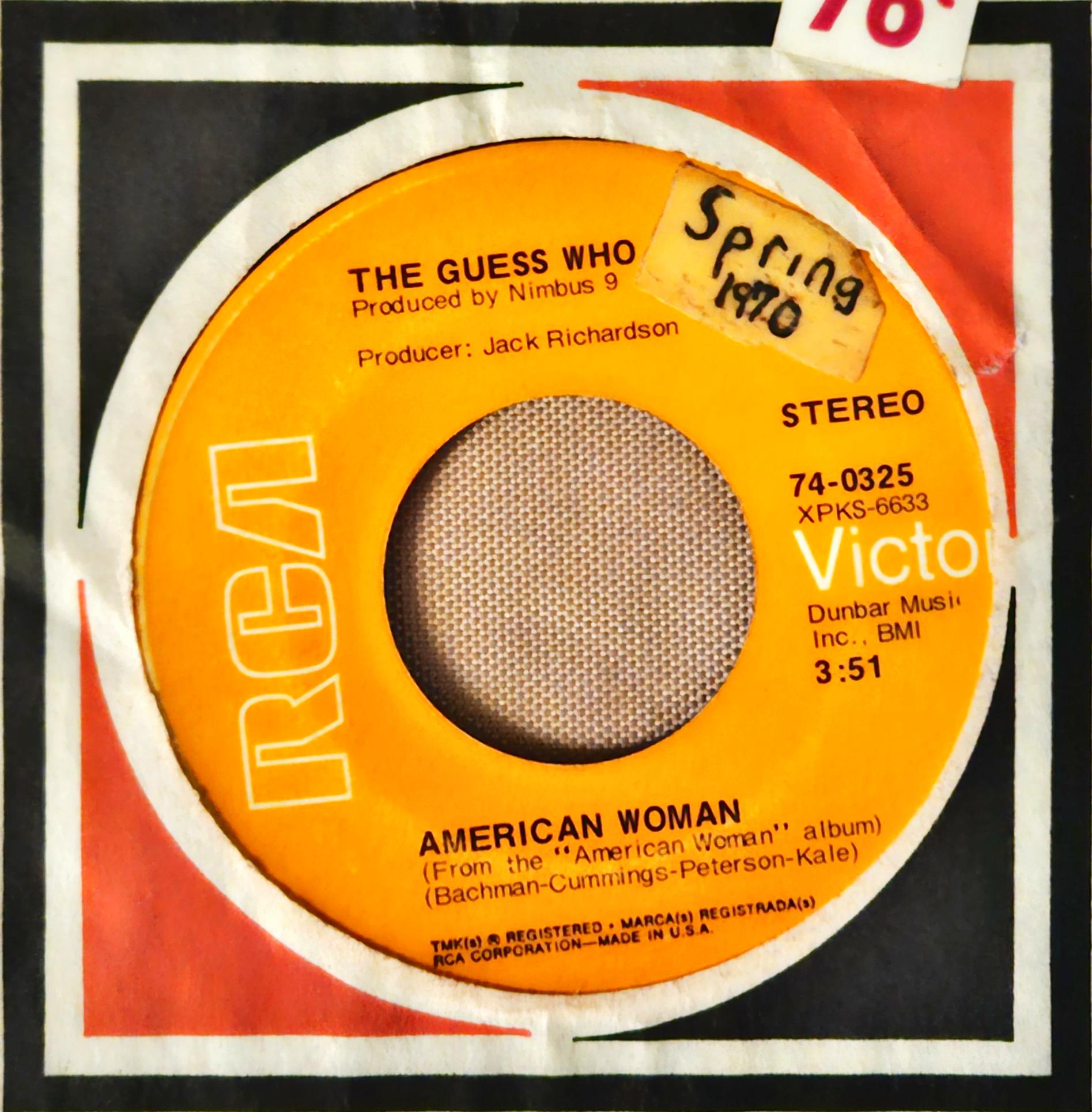
4.    American Woman & No Sugar Tonight—The Guess Who:  1970

Peak Position on Billboard Hot 100:  Both songs reached #1

These songs are found on the “American Woman” album. Released January 1970.

  • No Sugar Tonight

Released as the B-side. “No Sugar Tonight” is a stand-alone track on the 45-rpm single. However, the song is actually part of the “No Sugar Tonight/New Mother Nature” medley that is found on the Guess Who’s “American Woman” album.

Co-written by Burton Cummings and Randy Bachman. Classic rock and classic hits radio stations do not separate the “No Sugar Tonight/New Mother Nature” medley in 2025 like top 40 stations did back in 1970.

  • American Woman

Co-written by Burton Cummings, Garry Peterson, Jim Kale & Randy Bachman: According to Billboard, it was the third biggest Song of 1970 and the most popular track in the U.S. by the Canadian band.

Randy Bachman of the Guess Who stated in 2014 that “American Woman” was an anti-war protest song against the Vietnam conflict from a Canadian point of view. Of course, lyrics can also be interpreted literally as guys from Canada not wanting anything to do with women from the U.S.

3.    Wouldn’t It Be Nice & God Only Knows—The Beach Boys:  1966

Peak Positions on the Billboard Hot 100

  • Wouldn’t It Be Nice: #8
  • God Only Knows: #39

Both songs from the “Pet Sounds” album. Released May 1966

  • God Only Knows

Issued as the B-side. Co-written by Brian Wilson and Tony Asher. Like many of the songs on the Beach Boys “Pet Sounds” album, around 20 session musicians played on this orchestral masterpiece. Single is in the sub-genre Baroque pop classification.

“God Only Knows” is renowned for its beautiful harmonic structure and innovative complexity. Rolling Stone magazine ranks it at number 11 on their “500 Greatest Songs of All Time” listing and Paul McCartney proclaims the Beach Boys single to be the greatest song ever written.

  • Wouldn’t It Be Nice

 Co-written by Brian Wilson, Tony Asher & Mike Love. Wilson produced this classic “Sunshine Pop” song himself by using the “Wall of Sound” production technique, with 18 different instruments played on the track.  The Beach Boys single is considered ground-breaking and influential for future sub-genres of rock music: Power pop and progressive pop.

This track is superb and has a melodic tune and excellent vocal harmonies. Pitchfork ranks Wilson’s gem at number 7 on their “200 Best Songs of the 1960s” listing.  Without any doubt, “Wouldn’t It Be Nice” is my favorite number one, “Sunshine Pop” song of the 60s.

2.    Fortunate Son & Down on the Corner—Creedence Clearwater Revival:  1969

Peak Position on the Billboard Hot 100: Both songs reached #3.

From the “Willie & the Poor Boys” album. Released October 1969

  • Down on the Corner

Produced and written by John Fogerty.  The tune on this ditty contains a calypso beat and is a feel-good story about Willy and the Poor Boys, a fictional jug band who were street musicians. The song makes reference to a harmonica, washboard, a kazoo, a Kalamazoo guitar, and a gut bass.

Initially, “Down on the Corner” was the B-side of the CCR single. It quickly became just as popular as the A-side “Fortunate Son” song. The band came up with the name “Willie and the Poor Boys” for their 1969 album, from the lyrics to this “swamp rock” classic song.

  • Fortunate Son

Written by John Fogerty. Released in September 1969 during the peak period of American involvement in the Vietnam War, this ode quickly became an anti-war movement anthem and is considered a signature song for its author, singer-songwriter Fogerty.

The former CCR front man recently explained with a post on X, “Fortunate Son is a song I wrote during the Vietnam War, inspired by the stark contrast between those who were drafted to fight and die for their country and those who had the privilege to avoid the draft because of their wealth and connections.”

“Fortunate Son” is my favorite John Fogerty/CCR track of all-time and I rate it as the #1 best protest and social justice song of the 60s and 70s.

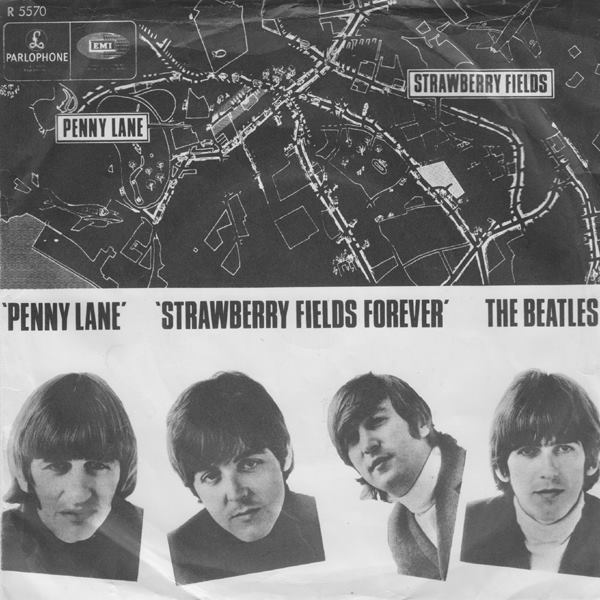
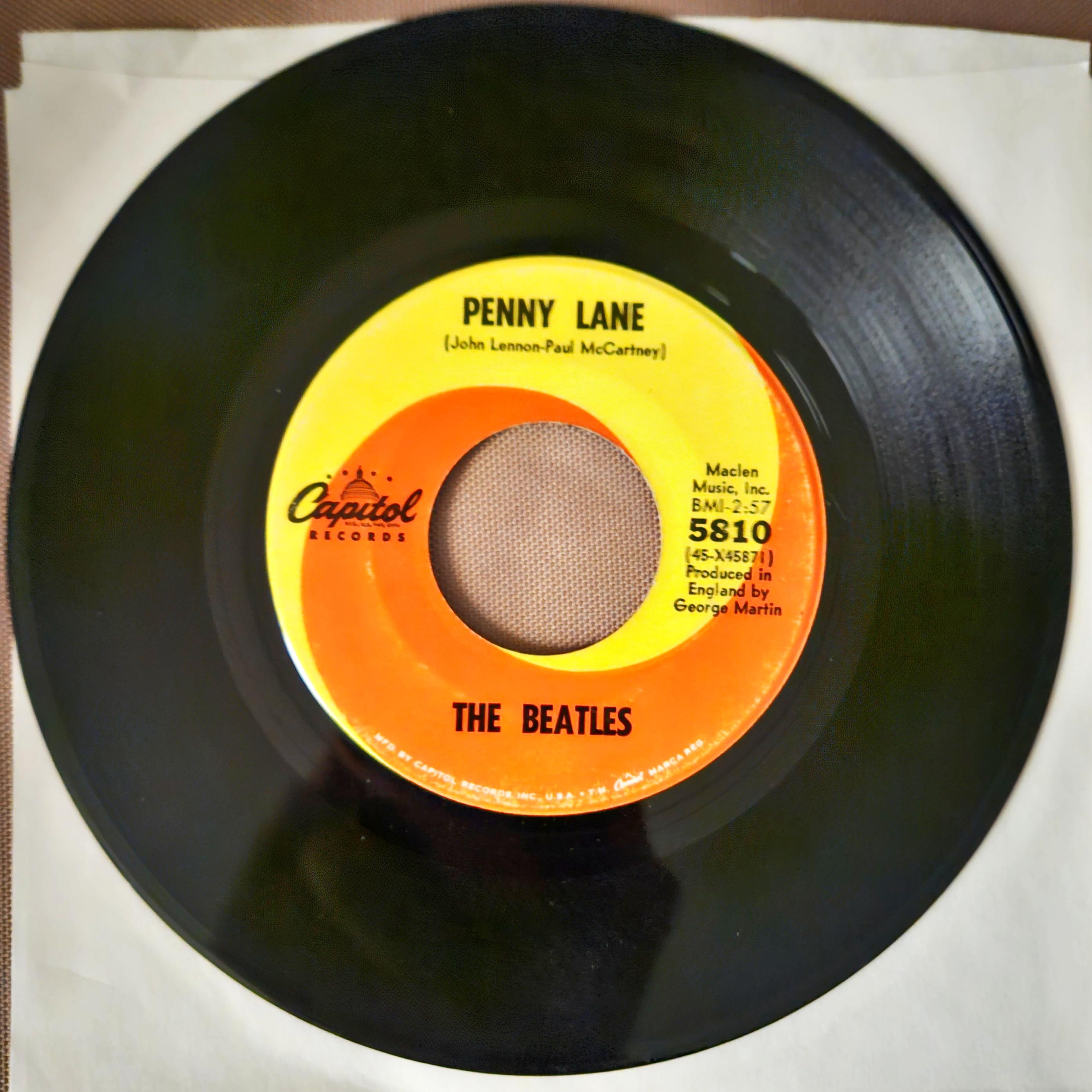
  1. Penny Lane & Strawberry Fields Forever—The Beatles:  1967

Peak Positions on Billboard Hot 100

  • Penny Lane #1
  • Strawberry Fields Forever:  #8

Both songs were placed on the “Magical Mystery Tour” (MMT) album which was divided into separate song categories:  Side 1: Soundtrack songs from “MMT” and Side 2:  Tracks from the 1967 Beatles’ non-album singles.

These songs were recorded during the “Sgt. Pepper’s Lonely Hearts Club Band” sessions but left off that 13-track album (Summer of Love 1967).

  • Strawberry Fields Forever
  • Co-written/credited as a John Lennon & Paul McCartney song.  It was primarily written by Lennon.

Double-A sided hit. John Lennon based the song on his childhood memories of playing in the garden of Strawberry Field, a Salvation Army children’s home in Liverpool, England. Musically, the sound on this song had a much different feel than any other Beatles singles released before 1967.

Strawberry Fields Gate: Liverpool, England. Photo courtesy of Dave Delaney

With a psychedelic rock sound, “Strawberry Fields Forever” was ground breaking. Beatles producer George Martin utilized diverse recording techniques such as reverse-recorded instrumentation, Mellotron flute sounds, an Indian Swarmandal (or harp), a fade-out/fade-in coda, as well as a cello and brass arrangement.

The combination of musical instruments, studio space-age sound effects and Lennon’s vocals, helped to make “Strawberry Fields Forever” a landmark recording in the psychedelic pop rock genre of music. Rolling Stone magazine ranks at #7 on their “500 Greatest Songs of All Time” list.

  • Penny Lane
  • Co-written/credited as a John Lennon & Paul McCartney song. It was primarily written by McCartney.

I rate “Penny Lane” as my second favorite Beatles song of all-time. The lyrics of the single refer to a street in Liverpool, and make mention of the sights and characters that Paul McCartney recalled from his upbringing in the city. 

Just like the song “Strawberry Fields Forever”, the Beatles became avant-garde pop rock composers and broke new ground with instrumentation with the recording of “Penny Lane.”  Music historians declare that the single is a cross between progressive and Baroque pop. The song was inducted into the Grammy Hall of Fame in 2011.

McCartney’s ode uses many instruments not associated with most Beatles songs: flutes, piccolos, oboes, trumpets and a flugelhorn.  It became the 13th Beatles single to peak at #1 on the Billboard Hot 100 during March 1967.

When I discovered Top 40 radio on WROV Roanoke in early 1967, the first song that I remember liking was “Penny Lane.”  Sometime in the spring of that year, I went to Sears and bought a 45-rpm single of my favorite Beatles song. It was the first vinyl record that I bought with my own money and still own it here in 2025.

Without a doubt, the Beatles, “Penny Lane/Strawberry Fields Forever” is my #1 favorite double-A sided single from the golden age of top 40 radio.

That wraps up my countdown of what I consider to be the 5 best double-sided 45 rpm singles from the golden age of Top 40 radio. I realize that my listing of songs in this category was written from my point of view and is subjective.

If you were creating a similar register of excellent double-sided singles from the 60s and 70s, your tabulation may be totally different. What do you consider to be best preeminent double-sided hit singles in this category? There are no right or wrong answers. I welcome your thoughts.

I still love all of the double-sided singles that are in my countdown above and fondly remember hearing those songs played on the radio when I was growing up. I still cherish those singles here in 2025.  Rock on!

To subscribe to my blog via email, please click the “Follow” button in the menu above.
Standard