Americana, Broadcasting, Folk, Heartland Rock, Music, Music Countdowns, Podcasts, Radio, Retro Rock, Rock Music, Top 40 Radio

21 Essential Heartland Rock Anthems  

What is Heartland Rock?  I first learned about this topic a couple of weeks ago when I went to the website of my local National Public Radio (NPR) station, WVTF 89.1 FM Roanoke, Virginia. 

One of the programs that WVFT airs on weekdays is called “Here and Now” which is a live production of WBUR 90.9 FM Boston, Massachusetts and (NPR).  I went to the “Here and Now” link and found a story about Heartland Rock (HR) from a segment that aired on July 2, 2026. 

The “Here and Now” segment had WBUR co-hosts Indira Lakshmanan and Will Walkey interviewing author Erin Osmon who recently published a book called, “Won’t Back Down: Heartland Rock and the Fight for America.”   

Osmon, a journalist and music historian, answers 8 questions on her new book about Heartland rock during the “Here and Now” segment which can be accessed via this link.

After I read and listened to Osmon’s “Here and Now” interview segment, I was curious to learn more about Heartland Rock. I then purchased her new book on this musical sub-genre. 

If you are also interested in this topic, I would encourage you to buy a copy of “Won’t Back Down: Heartland Rock and the Fight for America.” either online or at your favorite local bookstore.  

In Osmon’s informative book, she explores the foundation and emergence of what is now known as Heartland Rock and gives explanations on why this sub-genre of rock music became popular during the 80s decade. 

Osmon traces the history and influences of Heartland Rock to several of the 60s and 70s legendary singer-songwriters: Woody Guthrie, Bob Dylan, Neil Young and John Fogerty. 

According to Osmon, three 60s rock songs stand out as roots for what later became known as Heartland Rock: “Fortunate Son” Creedence Clearwater Revival, “The Weight” The Band and “Everybody Knows This Is Nowhere” Neil Young.  

The timeline for Heartland Rock’s rise to prominence in the United States happened in the mid 70s and its influence remained strong until the late 80s.  

Osmon identifies four core artists in the Heartland Rock genre: Bruce Springsteen from New Jersey, Bob Seger from Michigan, Tom Petty from Florida and John Mellencamp from Indiana. 

While male artists were at the forefront of Heartland Rock’s rise in popularity, women such as Bonnie Raitt, Tracy Chapman, Melissa Etheridge, and Lucinda Williams were also serving up outstanding perspectives with songs into this musical genre. 

Musically, HR generally blends rock, folk, country and Americana genres together with acoustic and electric guitars as dominant instruments in these types of songs. 

One misnomer about Heartland Rock is that all songs are centered around either small Rust Belt communities or industrial towns located in the Great Lakes region of the U.S. 

As Osmon points out in her book, Heartland Rock is about ideological and spiritual geography, and not physical locations. Songs in this sub-genre of rock music can be about any small locality across America.  

At the beginning of this article, I asked the question, “What is Heartland Rock?” While there are no simple definitions of songs in this category, this musical sub-genre has many common themes. HR anthems tend to have some of the elements that I have listed below:

  • Rooted in working-class life  
  • Pride in small-town communities 
  • Resilience in hard economic times 
  • Struggling or losing family farms 
  • Factories closing 
  • Longing for a simple life 
  • Pulling for an underdog during trying times  
  • Railing against “Reaganomics”  
  • Shattered Expectations of the American Dream  
  • Manufacturing jobs eliminated  
  • Inequality in various forms  
  • Abandonment of rural values  
  • Fear of recession and globalization 
  • Small towns losing population 
  • Lyrics that tell a story 
  • Romanticizing rural life of the 50s & 60s  
  • Having Cold War hysteria  
  • Searching for spiritual belonging  

After I educated myself on the topic of Heartland Rock, I started thinking about my favorite songs in this category. For the rest of this article, I will be counting down what I consider to be the top 21 best Heartland Rock anthems. 

My countdown of songs is based upon Osmon’s listing of “150 Essential Heartland Rock Songs” in the appendix of her outstanding book.  

One note: Bruce Springsteen has 22 out of the 150 songs on Osmon’s essential HR list. While I could devote a whole countdown of odes by the Boss, I didn’t overload my selections from the New Jersey native. 

I do not consider my countdown as a definitive list or the absolute best HR songs in the category. My selections are what I consider to be my favorites from the years of 1975 to 1989. 

Before starting the countdown of my prominent HR songs, I am sharing other superb tracks that fell outside just outside the top 21 designation. These tunes are not ranked and placed in a random order. 

  • Fire Lake—Bob Seger & the Silver Bullet Band 
  • Jack & Diane—John Mellencamp  
  • Handle With Care—The Traveling Wilburys 
  • Glory Days—Bruce Springsteen  
  • Rock & Roll Girls—John Fogerty  
  • Free Fallin’–Tom Petty 
  • Mandolin Rain—Bruce Hornby & the Range 
  • Money for Nothing—Dire Straits  
  • Out in the Street—Bruce Springsteen  
  • Nick of Time—Bonnie Raitt  
  • And We Danced—The Hooters 
  • End of the Line—The Traveling Wilburys  
  • Rockin’ in the Free World—Neil Young 
  • Fast Car—Tracy Chapman   
  • Thunder Road—Bruce Springsteen  
  • Cherry Bomb—John Mellencamp 
  • Walk of Life—Dire Straits 
  • Night Moves—Bob Seger & the Silver Bullet Band 
  • The Waiting—Tom Petty & the Heartbreakers  
  • The Promised Land—Bruce Springsteen  

Without further ado, my best Heartland Rock countdown begins: The first selection at #21 is an outlier as the track that isn’t found on Osmon’s 150 essential HR song list. However, I believe it should be considered a top HR track and that anthem starts off the countdown.

21. “Allentown” by Billy Joel: 1982  

The lyrical content of this song written by Billy Joel has core themes central with many Heartland Rock tunes. The words on “Allentown” depict steel mills and coal mines shutting down, with folks in that town showing desperation with their living experiences. In my humble opinion, Joel’s track is an essential quintessential 80s HR anthem.

20.  The End of the Innocence—Don Henley 1989   

A collaboration with Bruce Hornby, who plays piano on the song and co-wrote the track with Henley.  Lyrics combine nostalgic and fond remembrances of life as a youngster, as well as disillusionment with present realities. In 1980, song won a Grammy Award for “Best Rock Male Vocal Performance.” 

19.  My Hometown—Bruce Springsteen 1984 

Written by Bruce Springsteen. Describes economic depression, main street stores vacant, and a textile mill closing. The track became the Boss’ seventh consecutive top 10 hit on the Billboard Hot 100 from the legendary “Born in the USA” album.  

18.  Small Town—John Mellencamp 1985 

John Mellencamp penned this autobiographical ode to his Indiana roots. The author shared experiences growing up in the Hoosier state and painted a sentimental affection for living life in a rural community.  One of Mellencamp’s signature songs. 

17.  I Won’t Back Down—Tom Petty 1989 

Co-written by Tom Petty and Jeff Lynne.  Lead single from “Full Moon Fever” which was Petty’s first solo album. It became an anthem for standing up for what a person believes no matter the consequences. George Harrison provides acoustic guitar and backing vocals on the track. 

16.  The Valley Road—Bruce Hornsby & the Range 1988 

Written by brothers Bruce and John Hornsby. Lyrics were formed from observations made by the siblings when growing up in Williamsburg, Virginia. The story is set in a rural area and describes betrayal and deception with problematic outcomes and social consequences for many individuals.  

15.   Hollywood Nights—Bob Seger & the Silver Bullet Band 1978 

Bob Seger’s penned this fictional story about a blue-collar Midwest man going to Los Angeles and meeting a beautiful California woman. Then after a short love affair, the gorgeous lady suddenly disappears and leaves the fellow heartbroken. This song remains a mainstay on classic album rock radio in 2026. 

14.   Born in the USA—Bruce Springsteen 1984 

This must be the most misunderstood HR anthem of all time. Instead of being a flag-waving, celebratory patriotic tune, Springsteen wrote a protest song. He expressed disapproval of Vietnam war veterans having economic hardships in civilian life, despite their military service.  

13.   Summer of ‘69–Bryan Adams 1985 

Most complex written songs can have dual meanings, and that appears to be the case for Bryan Adams and Jim Valance who penned the 1985 hit single.  The lyrics fondly look back on a youthful summertime romance during the historic year of 1969. At the same time, the number 69 is also a metaphor for making love.  The tune has an excellent guitar riff.

12.   Rain on the Scarecrow—John Mellencamp 1985 

The powerful lyrics of this song were co-written by George Green and John Mellencamp. The focus of the track was on the cultural identity and collapse of rural family farms in the U.S.  This was one of the songs that Mellencamp performed at the inaugural Farm Aid concert in 1985. 

11.   Against the Wind—Bob Seger & the Silver Bullet Band: 1980  

Bob Seger composed the title track from his “Against the Wind” album. The author yearns for the simplicity of past times and explores past relationships with former friends and ex-girlfriend Janey.  Seger closes his ditty by stating he has mellowed out as he has aged.  

10.   American Girl—Tom Petty & the Heartbreakers: 1976  

This up-tempo rocker is considered one of Tom Petty’s most popular tracks.  The artist who was born in Gainesville, Florida wrote the song about a young woman who escaped a rural small town and ends up in a large city seeking a brighter future. Despite being lonely and heartbroken, she is hopeful for a better life. 

9.     The River—Bruce Springsteen: 1980  

I consider the profound lyrics the Boss wrote for this composition to be his greatest written masterpiece. Using a river as a metaphor is absolutely brilliant. Springsteen’s story goes from a working-class teenage couple’s youthful dreams, then transitions to troubling life events happening which result in total disillusionment of those earlier shattered dreams. A truly outstanding song. 

8.     The Way It Is—Bruce Hornsby & the Range: 1986  

Singer-songwriter, multi-instrumentalist and superb pianist Bruce Hornsby penned the hard-hitting HR song. Lyrics address topics such as welfare, racism, economic opportunity and civil rights. “The Way It Is” helped pave the way for Bruce Hornsby and the Range to win a Grammy Award for “Best New Artist” in 1987 

7.     Pink Houses—John Mellencamp:  1983 

John Mellencamp’s written ode was totally misunderstood when it was released as a single. While many folks thought the song was patriotic, this anthem is social commentary on race, class and the bleak reality of a housing crisis in America. The Indiana native sang about the real struggle for working-class families just to pay their bills. 

6.     Turn the Page—Bob Seger & the Silver Bullet Band: 1976  

Sometime when touring during with his band in 1972, Bob Seger wrote the lyrics for “Turn the Page.”  The lyrics were based on real life experiences of musicians and bands traveling from town to town during concert tours. The song describing the ups and downs of life on the road is my favorite HR track by Seger. I love the saxophone playing by Alto Reed on this track.

5.     Running on Empty—Jackson Browne: 1977  

Jackson Browne’s autobiographical account uses a highway as a metaphor for this up-tempo, toe-tapping tune. Browne nostalgically longs for a simpler time in his life by stating, “in ‘65, I was 17” and “in ‘69, I was 21.”  It is a pleasing anthem for the nomadic lifestyle of a musician.  

4.     Centerfield—John Fogerty: 1985  

Baseball is said to be America’s national pastime and John Fogerty’s nostalgic ode is a legendary sports anthem. This tribute mentions MLB Hall of Fame centerfielders such as Joe DiMaggio, Willie Mays and Ty Cobb. In 2010, Fogerty became the only musician ever to be celebrated at the National Baseball Hall of Fame Induction Ceremony when “Centerfield” was honored.  

3.     The Boys of Summer—Don Henley: 1984  

Lyrics about aging are the theme for this song co-written by Don Henley and Mike Campbell. With reference to baseball and summertime, the track remembers a past love relationship with regrets and then questions the meaning of life as a middle-aged person. Henley won a Grammy Award for “Best Male Rock Vocal Performance” with his exceptional song. 

2.     Refugee—Tom Petty & the Heartbreakers: 1979  

Pressures of the music industry were the overriding theme for the Tom Petty and Mike Campbell co-written song. The lyrics encourage listeners to stand up for personal beliefs, fight for self-empowerment, and refuse to be victimized during times of trouble.  “Refugee” was one of the 4 songs that Petty played at the “Live Aid” charity show in Philadelphia, Pennsylvania in July 1985. 

1.     Born to Run—Bruce Springsteen: 1985  

My #1 Heartland Rock anthem is one of my favorite songs of all time.  Bruce Springsteen’s magnificently written ode addresses a desire to escape the weight and pressure of life. 

The Boss uses metaphors about cars, motorcycles and highways to vividly evoke topics of freedom, romance and pursuit of the “American Dream.”    

I love the high-energy music played on this 1975 hit, and the tenor saxophone solo by Clarence Clemons is outstanding. Springsteen’s single was the #1 favorite song that I played on WROV Roanoke in 1975, which was my first job on the radio.  

Without a doubt, I rate “Born to Run” by Bruce Springsteen as the #1 best Heartland Rock track on this countdown.  

That wraps up what I consider to be my favorite Heartland Rock songs. I completely understand that my listing of tracks in this category was written from my point of view and is subjective. 

If you were creating a similar register of excellent Heartland Rock songs, your tabulation may be totally different. What do you consider to be the best preeminent HR tracks from 1975 to 1989?  

Thanks in advance for sharing your thoughts and comments below on what you consider to be the best Heartland Rock tracks from the 70s and 80s.  Rock on! 

To subscribe to my blog via email, please click the “Follow” button in the menu above. 
Standard
Broadcasting, Music, Music Countdowns, Pop Music, Radio, Retro Rock, rock, Rock Music, Top 40 Radio, Virginia Artists

1986 Totally Tubular Singles

A few weeks ago, I booked a Roanoke, Virginia area DJ gig for the Northside High School Class of ’86 and their 40-year reunion celebration event. Obviously, I will be playing many of the top singles from the year these folks graduated from high school in 1986.

With this latest edition of my music blog, I will be highlighting the popular hits of 1986 and counting down what I consider to be the best songs on Contemporary Hit Radio (CHR) 40 years ago.

After I scheduled the Northside Class of ’86 reunion, I needed to brush up on the top 100 singles of 1986 according to trade publications Billboard and Cash Box. I also read up on the most popular MTV videos in ‘86 that the cable TV music channel aired.

At the beginning of 1986, I lived in Roanoke, Virginia and my own listenership of CHR radio had started to wane. Whenever I did listen to the hits from 40 years ago, the station I most often tuned in to was legendary K92 Roanoke (WXLK 92.3 FM).

K92 signed on the air on New Year’s Day in 1980. Throughout the entire 80s decade, this top 40/CHR outlet was the most listened to radio station in the Roanoke/Lynchburg market.

K92 Roanoke DJ Staff 1980 on the cover of Roanoker Magazine: From left Bill Jordan, David Lee Michaels, John Berry, Larry Dowdy, Vince Miller and Russ Brown. Photo courtesy of the WROV History website/Pat Garrett.

One of the original K92 DJ’s in 1980 was Vince Miller Wilkes, whom I have known since we both worked for WROV Roanoke in the mid 70s. I asked Wilkes via Facebook Messenger to describe what it was like to work for the high powered, fast paced sound at K92 after coming over crosstown from the low powered WROV 1240 AM station.

Miller shared, “The first thing I remember, having come from a 1000 watt, 250 at night AM (WROV 1240), was how far the 93,000 watt FM signal got out. I went from talking to the Roanoke City limits to parts of five states. We could drive 75 miles to make a personal appearance, and be received as stars.”

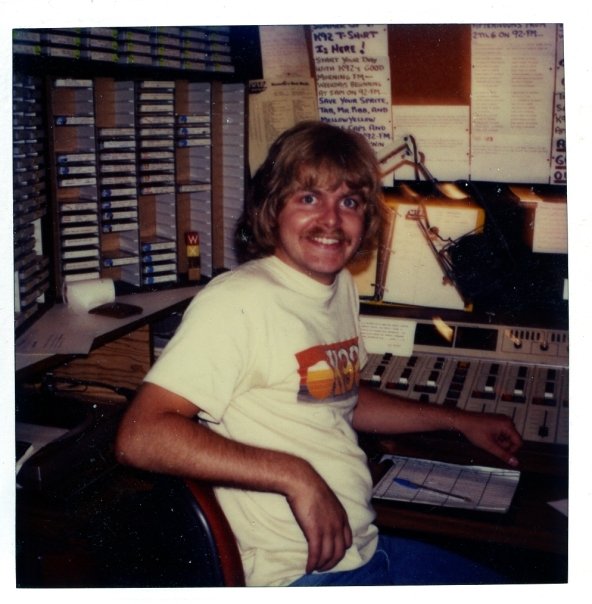
Above: Night time DJ Vince “The Prince” Miller inside the main K92 studio sometime during 1980. Photo courtesy of Vince Miller Wilkes.

During the first few years after signing on the air, K92 played some local Roanoke hits in addition to all of the national top 40 hits. I spoke with another one of the 1980 original K92 DJs, David Lee Michaels, last month, and we talked about the music selection on his station during the early years.

Michaels credited former 70s WROV DJs Bucky Stover, Vince Miller Wilkes and Bart Prater that came over to K92 in the early 80s as all being influential with K92 playing popular Roanoke singles and album tracks.  

Examples of popular regional hits played by K92 during 1980 were by the Robbin Thompson Band: “Sweet Virginia Breeze” as well as “Candy Apple Red” and “Brite Eyes.”  K92 also regularly played the album track “South City Midnight Lady” by the Doobie Brothers, which was a favorite 70s Roanoke area track when Bart Prater worked at crosstown top 40 WROV 1240 AM.

By 1986, the music played on K92 closely followed the national hits from the Billboard Hot 100 chart. The “K-Crew” morning drive host that year was Larry Dowdy. The K92 DJ and I first met at WROV Roanoke in 1974 when we both worked for that Top 40 station. I recently had the opportunity to speak Dowdy about the musical direction and types of songs that he played 40 years ago.

In my conservation with Dowdy, he proclaimed “that the song selection on K92 was much tighter in 1986, with fewer current hits on the station’s hot rotation.” Dowdy also said that K92’s playlist tended to lean toward rock songs, synth-pop and dance-oriented singles. It was a transitional year for the CHR format.

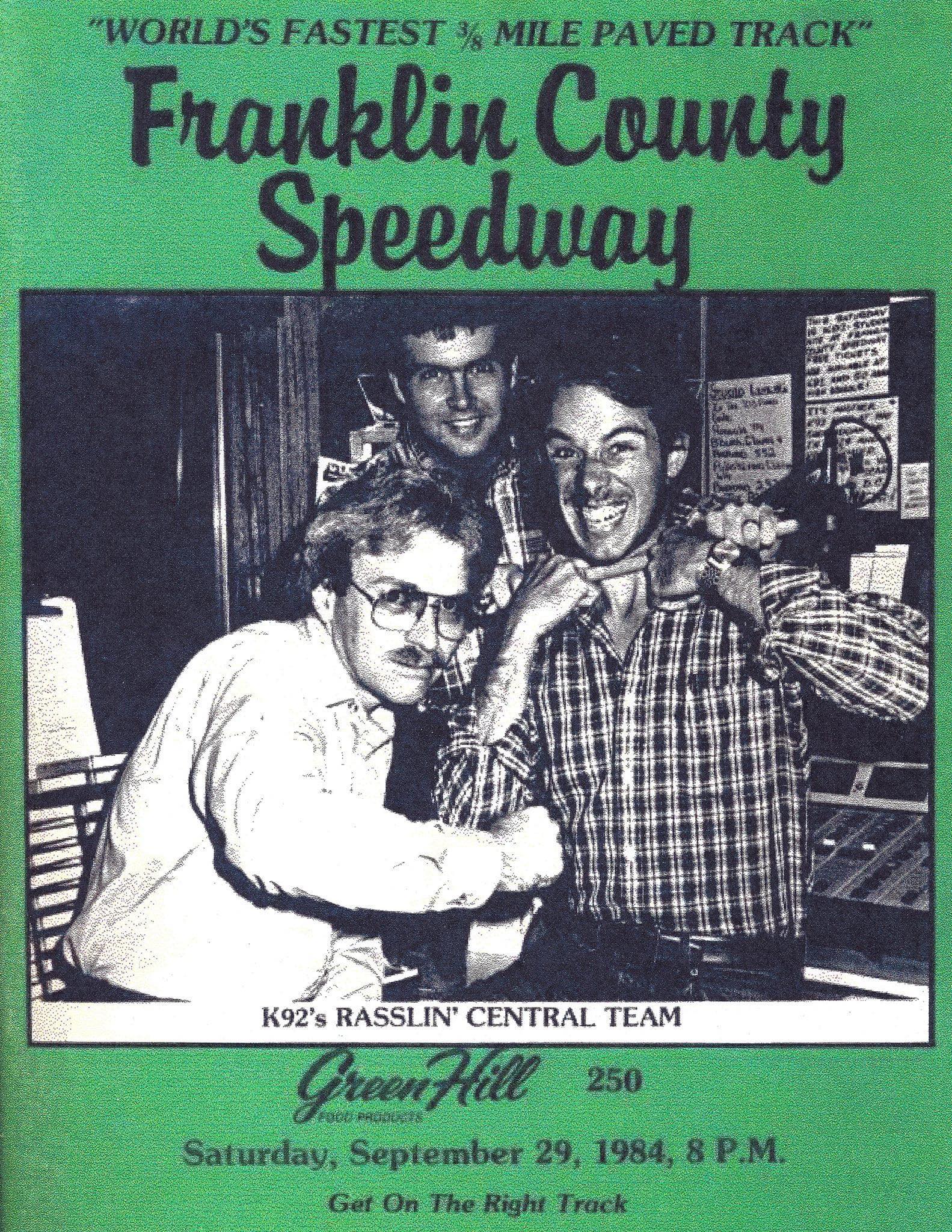
Above photo: K92 Roanoke morning “K Crew” staff September 1984: Larry Dowdy, Mike Stevens and Bill Jordan inside K92 studio. Photo courtesy of Larry Dowdy.

For the remaining portion of this message, I will be focusing on what I consider to be the most significant CHR singles from 1986.  The songs I feature were all national hits in the U.S.

As I survey the prominent hits from 40 years ago, this countdown is entirely based on my opinions. My selections are songs that I deem to be culturally, historically, aesthetically significant, meaningful or relevant.

For my countdown with the best singles from 40 years ago, I used three 1986 year-end charts.  Each of those surveys ranked their top 100 songs of ’86. Any song not listed by any of the 3 national charts was excluded for consideration on my countdown listing.

The 3 national year-end top 100 charts of 1986 used for the countdown are below:

  • Billboard Hot 100 Singles
  • Cash Box Top 100 Singles
  • Billboard Mainstream Rock Singles

On Billboard’s Hot 100 Year-end top singles for 1986 listing, “That’s What Friends Are For” by Dionne Warwick & Friends was the #1 biggest song of ’86. 

Cash Box rated “Higher Love” by Steve Winwood as the top single of 1986 while Billboard’s Mainstream Rock chart placed “Silent Running (On Dangerous Ground)” by Mike + the Mechanics as the #1 single for ’86.

Before I start my countdown of top 1986 singles, I am sharing 10 excellent rock singles that reached #40 or higher on Billboard’s Hot 100 chart but were not major top 40 hits:

  • I Still Believe—The Call
  • Is It Love—Mr. Mister
  • If She Knew What She Wants—The Bangles
  • Wild Life—Talking Heads
  • Mothers Talk—Tears for Fears
  • All the Things She Saw—Simple Minds
  • Tuff Enuff—The Fabulous Thunderbirds
  • Don’t Get Me Wrong—The Pretenders
  • All the King’s Horses—The Firm
  • Strength—The Alarm

Next are 25 singles that I considered for the 1986 countdown but fell outside of my top 30 selections. These songs are not ranked and placed in a random order:

  • You Can Call Me Al—Paul Simon
  • My Hometown—Bruce Springsteen
  • These Dreams—Heart
  • Sara—Starship
  • Sweet Love—Anita Baker
  • You Give Love a Bad Name—Bon Jovi
  • Walk of Life—Dire Straits
  • Danger Zone—Kenny Loggins
  • Small Town—John Mellencamp
  • How Will I Know—Whitney Houston  
  • Why Can’t This Be Love—Van Halen
  • No One is to Blame—Howard Jones
  • Conga—Miami Sound Machine
  • So Far Away—Dire Straits
  • Land of Confusion—Genesis  
  • I’ll Be Over You—Toto
  • Addicted to Love—Robert Palmer
  • R.O.C.K. in the USA (A Salute to 60s Rock)—John Mellencamp
  • Walk this Way—Run DMC featuring Aerosmith
  • Take My Breath Away—Berlin
  • A Matter of Trust—Billy Joel
  • Coming Around Again—Carly Simon
  • Walk Like an Egyptian—The Bangles
  • Burning Love—Survivor
  • Perfect Way—Scritti Politti

Without further ado, my 1986 best singles countdown begins:

30.  Sledgehammer—Peter Gabriel  

Positions on Billboard Charts:  #1 Hot 100, 6th Biggest Single of 1986 (MR)

English singer-songwriter Peter Gabriel wrote this smash hit. Song categorized as a hybrid funk, rock and new wave dance tune. Video for “Sledgehammer” won 9 MTV Music Awards in 1987.

29.  Mad About You—Belinda Carlisle  

Positions on Billboard Charts:  #3 Hot 100, 36th Biggest Song of 1986  

 Debut solo single by American singer-songwriter Belinda Carlisle. She was the lead vocalist for 80’s band the Go-Go’s.  The artist had 3 more top ten hits during 1987 and 1988.

28.  All I Need is a Miracle—Mike + the Mechanics  

Positions on Billboard Charts:  #5 Hot 100, 74th Biggest Songs of 1986

The first of 2 songs on the countdown by this British band. The group was named after bassist Mike Rutherford who also was simultaneously in the rock trio Genesis. Paul Young was lead vocalist on this song.

27.  If You Leave—Orchestral Manoeuvres in the Dark (OMD)

Positions on Billboard Charts:  #4 Hot 100, 53rd Biggest Songs of 1986

British electronic band OMD was formed in 1978.  They recorded “If You Leave” for the soundtrack to the 1986 film “Pretty in Pink.” This hit is considered the signature song for OMD.

26.  Your Wildest Dreams—The Moody Blues

Positions on Billboard Charts:  #9 Hot 100, 91st Biggest Songs of 1986  

The Moody Blues guitarist and lead singer Justin Hayward wrote about his “first love” on this surprise synth-pop single. It became the second biggest hit by the progressive rock band in the U.S.

25.  Kiss—Prince

Positions on Cash Box and Billboard Charts:  #1 Hot 100 (B), 5th Biggest Songs of 1986 (C)

The guitar-accented funk riff Prince plays on this song is superb. Rolling Stone rated “Kiss” as the 85th best track on their “500 Greatest Songs of All Time” list in 2021. The late Minnesota artist won a Grammy Award for “Best R&B Performance by a Duo or Group with Vocals” on this hit.

24.  Take Me Home Tonight—Eddie Money  

Positions on Billboard Charts: #1 Mainstream Rock, #4 Hot 100, 59th Biggest Song of 1986

American singer-songwriter born in New York. Moved to California at age 18. Eddie Money had guest singer Ronnie Spector repeatedly singing the words, “Be My Baby” during the chorus on this power-pop single. It became the multi-instrumentalist’s biggest top 40 hit during his career.

23.  Your Love—The Outfield  

Positions on Billboard Charts:  #6 Hot 100, 62nd Biggest Single of 1986   

The Outfield had commercial success with their 1985 “Play Deep” album and the single “Your Love.”  True confusion:  When I first heard the song played on K92 Roanoke in early 1986, I actually thought it was a single by the artist Sting instead of by this British band.

22.  Hip to Be Square—Huey Lewis & the News    

Positions on Billboard Charts: #3 Hot 100, 49th Biggest Song of 1986

Huey Lewis was smoking hot during 1986 and 1987.  His album “Fore” achieved two number 1 singles: “Stuck with You” and “Jacob’s Ladder.”  And the toe-tapping “Hip to Be Square” peaked at #3. The tune features excellent saxophone playing by Tower of Power’s, Stephen “Doc” Kupka.  

21.  West End Girls—Pet Shop Boys  

Positions on Cash Box and Billboard Charts: #1 Hot 100 (B), 2nd Biggest Song of 1986 (C)

The British synth-pop duo Pet Shop Boys are Neil Tennant and Chris Lowe, and they wrote the world-wide smash single “West End Girls.”  The tune has a strong bass line and sensational synthesizer riffs. The video was a hot rotation clip on MTV 40 years ago.

20.  Word Up—Cameo   

Positions on Billboard Charts:  #6 Hot 100, 68th Biggest Song of 1986

Cameo lit up the dance floors across American in 1986 with this multi-formatted funk-rock hit. Actor LaVar Burton appears in the video for this song.  “Word Up” won a Soul Train Music Award for “Best R&B Soul Single” and a “Best Dance Record” award with the British NME magazine.

19.  The Next Time I Fall in Love—Peter Cetera & Amy Grant  

Positions on Billboard & Cash Box Charts:  #1 Hot 100 (B), 34th Biggest Song of 1986 (C)

Co-written by Bobby Caldwell and Paul Gordon. Peter Cetera left Chicago in 1985 and Amy Grant was a Contemporary Christian singer looking to crossover into secular music. It was a perfect paring of singers. “The Next Time I Fall” is listed on Billboard’s top 25 “Best Love Song Duets” of all time in 2020.

18.  Manic Monday—The Bangles

Positions on Billboard Charts:  #2 Hot 100, 48th Biggest Song of 1986  

Singer-songwriter and musician Prince penned this selection.  Guitarist Susanna Hoffs of the Bangles provided lead vocals on this infectious pop track. The first major hit by the band lead to the group’s first #1 smash “Walk Like an Egyptian” during late December 1986.

17.  Life in a Northern Town—The Dream Academy  

Positions on Billboard Charts:  #7 Hot 100, 78th Biggest Song of 1986

The Dream Academy were billed as a British alternative pop trio. The song was co-written by band members Nick Laird-Clowes and Gilbert Gabriel.  This melodic single is about the collapse of the shipping industry in the United Kingdom.

16.  Silent Running (On Dangerous Ground)—Mike + the Mechanics  

Positions on Billboard Charts:  #6 Hot 100, #1 Mainstream Rock, #1 Biggest Song of 1986 (MR)

Second song by British supergroup Mike + The Mechanics. It was a side project for Mike Rutherford, who was also in Genesis that same year. Paul Carrack was the lead singer on what became the #1 biggest mainstream rock single of 1986 according to Billboard.

15.  Invisible Touch—Genesis    

Positions on Billboard Charts: #1 Hot 100, 54th Biggest Song of 1986  

In 1986, British progressive rock band Genesis was a trio consisting of Phil Collins, Tony Banks and Mike Rutherford. These members were co-writers with this upbeat composition. It features multiple key changes and was the only #1 hit on the Billboard Hot 100 by the band.

14.  True Colors—Cyndi Lauper   

Positions on Billboard Charts: #1 Hot 100, 41st Biggest Song of 1986

Actress and singer-songwriter Cynthia Lauper recorded Billy Steinberg and Tom Kelly’s co-written ode and turned it into her second #1 hit. “Time After Time” was Lauper’s first chart topping tune. It received a Grammy Award nomination for Best Female Pop Vocal Performance.

13.  Never—Heart  

Positions on Billboard Charts:  #4 Hot 100, 18th Biggest Song of 1986  

From the 1985 self-titled “Heart” album. “Never” was the band’s highest charting single to that point.  This power ballad features strong performances by the Wilson siblings: Ann rocks with emotional vocals while Nancy has soaring guitar licks. Video of the song was a MTV favorite.

12.  Amanda—Boston

Positions on Billboard Charts: #1 Hot 100, 50th Biggest Song of 1986

Eight years had passed since Boston last released their album “Don’t Look Back” in 1978. Then in 1986, the band’s “Third Stage” dropped and “Amanda” was released as a single from the LP. It immediately became a hit and is considered a quintessential power ballad of the 80s.

11.  Tonight She Comes—The Cars

Positions on Billboard Charts:  #1 Mainstream Rock, #7 Hot 100, 81st Biggest Song of 1986

New Wave rock band scored their final top 10 hit before the Cars broke up in 1988. It is from the band’s “Greatest Hits” album. This composition was written and sung by Ric Ocasek and has an outstanding guitar solo from Elliot Easton.

10.  Live to Tell—Madonna   

Positions on Cash Box and Billboard Charts:  #1 Hot 100 (B), 3rd Biggest Song of 1986 (C)

Music was composed by Patrick Leonard and lyrics written by Madonna. This powerful, emotional and acclaimed pop ballad was completely unlike anything the artist had ever recorded. “Live to Tell” was a significant artistic breakthrough in Madonna’s career.

9.    Kyrie—Mr. Mister  

Positions on Billboard Charts: #1 Hot 100, 9th Biggest Song of 1986

“Kyrie” is the first of two Mr. Mister songs on my countdown. Lyrics were written by John Lang with the music being composed by Richard Page and Steve George. . The term “Kýrie, eléison” means “Lord, have mercy” in the Greek language and is used as liturgy in Christian churches.

8.    What You Need—INXS  

Positions on Billboard Charts: #5 Hot 100, 56th Biggest Song of 1986  

Australian funk rock/new wave band. “What You Need” was the first top 10 single for the group on the Billboard Hot 100. Highlights on this song include a driving bass line from Garry Gary Beers, strong saxophone playing by Kirk Pengilly and Michael Hutchence’s high-energy rock vocals.

7.    The Way It Is—Bruce Hornsby & the Range   

Positions on Cash Box and Billboard:  #1 Hot 100 (B), 56th Biggest Song of 1986 (C)  

Singer-songwriter and pianist from Williamsburg, Virginia. Hard hitting-lyrics on this pop song addresses topics such as welfare, racism, economic opportunity and civil rights. “The Way It Is” helped pave the way for Bruce Hornsby and the Range to win a Grammy Award for “Best New Artist.”

6.    In Your Eyes—Peter Gabriel   

Positions on Billboard Charts:  #1 Mainstream Rock, #26 Hot 100, 6th Biggest Song of 1986 (MR)

My second selection on the countdown by Peter Gabriel who wrote the lyrics to this hit. Musically, the tune has an African worldbeat influence with percussion and drums. Some music historians consider “In Your Eyes” among the top romantic love songs from the 20th century.

5.    Sweet Freedom—Michael McDonald

Peak Positions on Billboard Charts:  #7 Hot 100, 75th Biggest Song of 1986

 Keyboardist and singer-songwriter Michael McDonald is known for his distinctive blue-eyed soul vocal style.  “Sweet Freedom” was featured in the 1986 film “Running Scared.”  The tune is smooth and has a fast-paced tropical percussion and drumming section. One of McDonald’s best solo singles.

4.   Something About You—Level 42

Positions on Billboard Charts:  #7 Hot 100, 37th Biggest Song of 1986

Level 42 is classified as a British jazz-funk band. Their hit “Something About You” is a defining model of 80’s synth-pop. It was the group’s only top 10 charting song on the Billboard Hot 100.

3.   Alive & Kicking—Simple Minds

Peak Positions on Billboard Charts: #3 Hot 100, 17th Biggest Song of 1986

Scottish rock band formed in 1977.  Co-written by 3 Simple Minds members:  Jim Kerr, Charlie Burchill and Mick MacNeil. Lyrics go from a series of questions to proclaiming faith will overcome obstacles. Guitar and piano playing shine on this mid 80s anthem.

2.  Broken Wings—Mr. Mister

Positions on Billboard Charts:  #1 Hot 100, 5th Biggest Singles of 1986

Mr. Mister’s second song on the countdown.  Lyrics were inspired by Kahlil Gibran’s novel “Broken Wings” according to the band’s lyricist John Lang. The song has an excellent blending of guitar, bass, synthesizer and drums. I consider it as one of the quintessential pop-rock hits of the 80s.

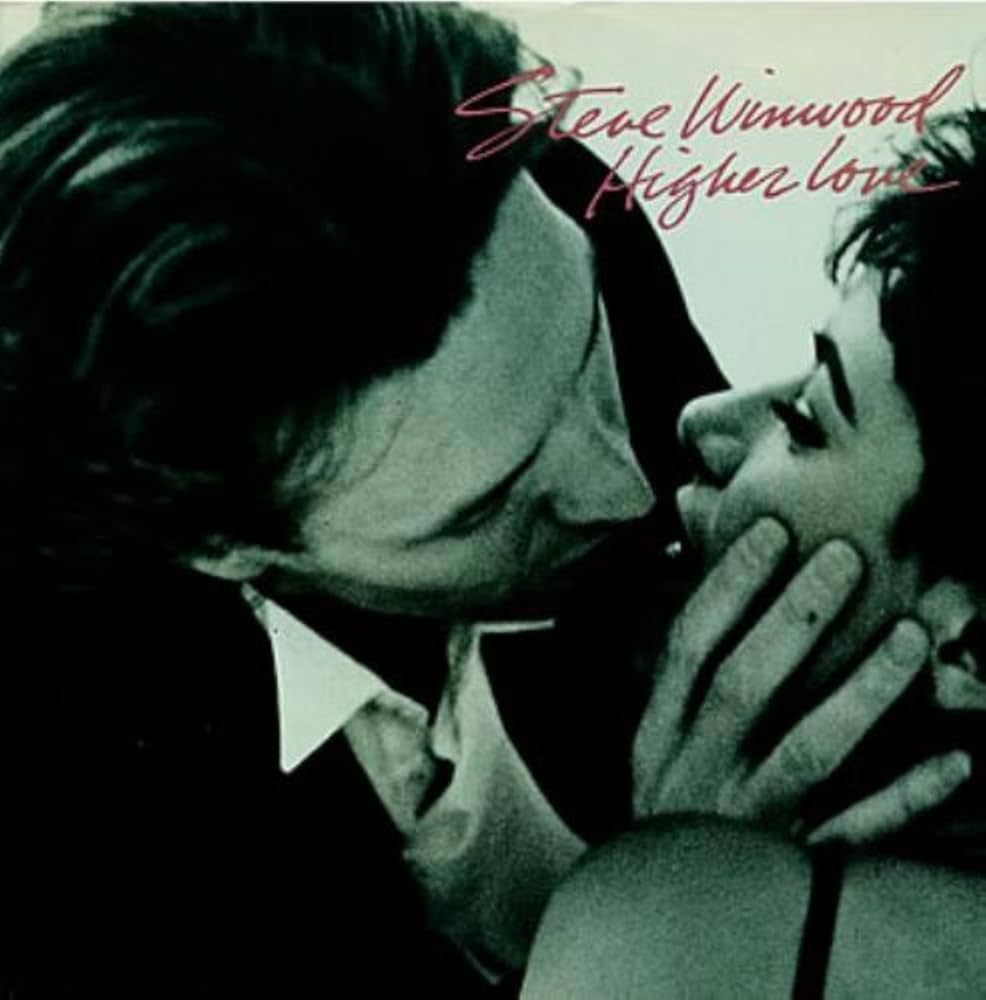
1.  Higher Love—Steve Winwood

Peak Positions on Cash Box and Billboard: #1 Hot 100 (B), #1 biggest Song of 1986 (C)

 British singer-songwriter and musician Steve Winwood has my best single of 1986 with “Higher Love.” This was the first #1 song for the artist who played in three rock bands during the 60s: The Spencer Davis Group, Traffic and Blind Faith.  

This hit was co-written by Winwood and Will Jennings and features two members on the R&B band Rufus: Chaka Khan on background vocals and drummer John ‘JR’ Robinson. Also in the mix was guitarist Nile Rodgers.

Musically, the song is a superb mix of synthesizer, drums and guitar giving the tune a funk/pop-rock dance groove.  Plus, the lyrics are a positive affirmation about faith and divine love outside of our world.

In 1987, the artist went on to earn two Grammy Awards for “Record of the Year” and “Best Male Pop Vocal Performance.” Without a doubt, I rate “Higher Love” by Steve Winwood as the #1 best single of 1986.

That wraps up what I consider to be my favorite and best singles for 1986. I completely understand that my listing of songs in this category was written from my point of view and is subjective.

If you were creating a similar register of excellent 1986 hits, your tabulation may be totally different. What do you consider to be best preeminent singles from 40 years ago?  I hope you will comment below.

The songs that I selected above still sound good to me 40 years later. I still cherish and fondly remember my favorite hit singles of 1986.  Rock on!

To subscribe to my blog via email, please click the “Follow” button in the menu above.

Standard