Broadcasting, Music, Music Countdowns, Pop Music, Radio, Retro Rock, rock, Rock Music

Favorite Double-Sided 45-RPM Radio Hits of the 60s and 70s

Did you ever wonder why some artists had two hits from the same 45-rpm single during the golden age of top 40 radio?  With this edition of my musical musings, I will be counting down what I consider to be some of the best two-sided radio hits from the 60s and 70s.

The first 7-inch, 45-rpm vinyl record, a format that became known as a “single,” was released by RCA Victor in March 1949. Creation of the 45-rpm single helped to change music forever.

In simple terms, record companies labeled their singles with an A-side and a B-side. Generally, songs that record labels wanted to promote as possible hits received an A-side designation while the B-side traditionally was not considered “hit material” by a record company.

It is interesting that sometimes the A-side of a single flopped while the B-side actually became a major hit record. “Na Na Hey Hey Kiss Him Goodbye” by Steam is an excellent example of the B-side of a single actually became a #1 hit while the A-side (“Sweet Laura Lee”) never charted.

Other outliers in this category:  Occasionally, the A-side of a single becomes a hit but the B-side doesn’t initially chart.  Eventually, the original B-side is re-released as an A-side single and then becomes a hit. “Another Park, Another Sunday” and “Black Water” by the Doobie Brothers are a perfect example of this phenomenon.

Some record companies regularly promoted what is known as a Double-A Single, in which both sides of the 45-rpm record were of equal importance with regard to promotion.  Most of the time, record companies released a Double-A single from an established music artist.

In the 50s and early 60s, Elvis Presley was the king of double-sided hit singles. According to Billboard magazine, Presley achieved 39 singles where both sides reached the Billboard Hot 100 chart.

Then in the 60s, the Beatles charted 24 two-sided hits while Creedence Clearwater Revival had 7 double-sided radio hits from 1969 through 1971.

For the remainder of this message, I will be counting down what I consider to be the 5 best double-sided radio hits from the golden age of top 40 radio. 

In researching historical musical data for this article, I used “The Billboard Book of Top 40 Hits” by Joel Whitburn.  I consider Whitburn’s book to be the “bible” of Top 40 music history and I bought a second copy of this superb music guide a few years ago.

The criteria that I used for my countdown of double-sided 45-rpm singles hits:

  • Only top 40 hits in the United States from 1965 to 1975.
  • Both sides of a 45-rpm vinyl single must have charted #40 or higher on the Billboard Hot 100 chart.
  • Both sides of a 45-rpm charted #40 or higher within 6 months of the first song becoming a hit.

My countdown of the top 5 double-sided 45-rpm hits is based entirely on my opinions, songs that I consider to be my favorites. These are selections that I deem to be culturally, historically, aesthetically significant, meaningful or relevant.

Obviously, there are many more excellent double-sided hits from the golden age of top 40 radio that fell outside of my top 5 countdown. My selections below are not ranked and placed in a random order:

  • Question 67 & 68 & I’m a Man—Chicago
  • The House That Jack Built & I Say a Little Prayer—Aretha Franklin
  • All You Need is Love & Baby You’re a Rich Man—The Beatles.
  •  Up Around the Bend & Run Through the Jungle—Creedence Clearwater Revival
  •  Junior’s Farm & Sally G—Paul McCartney
  •  Pleasant Valley Sunday & Words—The Monkees
  •  Atlantis & To Susan on the West Coast Waiting—Donovan
  • There’s a Kind of Hush & No Milk Today—Herman’s Hermits
  • Green River & Commotion—Creedence Clearwater Revival
  • Get Back & Don’t Let me Down—The Beatles
  • Calypso & I’m Sorry—John Denver
  • Lookin’ Out My Back Door & Long As I Can See the Light—Creedence Clearwater Revival
  • (Sweet Baby Baby) Since You’ve Been Gone & Ain’t No Way—Aretha Franklin
  • Thank You (Falettinme Be Mice Elf Agin) & Everybody is a Star—Sly & the Family Stone
  • I’m a Believer & (I’m Not Your) Steppin’ Stone—The Monkees
  • My Sweet Lord & Isn’t It a Pity—George Harrison
  •  It’s Too Late & I Feel the Earth Move—Carole King
  • Have You Ever Seen the Rain & Hey Tonight—Creedence Clearwater Revival
  • Colour My World & Beginnings—Chicago
  • Laughing & Undun—The Guess Who
  • Paperback Writer & Rain—The Beatles
  • Who’ll Stop the Rain & Travelin’ Band—Creedence Clearwater Revival
  • Maggie May & Reason to Believe—Rod Stewart
  • So Far Away & Smackwater Jack—Carole King
  • Something & Come Together—The Beatles
  • Bad Moon Rising & Lodi—Creedence Clearwater Revival

Without further ado, my countdown of the best double-sided 45-rpm radio hits begins:

5.    Hey Jude & Revolution—The Beatles:  1968

Peak Positions on Billboard Hot 100

  • Hey Jude:  #1
  • Revolution #12

Both songs were first placed on the “Hey Jude” (original title: The Beatles Again) album, which is a collection of non-album singles and B-sides by the Beatles. Released February 1970.

These songs were recorded during the Beatles “White Album” sessions but left off the 30-track double LP (November 1968).  This Double-A sided 45-rpm single became the first Beatles’ recordings that were released on Apple Records by the band.

  • Revolution:  Co-written/credited as a John Lennon & Paul McCartney song.  It was primarily written by Lennon.

Lyrics for “Revolution” came about as some anti-war moment members were calling out for violence to achieve their goals.  Lennon, being a peace activist, believed in non-violent methods to promote peaceful transitions.

The Beatles rocked with a message of social change on this hard driving tune. I rate “Revolution” as the 8th best protest and social justice anthem from the 60s and 70s.

  • Hey Jude: Co-written/credited as a John Lennon & Paul McCartney song. It was primarily written by McCartney.

One of the signature songs for British band.  “Hey Jude” spent 9 weeks at the top of Billboard’s singles chart and is ranked as the #1 song of 1968. It also was Billboard’s biggest charting single of the 60s decade.

The Beatles successful song has been inducted into the Grammy Hall of Fame, the Rock and Roll Hall of Fame and National Academy of Recording Arts & Sciences Grammy Hall of Fame. Without a doubt, this track remains one of the Fab Four’s most enduring singles.

4.    American Woman & No Sugar Tonight—The Guess Who:  1970

Peak Position on Billboard Hot 100:  Both songs reached #1

These songs are found on the “American Woman” album. Released January 1970.

  • No Sugar Tonight

Released as the B-side. “No Sugar Tonight” is a stand-alone track on the 45-rpm single. However, the song is actually part of the “No Sugar Tonight/New Mother Nature” medley that is found on the Guess Who’s “American Woman” album.
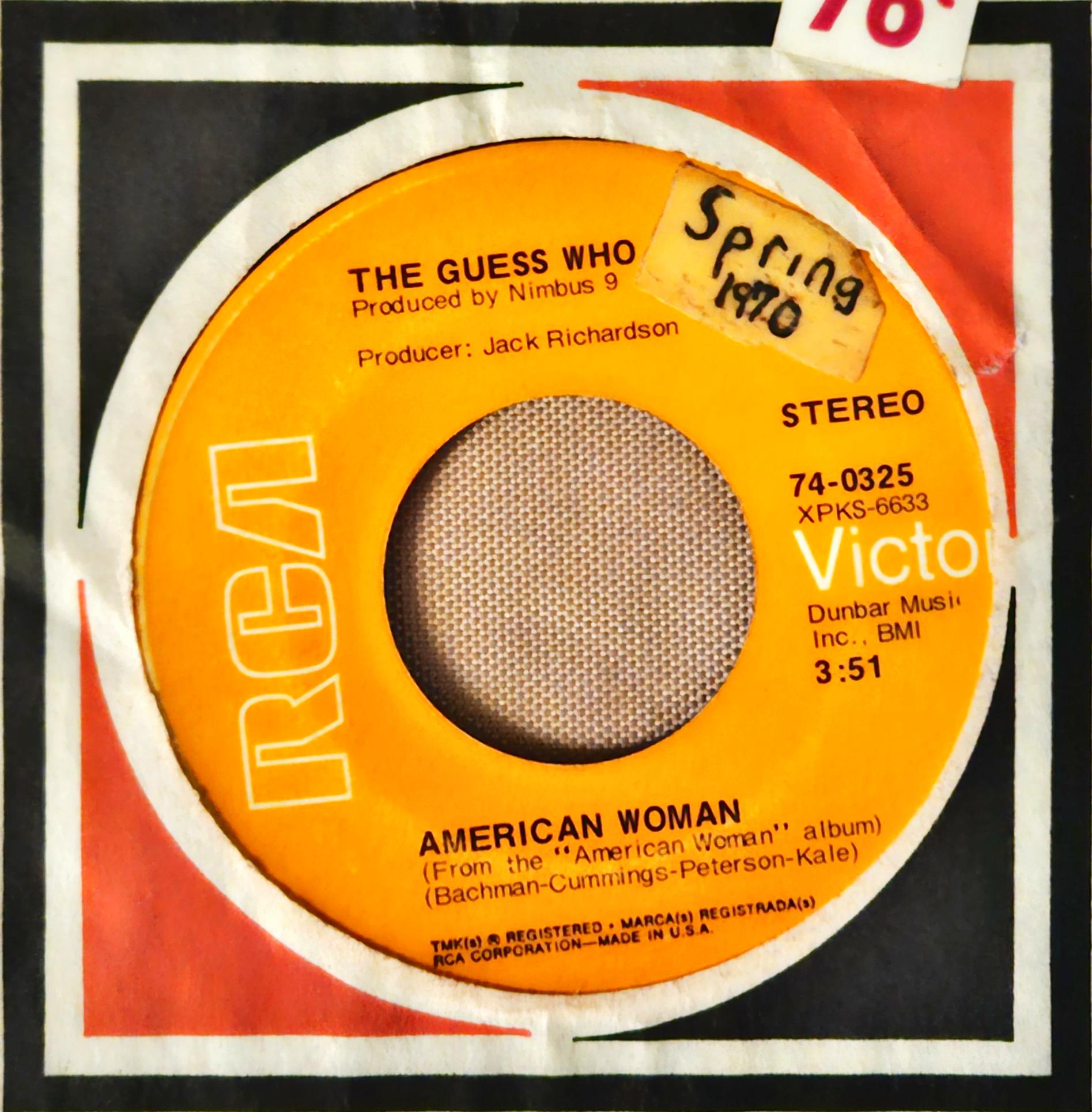
Co-written by Burton Cummings and Randy Bachman. Classic rock and classic hits radio stations do not separate the “No Sugar Tonight/New Mother Nature” medley in 2025 like top 40 stations did back in 1970.

  • American Woman

Co-written by Burton Cummings, Garry Peterson, Jim Kale & Randy Bachman: According to Billboard, it was the third biggest Song of 1970 and the most popular track in the U.S. by the Canadian band.

Randy Bachman of the Guess Who stated in 2014 that “American Woman” was an anti-war protest song against the Vietnam conflict from a Canadian point of view. Of course, lyrics can also be interpreted literally as guys from Canada not wanting anything to do with women from the U.S.

3.    Wouldn’t It Be Nice & God Only Knows—The Beach Boys:  1966

Peak Positions on the Billboard Hot 100

  • Wouldn’t It Be Nice: #8
  • God Only Knows: #39

Both songs from the “Pet Sounds” album. Released May 1966

  • God Only Knows

Issued as the B-side. Co-written by Brian Wilson and Tony Asher. Like many of the songs on the Beach Boys “Pet Sounds” album, around 20 session musicians played on this orchestral masterpiece. Single is in the sub-genre Baroque pop classification.

“God Only Knows” is renowned for its beautiful harmonic structure and innovative complexity. Rolling Stone magazine ranks it at number 11 on their “500 Greatest Songs of All Time” listing and Paul McCartney proclaims the Beach Boys single to be the greatest song ever written.

  • Wouldn’t It Be Nice

 Co-written by Brian Wilson, Tony Asher & Mike Love. Wilson produced this classic “Sunshine Pop” song himself by using the “Wall of Sound” production technique, with 18 different instruments played on the track.  The Beach Boys single is considered ground-breaking and influential for future sub-genres of rock music: Power pop and progressive pop.

This track is superb and has a melodic tune and excellent vocal harmonies. Pitchfork ranks Wilson’s gem at number 7 on their “200 Best Songs of the 1960s” listing.  Without any doubt, “Wouldn’t It Be Nice” is my favorite number one, “Sunshine Pop” song of the 60s.

2.    Fortunate Son & Down on the Corner—Creedence Clearwater Revival:  1969

Peak Position on the Billboard Hot 100: Both songs reached #3.

From the “Willie & the Poor Boys” album. Released October 1969

  • Down on the Corner

Produced and written by John Fogerty.  The tune on this ditty contains a calypso beat and is a feel-good story about Willy and the Poor Boys, a fictional jug band who were street musicians. The song makes reference to a harmonica, washboard, a kazoo, a Kalamazoo guitar, and a gut bass.

Initially, “Down on the Corner” was the B-side of the CCR single. It quickly became just as popular as the A-side “Fortunate Son” song. The band came up with the name “Willie and the Poor Boys” for their 1969 album, from the lyrics to this “swamp rock” classic song.

  • Fortunate Son

Written by John Fogerty. Released in September 1969 during the peak period of American involvement in the Vietnam War, this ode quickly became an anti-war movement anthem and is considered a signature song for its author, singer-songwriter Fogerty.

The former CCR front man recently explained with a post on X, “Fortunate Son is a song I wrote during the Vietnam War, inspired by the stark contrast between those who were drafted to fight and die for their country and those who had the privilege to avoid the draft because of their wealth and connections.”

“Fortunate Son” is my favorite John Fogerty/CCR track of all-time and I rate it as the #1 best protest and social justice song of the 60s and 70s.

  1. Penny Lane & Strawberry Fields Forever—The Beatles:  1967

Peak Positions on Billboard Hot 100

  • Penny Lane #1
  • Strawberry Fields Forever:  #8

Both songs were placed on the “Magical Mystery Tour” (MMT) album which was divided into separate song categories:  Side 1: Soundtrack songs from “MMT” and Side 2:  Tracks from the 1967 Beatles’ non-album singles.

These songs were recorded during the “Sgt. Pepper’s Lonely Hearts Club Band” sessions but left off that 13-track album (Summer of Love 1967).

  • Strawberry Fields Forever
  • Co-written/credited as a John Lennon & Paul McCartney song.  It was primarily written by Lennon.

Double-A sided hit. John Lennon based the song on his childhood memories of playing in the garden of Strawberry Field, a Salvation Army children’s home in Liverpool, England. Musically, the sound on this song had a much different feel than any other Beatles singles released before 1967.

Strawberry Fields Gate: Liverpool, England. Photo courtesy of Dave Delaney

With a psychedelic rock sound, “Strawberry Fields Forever” was ground breaking. Beatles producer George Martin utilized diverse recording techniques such as reverse-recorded instrumentation, Mellotron flute sounds, an Indian Swarmandal (or harp), a fade-out/fade-in coda, as well as a cello and brass arrangement.

The combination of musical instruments, studio space-age sound effects and Lennon’s vocals, helped to make “Strawberry Fields Forever” a landmark recording in the psychedelic pop rock genre of music. Rolling Stone magazine ranks at #7 on their “500 Greatest Songs of All Time” list.

  • Penny Lane
  • Co-written/credited as a John Lennon & Paul McCartney song. It was primarily written by McCartney.

I rate “Penny Lane” as my second favorite Beatles song of all-time. The lyrics of the single refer to a street in Liverpool, and make mention of the sights and characters that Paul McCartney recalled from his upbringing in the city. 

Just like the song “Strawberry Fields Forever”, the Beatles became avant-garde pop rock composers and broke new ground with instrumentation with the recording of “Penny Lane.”  Music historians declare that the single is a cross between progressive and Baroque pop. The song was inducted into the Grammy Hall of Fame in 2011.
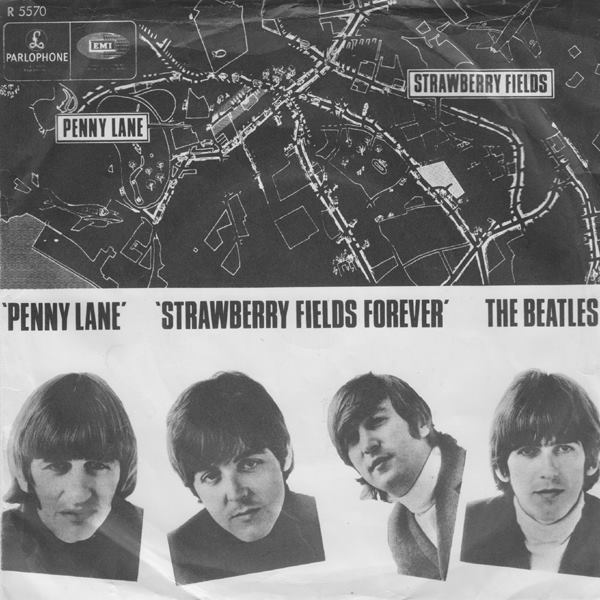
McCartney’s ode uses many instruments not associated with most Beatles songs: flutes, piccolos, oboes, trumpets and a flugelhorn.  It became the 13th Beatles single to peak at #1 on the Billboard Hot 100 during March 1967.

When I discovered Top 40 radio on WROV Roanoke in early 1967, the first song that I remember liking was “Penny Lane.”  Sometime in the spring of that year, I went to Sears and bought a 45-rpm single of my favorite Beatles song. It was the first vinyl record that I bought with my own money and still own it here in 2025.
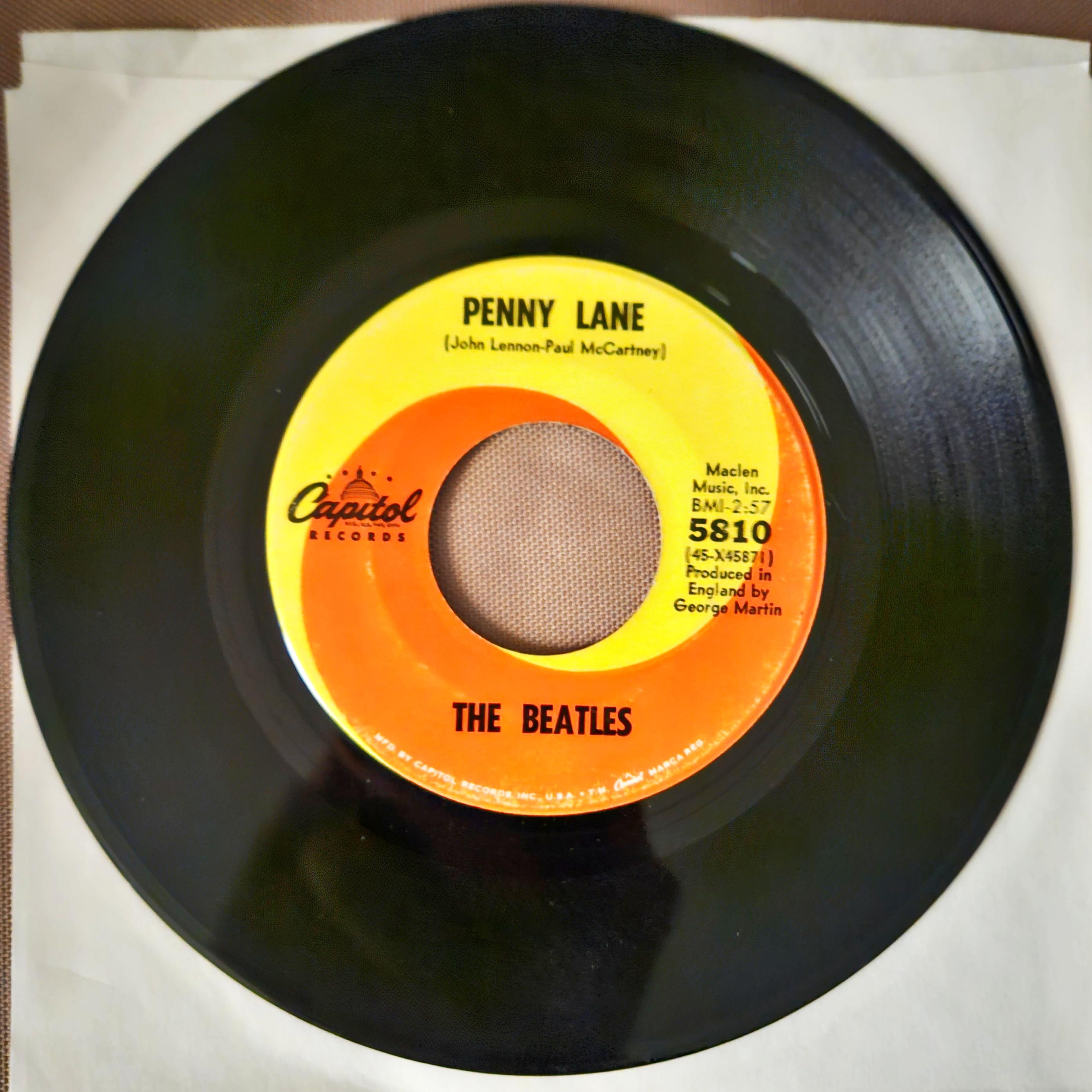
Without a doubt, the Beatles, “Penny Lane/Strawberry Fields Forever” is my #1 favorite double-A sided single from the golden age of top 40 radio.

That wraps up my countdown of what I consider to be the 5 best double-sided 45 rpm singles from the golden age of Top 40 radio. I realize that my listing of songs in this category was written from my point of view and is subjective.

If you were creating a similar register of excellent double-sided singles from the 60s and 70s, your tabulation may be totally different. What do you consider to be best preeminent double-sided hit singles in this category? There are no right or wrong answers. I welcome your thoughts.

I still love all of the double-sided singles that are in my countdown above and fondly remember hearing those songs played on the radio when I was growing up. I still cherish those singles here in 2025.  Rock on!

To subscribe to my blog via email, please click the “Follow” button in the menu above.

Standard
AT40, Broadcasting, Music, Music Countdowns, Pop Music, Radio, Retro Rock, rock, Rock Music

Exceptional Rock Hits of the 90s: Not Released as Singles

Bob Dylan wrote a song called “The Times They Are a-Changin'” in the 60s about social justice issues.  In the 90s, the same type of statement could be made about pop rock music and the radio stations playing hit songs: “The times they were a changing.”

With this edition of my musical musings, I will be counting down what I consider to be the best rock hits of the 90s that were not released as singles in the United States.  My selections are from the years 1994 through 1998.

Before getting to my countdown, I will give a brief history of Top 40 radio. Looking back to 1970, Top 40 radio played a wide variety of mass appeal hits in a variation of musical genres: pop, rock, soul, R&B, country, easy listening, and adult standards.

In the early 70s, radio station playlists featured the top-selling vinyl 45-rpm singles and airplay of the 40 biggest songs. These songs were tracked nationally by Billboard and Cash Box magazines, which both published weekly surveys of the 100 biggest hits.

When the debut American Top 40 show happened on July 4th weekend in 1970, Casey Kasem aired the 40 biggest singles on the Billboard Hot 100 (BH100) chart. Criteria for this once-a-week survey: Only songs released as a 45-rpm single were eligible for charting on the BH100.

The Billboard rule of charting only songs released as singles on their Hot 100 survey was adopted in 1958 and was maintained until being eliminated in November 1998.

From 1970 until 1991, AT40 used the BH100 chart on its national weekly broadcasts.  Then in November 1991, AT40 stopped using the BH100 chart, switching first to Billboard’s “Hot 100 Airplay” chart and then finally to the “Mainstream Top 40” Billboard survey.

Both of these later Billboard charts were based solely on radio station airplay and the songs listed could be either a single or an album track.

On the weekend of January 28, 1995, the final episode of the original AT40 was broadcast. After a 3-year gap, American Top 40 returned with the second Casey Kasem era (1998-2004).

The evolution of Top 40 radio changed tremendously during the 70s and 80s. Stations went from being located primarily on the AM dial to high quality FM signals during this time period.

During the 80s, the Top 40 radio format became known as Contemporary Hit Radio (CHR). Stations utilizing the CHR format played current and recurrent popular hits that focused mostly on pop, rock, R&B and country crossover tunes.

By the 90s, newer sub-genres of pop-rock music became popular: Hip-Hop, Electronic, Urban, Grunge, Alternative and Modern Rock. This new diversity of music caused a large number of CHR stations to narrow their focus.

Instead of playing all the current top hits from the Billboard Hot 100 singles chart, many CHR formatted stations went away from playing mass appeal hits and splintered the songs they aired into smaller playlists.

The fractioning of the CHR format by the mid 90s had multiple stations in radio markets playing fewer songs and the music they aired tended to be mostly in a specific sub-genre of pop-rock music.

There were still successful traditional mainstream CHR stations functioning in radio markets that played a wide variety of hits in the 90s. One such station was in my hometown K92 (WXLK) 92.3 Roanoke, Virginia.

Above: A K92 Roanoke aircheck of David Lee Michaels: Summer 1981.

Photo inside of the K92 Roanoke studio in the early 90s courtesy of David Lee Michaels: From Left to Right: K92 DJ Eddie Haskell, English rock singer-songwriter and musician John Waite and K92 DJ David Lee Michaels.

K92 came on the air on New Year’s Day in 1980 with a Top 40 CHR format. This mainstream CHR outlet was the top-rated number one radio station in the Lynchburg/Roanoke market starting in 1980 and remained as the most listened to station into the early 90s.

Above: A K92 Roanoke audio clip of Ellis B Feaster: Summer 1989. Courtesy of Ellis B Feaster.

A photo I took of the K92 studio building on Electric Road in Roanoke County, Virginia. February 27, 2025.

Below is a listing of “main leaning” CHR formatted stations during the 90s and the music those outlets played:

  • Mainstream/Traditional CHR
  • Adult CHR
  • Rhythmic/Dance CHR
  • Urban CHR
  • Rock CHR

All chart documentation that I have reference below came from my personal copy of, “The Billboard Book of Top 40 Hits” by Joel Whitburn (9th edition).  I consider Whitburn’s book to be the “bible” of Top 40 music history and I bought my second copy of this superb music guide a few years ago.

Whitburn’s reference guide tabulates numeric positions for all Top 40 hits on multiple Billboard charts. When my countdown is viewed below, it may be surprising to some that these songs were not released as singles but actually album tracks that became radio hits.

In addition, my countdown of radio airplay hits is entirely based on my opinions: I consider those 20 rock songs as favorites from the 90s decade. My selections are songs that I deem to be culturally, historically, aesthetically significant, meaningful or relevant.

As I do with all of my countdowns, I document tracks that I considered but fell outside my top 20 selections. These album track hits are not ranked and are placed in a random order:

  • When I Come Around—Green Day
  • Crash into Me—Dave Matthews Band
  • Hand in My Pocket—Alanis Morissette  
  • Push—Matchbox 20
  • Buddy Holly—Weezer
  • A Long December—The Counting Crows
  • What I Got—Sublime
  • Champagne Supernova—Oasis
  • Spiderwebs—No Doubt
  • Daughter—Pearl Jam
  • Takes a Little Time—Amy Grant
  • 3 AM–Matchbox 20
  • Santa Monica (Watch the World Die)—Everclear
  • If You Could Only See—Tonic
  • Standing Outside a Broken Phone Booth with Money in My Hand—Primitive Radio Gods

Without further ado, my Top 20 countdown of the best non-singles radio hits begins:

20.  Zombie—The Cranberries 1995

Peak Positions on Billboard Charts: #1 Mainstream Rock, #18 Hot 100 Airplay

The Cranberries, an Irish alternative rock band, had a world-wide smash hit with “Zombie.” Written by band member/lead singer Dolores O’Riordan, her powerful lyrics are a furious anti-terrorism lament, protesting bombs exploding in England by the Irish Republican Army that killed two children.

19.  Closing Time—Semisonic 1998

Peak Positions on Billboard Charts: #1 Mainstream Rock, #4 Hot 100 Airplay

Rock band trio from, Minneapolis, Minnesota. This ballad has multiple meanings according to Semisonic’s songwriter Dan Wilson: 1.  Imagery of bouncers yelling “closing time” and people leaving bars. 2. About childbirth, with a pun on being “bounced from the womb”. Tune was nominated for a Grammy Award (Best Rock Song).

18.  Black Hole Sun—Soundgarden 1994

Peak Positions on Billboard Charts: #1 Modern Rock (7 weeks) #9 Hot 100 Airplay

Grunge Rock band from Seattle, Washington. Penned by Soundgarden’s singer-songwriter and guitarist Chris Cornell. Signature song by the band was the number 1 biggest album track on Billboard’s Modern Rock chart in 1994.

17.  Mr. Jones—The Counting Crows 1994

Peak Positions on Billboard Charts: #1 Modern Rock, #2 Hot 100 Airplay

Breakthrough hit by San Francisco, California rock band. From the album “August and Everything After.” Received a MTV Video Music Award for “Best New Artist” category with their hit.

16.  Walking on the Sun—Smash Mouth 1997

Peak positions on Billboard Charts: #1 mainstream Rock, #2 Hot 100 Airplay

Power pop rock band from San Jose, California. Debut hit was written by Smashmouth’s Greg Camp, after learning about Rodney King as a victim of police brutality in Los Angeles, California. A catchy, infectious track.

15.  Lightning Crashes—Live. 1994

Peak Positions on Billboard Charts: #1 Modern Rock (9 weeks), #1 Rock Tracks (10 weeks), #12 Hot 100 Airplay

York, Pennsylvania alternative rock band. Primarily written by lead singer Ed Kowalczyk but is credited to all 4 members of Live. The band dedicated this hit to a mutual high school friend, 19 year old Barbara Lewis who was killed by a drunk driver in 1993.

14.  Love Will Keep Us Alive—Eagles. 1994

Peak Positions on Billboard Charts: #1 Adult Contemporary (3 weeks), #22 Hot 100 Airplay

The Southern California rock band had been on hiatus since 1980 and formally reunited in 1994. This soft rock hit introduced a new generation to Eagles music. Bassist Timothy B. Schmidt is on lead vocals with a song nominated for a Grammy Award in 1995.

13.  How Bizarre—OMC. 1996

Peak Positions on Billboard Charts: #1 Mainstream Rock, #4 Hot 100 Airplay

OMC: aka (Otara Millionaires Club) was a New Zealand band. Started as a trio, then became a duo. When “How Bizarre” reached the top spot on Billboard’s Mainstream Rock survey, ONC became the first New Zealand artist ever to reach the a number 1 position with any Billboard chart. Received a MTV Video Music Award.

12.  Good Riddance (Time of Your Life)—Green Day. 1998

Peak Positions on Billboard Charts: #7 Mainstream Rock, #11 Hot 100 Airplay

Alternative California rock band switched things up for this ballad. The track was an unusual composition for Green Day: it had sparse instrumentation. Songwriter Billie Joe Armstrong plays acoustic guitar while a string arrangement was added into the mix. It has become a classic 90s folk-rock tune.

11.  Lovefool—The Cardigans. 1997

Peak Positions on Billboard Charts: #3 Hot 100 Airplay, #4 Mainstream Rock

Swedish rock band provided a pure pop song with “Lovefool.” Written by band members Nina Persson and Peter Svensson. Musically upbeat and lyrics that are sad, bittersweet and a little quirky. Billboard rates it as the 4th best hit with their “100 Best Pop Songs of 1997” listing.

10.  Interstate Love Song—Stone Temple Pilots. 1994

Peak Positions on Billboard Charts: #1 Mainstream Rock (15 Weeks), #18 Hot 100 Airplay

San Diego Grunge rock band. Track is from the album “Purple.” Written by Stone Temple Pilots singer-songwriter Scott Weiland. The signature song by the band is considered one of the best rock hits of the 90s by many music historians.

9.    Until I Fall Away—Gin Blossoms

Peak positions on Billboard Charts: #13 Mainstream Rock, #13 Hot 100 Airplay

Throwback power pop rock band from Tempe, Arizona. Musically, Gin Blossoms’ music featured chiming guitars, superb harmonies and catchy melodies. The band achieved 3 other hit songs during the 90s decade.

8.    What Would You Say—Dave Matthews Band 1994

Peak Positions on Billboard Charts: #5 Mainstream Rock, #9 Hot 100 Airplay

The first of two Dave Matthews Band songs on my countdown. Track from the “Under the Table and Dreaming” album. This track lifted the Charlottesville, Virginia rock/jazz/jam group into national prominence. Blues Traveler member John Popper plays harmonica on this tune.

7.    Torn—Natalie Imbruglia. 1998

Peak Positions on Billboard Charts: #1 Hot 100 Airplay, #1 Mainstream Rock

Natalie Imbruglia is an Australian and British singer-songwriter and actress. “Torn” was a huge international hit. It is considered a perfect acoustic pop rock track of the 90s. It received a Grammy nomination in 1999 and won a MTV Video Music Award (Best New Artist).

6.    A Change Would Do You Good—Sheryl Crow 1997

Peak Positions on Billboard Charts: #1 Mainstream Rock, #5 Hot 100 Airplay

Singer-songwriter and musician Sheryl Crow flowed easily into multiple genres of music during her career: rock, pop, folk and country. The artist plays bass and organ on this straight up, toe-tapping rock track. Additional guitars by Jeff Trott and Todd Wolfe fill out this outstanding tune.

5.    You Oughta Know—Alanis Morissette 1995

Peak Positions on Billboard Charts: #2 Mainstream Rock, #3 Hot 100 Airplay

In the mid-90s, Canadian singer-songwriter Alanis Morissette was the queen of angst rock. The track’s hard hitting confessional lyrics about an ex-boyfriend is performed with passion. It won two Grammy Awards for “Best Rock Song” and “Best Female Rock Vocal performance.” Rolling Stone magazine rates “You Oughta Know” at #103 on their “500 Greatest Songs of All Time” listing.

4.    Ants Marching—Dave Matthews Band 1995

Peak Positions on Billboard Charts: #19 Hot 100 Airplay, #21 Mainstream Rock

Virginia’s most prominent rock band of the 20th century has their second hit on my countdown. Written by Dave Matthews, the singer-songwriter considers “Ants Marching” as the official anthem for his band. The music mix of guitar, saxophone and violin is superb on this uptempo jam.

3.    Don’t Speak—No Doubt 1996

Peak Positions on Billboard Charts: #1 Hot 100 Airplay (16 Weeks), #2 Modern Rock

No Doubt was a hybrid rock band that played a combination of pop, rock, new wave, ska and alternative musical genres. Siblings Gwen and Eric Stafani wrote “Don’t Speak” which was a breakup song. It was nominated for 2 Grammy Awards and became the signature song for the California band.

2.    One Headlight—The Wallflowers 1997

Peak positions on Billboard Charts: #1 Hot 100 Airplay, #1 Mainstream Rock, #1 Adult Album Alternative

Jakob Dylan is a co-founder, lead vocalist, guitarist, and principal songwriter of the Wallflowers. His father is the legendary music icon Bob Dylan. “One Headlight” became the first song to reach #1 on all three of Billboard’s rock charts. The track won 2 Grammy Awards: for “Best Rock Song” and “Best Rock Performance.”

1.    Iris—Goo Goo Dolls. 1998

Peak Positions on Billboard Charts: #1 Hot 100 Airplay (17 Weeks), #1 Mainstream Rock (5 Weeks)

My #1 selection is “Iris” by Goo Goo Dolls. Formed in Buffalo, New York, during 1986, the alternative rock group still is a functioning as a band here in 2025. Their 1998 track is their signature song.

“Iris” is a power ballad and was featured in the film, “City of Angels.” It received 2 Grammy nominations and in 2012 Billboard ranked the track as #1 on the chart listing “Top Pop Songs: 1992-2012.”

Anyone that listened to CHR or rock formatted radio stations in 1998, would have heard this song on a regular basis. Without a doubt, “Iris” by the Goo Goo Dolls” is my #1 greatest rock hit of the 90s not released as a single.

That wraps up my countdown of what I consider to be the best rock radio hits in the 90s not released as singles.

If you have any thoughts about CHR radio and the music played on those stations during the 90s decade, please submit your comments on this topic. I look forward reading your opinions.

As always, I appreciate everyone who reads and subscribes to DJ Dave’s Musical Musings.  I am grateful.  Rock on!

To subscribe to my blog via email, please click the “Follow” button in the menu above.

Standard
Album Review, Americana, Artist Profiles, Folk, Music, Pop Music, rock, Virginia Artists

Caleb Meyer:  Most of the Days EP: Now Released

Since I started publishing DJ Dave’s Musical Musings in 2018, I have regularly written about musical artists from a variety of musical genres who perform in the Roanoke area and throughout the state of Virginia. With this in mind, I am featuring an up-and-coming Americana folk-rock artist.

For my first music blog of 2025, I am glad to introduce to you musician and singer-songwriter Caleb Meyer.  This artist is from Roanoke, Virginia and has just released a 5-song EP called “Most of the Days.”

Meyer is a native of Roanoke and is 25 years old. Besides living in South Carolina and Colorado, Caleb has spent the majority of his life residing in Virginia.

I first met Meyer when he was a student at Hidden Valley High School in Roanoke, when his family started attending Anglican parish, Church of the Holy Spirit (CHS) where I have worshipped since 2002. I got to know Caleb well during my time as a volunteer small group leader with the CHS senior high youth group.

After Meyer graduated from Hidden Valley High School, he studied audio engineering and music business from 2018 to 2022. After beginning his professional career in Colorado, Caleb moved back to Roanoke and started utilizing his audio engineering skills.

I recently spoke with Church of the Holy Spirit (CHS) Chief of Staff Tim Henderson, and he told me that Meyer was hired to work in the CHS Audio/Visual department in 2022. Caleb has flourished with various duties such as audio engineering and heading up live streaming of church services over the past 3 years.

Quigg Lawrence, CHS Senior Pastor and Bishop in the Anglican Church says “Caleb is like a Swiss army knife, and functions well with any task he is assigned within the CHS worship arts ministry.”

All of the professional skills Meyer has gained over the past few years have been beneficial to his budding singing career. Caleb has amassed audio equipment and uses it to mix and master recordings of his own music inside the comfort of his own home.

 Meyer can also freelance and produce music for other local Roanoke artists at his home studio. With the growing music scene in the Roanoke Valley, Caleb is hoping to tap into recording, mixing and mastering music by fellow Virginia singers and musicians.

Since 2022, Meyer has a history working with Nashville record producer and engineer Evan Sieling, world-renowned instrumentalist Scott Mulvahill, and Artimus Pyle of Lynyrd Skynyrd. Some of Caleb’s professional sound credits are listed below:

  • A Robin Built a Nest on Daddy’s Grave–Bent Mountain
  • Say You’re Gone–Luke Lively
  • Mushroom Song–Landon Carder
  • Most of the Days–Caleb Meyer
  • Peaks–Brenidy O’Dea

The outstanding audio engineering skills of Meyer were evident as I listened to Caleb’s new EP called “Most of the Days.”   It is impressive that Meyer wrote lyrics to all of the songs, sings on every track, played acoustic guitar, then mixed, and produced this EP himself. Credit goes to Evan Sieling for mastering the 5 songs.

Released on December 23, 2024, “Most of the Days” does have input from some fellow Roanoke area musicians. These guys play a variety of instruments which gives the album a full, rich sound. Acoustic guitar was handled by Meyer on the EP.

Below are the names of the 5 tracks on “Most of the Days” by Caleb + Co.

  • Hard to Say
  • Convicted (Estranged)
  • I Might Understand
  • Suffer Well
  • Coming Through

As I listened to the tracks on Caleb’s “Most of the Days” EP for the first time, I realized the tracks were an outstanding mix of musical genres:  Rock, Pop, Folk and Americana.  To hear Meyer’s music, you can access via these sites: YouTube, Apple Music, Amazon and Spotify.

Just after New Year’s Day 2025, I met Caleb at Mill Mountain Coffee in downtown Roanoke to discuss his new EP and glean information for this blog article. During our time together, Meyer shared with me about his music career, producing songs for other artists and his desire to one day create a recording studio in Roanoke.

After my interview with Meyer, I emailed him a list of questions about on his music career and life experience highlights. Caleb’s responses to my questions are found below:

DJ Dave: At what age did you start having aspirations of becoming a singer-songwriter, musician and recording artist? Briefly describe how you came about your decision to be in the music industry.

Caleb: When I was 6 years old, I wrote my first song called “Burn the Idols”. As bad as that song was (and it was BAD), it was the start of a great passion for me. Soon after writing the lyrics, my parents got me a guitar so I could start putting some music to it. My dad taught me my first few chords on guitar, and I went on to continue to teach myself from there.

 DJ Dave: Now as a musician and singer-songwriter, how do you classify the type of music that you perform? Why have you selected the multiple musical genres you sing and record?

 Caleb: I call my own style folk-rock and/or alternative. I have a pretty eclectic music taste, and that shows in my writing. That is probably why I am comfortable working in so many different genres, but some genres I am definitely more comfortable in than others. Bands like Mumford and Sons and The Lumineers were big inspirations for me, as well as artists like Ed Sheeran and Jon Bellion.

 DJ Dave: When writing new songs, do you have a particular type of subject matter you prefer or do you pen a variety of topics with your compositions?

 Caleb: It is more difficult for me to write happy songs, but I still try to incorporate a sense of hope into all my songs. Most of my lyrics have a bittersweet tone to them. The theme of this EP specifically could be described as “learning and growing from pain and past mistakes”.

On a surface level, this EP was inspired by a breakup. But if you listen to the lyrics, the content goes much deeper than that.

DJ Dave: Being an indie artist, you write, sing, record, produce, mix and master your own songs. Can you describe the process of totally creating new music?

Caleb: Whether it’s one of my own songs or a song for a production client, the process always starts as a demo or voice memo recording. From there, I normally start to develop a vision for the instrumentation and structure I want the song to have.

Next, I will record whatever instrument that will act as the backbone of the song first. For my own music, this is often acoustic guitar. After that, I will record a scratch track of the lead vocal so I can start building the rest of the instrumentation around it.

Once this is complete, I will go back and record the final vocals and put any final touches on the sound design. Once the instrumental and vocals are in a good place, it’s time to mix and master!

 DJ Dave: On your recently released “Most of the Days” EP, who are the musicians that accompanied you and what instruments did they play on your latest project?

Caleb:    EP Personnel:

  • Parker Brown: Keys
  • Ayden Young: Banjo and double bass
  • Nathan Folta: Violin
  • Taylor Folta: Cajon
  • Caleb Meyer: Guitar and vocals

Dj Dave:  In the summer of 2025, you shared with me that you are planning to perform some live gigs with some fellow musicians in the Roanoke Valley. What types of venues are you playing this summer?

 Caleb: The possible gigs I’ve got lined up for the band are backyard concerts that my friends will host. Intimate venues with close friends, and whoever else is wants to come. I will likely have a few gigs at restaurants and breweries in the Roanoke area as well, but those come up sporadically. I will be posting about any upcoming events on my Facebook page.

Looking ahead to the future, Meyer has a couple of goals in relation to his own songs, as well as recording other Roanoke Valley/Southwest Virginia artist’s music.

  • His short-term goal is working towards creating a recording studio with sound equipment inside of a mobile trailer. Meyer could then record local Roanoke artists, plus expand his services to Central and Southwestern Virginia.
  • A long-term goal that Meyer has is to create a free-standing building to house a commercial recording studio in Roanoke by the year 2030. This would allow musical artists from all across the Mid-Atlantic region to utilize this type of facility.

The official Caleb Meyer Blue Ridge Fellows photo. Courtesy Caroline Crawford.

One take away I received from my time speaking with Meyer is his desire to be a positive Christian witness with every aspect with his music and audio engineering duties.  Colossians 3:23 (English Standard Version) sums up Caleb’s belief: “Whatever you do, work heartily, as for the Lord and not for men.”

As a Christian myself, I appreciated learning about Meyer’s dedication to rely on faith in his interactions with others. His aspiration to follow biblical teachings is encouraging to me. Without a doubt, I feel that Meyer is heading in a positive direction.

Obviously, no one knows what the future will hold. I look forward seeing how Meyer’s musical career blossoms and his desire to create recording studio opportunities for other artists in the next few years. Caleb’s future looks promising and bright here in Roanoke.  Rock on!

To subscribe to my blog via email, please click the “Follow” button in the menu above.

Standard