Broadcasting, Music, Music Countdowns, Pop Music, Radio, Retro Rock, Rock Music, Top 40 Radio, Woodstock

20 Excellent Songs and Memorable Albums of 1969

A couple of months ago, I had a musical conversation with my daughter Amy. As a result of our discussion, I came up with this month’s article: I will highlight 20 superb tracks from 20 memorable albums that were released during the year of 1969.

This message will be song driven instead of being album oriented. I will be counting down what I consider to be the best song that is found on each of the 1969 released studio albums that I have selected.

Here is the process that I used in selecting the albums for this article: an album had to be released between January 1 and December 31, 1969. That excludes albums released late in 1968, even though the LP may have been popular during the first few months of 1969.

Once I selected the 20 albums released in 1969, I picked my favorite track on each of those LPs. Of those songs, I have ranked the 20 tracks for the countdown with the #1 selection being my favorite song of the bunch.

The other main criteria that I used for this exercise: I picked only studio albums in my selection of 1969 LPs. That means I did not include any live recordings, greatest hits, compilation or soundtracks albums for this countdown.

While the 20 albums I list in the article are not ranked as part of the countdown, the number 1 top track is also found on my favorite studio album from 1969.

All of the albums and tracks on my countdown are from popular artists and bands that I liked in 1969 and I still enjoy listening to 56 years later. Before I begin listing the 20 albums and tracks, below are various albums that are all good to excellent LPs but didn’t qualify for inclusion into the countdown.

First is a list of top live and/or soundtrack albums of 1969 that aren’t eligible for the 20 tracks and LP countdown:

  • Captured Live at the Forum–Three Dog Night
  • At San Quentin–Johnny Cash
  • Yellow Submarine Songtrack–The Beatles
  • Goodbye–Cream

Next are top-selling albums at the beginning of 1969 but released in 1968. Thus, these selections weren’t eligible for the 20 tracks and LPs countdown:

  • The Beatle–The Beatles: AKA: “The White Album”
  • In-A-Gadda-Da-Vida–Iron Butterfly
  • Wichita Lineman–Glen Campbell
  • Cheap Thrills–Big Brother and the Holding Company
  • Crimson and Clover–Tommy James & the Shondells
  • Blood Sweat & Tears–Blood Sweat and Tears
  • Hair (Original Broadway Cast Recording)
  • Diana Ross & the Supremes Join the Temptations

One other outstanding album of 1969 was by Blind Faith. This supergroup consisted of Eric Clapton, Steve Winwood, Ginger Baker and Ric Grech, This band broke up soon after recording their highly-rated, self-titled debut album.

Without further ado, my best 20 albums and tracks of 1969 countdown begins:

20.   Bob Dylan: Song: “Lay Lady Lay” 

 Album: “Nashville Skyline” Released 4/9/69 

My second favorite track: “Girl from the North Country” (duet with Johnny Cash).

Bob Dylan launched a foray into country music with this album. “Lay Lady Lay” was the first top 10 hit on Billboard Hot 100 for Dylan in 3 years: Since “Rainy Day Women #12 & 35” in 1966.

19.   The 5th Dimension: Song: “Aquarius (Let the Sunshine In)”  

Album: “The Age of Aquarius” Released 5/69 

My second favorite track: “Workin’ on a Groovy Thing”

Was biggest selling album for the pop soul vocal group. The “Aquarius” single is a medley of two songs, a cover that was originally performed in the Broadway rock musical “Hair.” The track won two Grammy Awards in 1970.

18.    Santana:  Album: Song: “Evil Ways” 

Album: “Santana” Released 8/22/69 

My second favorite track: “Soul Sacrifice”

Debut album by Latin rock band that played at Woodstock in August 1969.  “Evil Ways” was the second single released on LP and reached #9 on the Billboard Hot 100 in the spring of 1970.

17.    The Band:  Album: Song: “Up on Cripple Creek” 

Album: “The Band” Released 9/22/69  

My second favorite track: “The Night They Drove Old Dixie Down

Also known as the “Brown Album.” Released just over a month after the Band played at Woodstock (August ’69). “Up on Cripple Creek” is a combination of pop, rock, country and bluegrass. Peaked at #25 in the winter of 1970 on the Billboard Hot 100.

16.     Dusty Springfield:  Song: “Son of a Preacher Man”  

Album: “Dusty in Memphis” Released 3/31/69  

My second favorite track: “The Windmills of Your Mind”

In 2020, album was inducted into Library of Congress for preservation in the National Recording Registry.  “Son of a Preacher Man” features outstanding blue-eyed soul vocals as Springfield was one of the most underrated women singers from the mid to late 60s.

15.     The Guess Who: Song: “Undun”  

Album: “Canned Wheat” Released 9/69  

My second favorite track: “No Time”

The popular Canadian band released their 2nd studio album in 1969. Originally a B-side of the “Laughing” 45-rpm single, “Undun” became a hit in its own right. This tune is considered a jazz-rock gem with superb guitar and excellent flute solo.

14.     The Rolling Stones: Song: “Gimme Shelter”   

Album: “Let It Bleed” Released 11/28/69  

My second favorite track: “You Can’t Always Get What You Want.”

The “Let It Bleed” album is ranked as one of the best LPs by the British band. It features prominent guest vocals by American singer Merry Clayton. Rolling Stone magazine ranks “Gimmie Shelter” at #13 on their countdown with the “500 Greatest Songs of All Time” list.

13.     Creedence Clearwater Revival: Song: “Born on the Bayou”  

Album: “Bayou Country” 1/15/69 

My second favorite track: “Proud Mary”

The first of 3 CCR albums released in 1969.  “Born on the Bayou” was written by John Fogerty. Some music historians consider the song “swamp rock.”  I say, “It’s only rock and roll but I like it.”

12.     Led Zeppelin: Song: “Whole Lotta Love”  

Album: “Led Zeppelin II” Released 10/22/69  

My second favorite track: “Ramble On”

“Led Zeppelin II” has a hard-driving, blues-based rock sound. Truly, “Whole Lotta Love” is a psychedelic masterpiece. Jimmy Page created one of the greatest guitar riffs of the 20th century on this song.

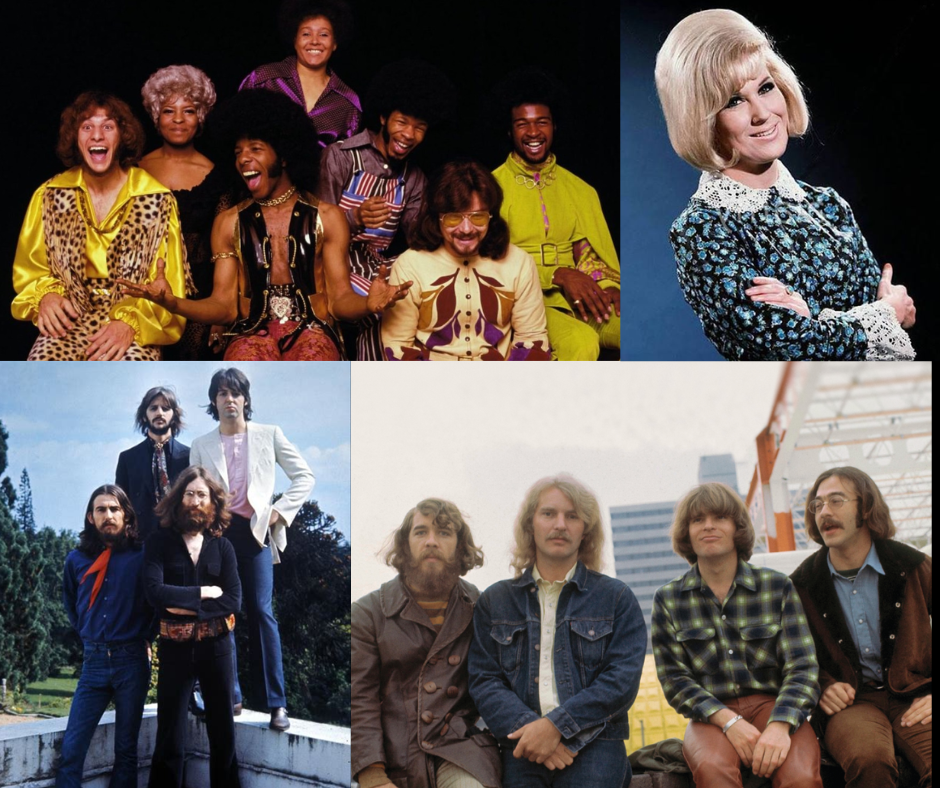
11.     Sly & the Family Stone: Song: “Stand!”  

Album: “Stand!” Released 5/3/69  

My second favorite track: “Everyday People”

Sly & the Family Stone’s “Stand!” album was inducted into the Grammy Hall of Fame in 2015.  The lyrics for the R&B/Funk track are affirmative. The band played this anthem at Woodstock during August 1969.

10.     Chicago: Song: “Beginnings”  

Album: “Chicago Transit Authority” Released 4/28/69  

My second favorite track: “Does Anybody Really Know What Time It Is?”

The debut album by Chicago is my second favorite by this band. “Beginnings” is almost 8-minutes long on “CTA” and is an early example of progressive rock. Lyrics were written by Robert Lamm.

9.       Creedence Clearwater Revival:  Song: “Green River”  

Album: “Green River” Released 8/7/69  

My second favorite track: “Bad Moon Rising”

This CCR album was released just over a week before the band played at Woodstock. John Fogerty’s guitar riff on this tune is superb. The “Green River” single is my favorite CCR track that played on top 40 radio back in the summer of ’69.

8.       Neil Young: Album: Song: “Cinnamon Girl”   

“Everybody Knows This is Nowhere” Released 5/14/69  

My second favorite track: “Down by the River”

Neil Young recorded his album just a few months before joining the Crosby Stills & Nash band. “Cinnamon Girl” has a dominant guitar riff and is a distinguished power pop tune. It is my second favorite solo song by the artist born in Canada.

7.      The Who: Song: “I’m Free”  

Album “Tommy” Released 5/19/69  

My second favorite track: “See Me, Feel Me”

Pete Townshend of the Who created a ground breaking album with the rock opera “Tommy.” “I’m Free” is one of my favorite singles played on top 40 radio in the summer of 1969. The British band also performed the song during Woodstock almost 57 years ago.

6.      The Doors: Song: “Touch Me”  

Album: “The Soft Parade” Released 7/18/69  

My second favorite track: “Tell All the People”

The Doors 4th studio album gave the band in new direction by incorporating brass and string arrangements. “Touch Me” features a smoking hot saxophone solo by Curtis Amy. I rate this single written by Robby Kreiger as the #1 best song recorded by the 1993 Rock & Roll Hall of Fame band.

5.      The Rascals: Song: “People Got to Be Free” 

Album: “Freedom Suite” Released 3/17/69  

My second favorite track: “A Ray of Hope”

Released as a double album, “Freedom Suite” was a concept LP. “People Got to Be Free” lyrics were inspired by the 1968 assassination of Martin Luther King, Jr. I rate this song as the 4th best protest and social justice anthem from the 60s and 70s.

4.       Three Dog Night: Song: “Easy to Be Hard”  

“Suitable for Framing” Released 6/11/69 

My second favorite track: “Eli’s Coming”

The first of two superb albums by Three Dog Night during 1969 (“Captured Live at the Forum” 2nd LP). “Easy to Be Hard” is a cover of a song from the Broadway rock musical “Hair.” Features powerful lead vocals by Chuck Negron.

3.      Creedence Clearwater Revival: Song: “Fortunate Son” 

Album: “Willy and the Poor Boys” Released 10/29/69  

My second favorite track: “Down on the Corner”

This was CCR’s third studio album released in 1969. John Fogerty’s signature song is my favorite CCR tune of all-time.  I rate “Fortunate Son” as the #1 best protest and social justice anthem from the 60s & 70s.

2.       Crosby Stills & Nash: Song: “Suite: Judy Blue Eyes”  

 Album: “Crosby Stills & Nash” Released 5/29/69  

My second favorite track: “Marrakesh Express”

Debut self-titled CS&N was inducted into the Grammy Hall of Fame in 1999. Stephen Stills wrote this song about singer-songwriter and girlfriend at the time Judy Collins. “Suite: Judy Blue Eyes” has four distinct sections. Harmonies by David Crosby and Graham Nash are outstanding on this acoustic jewel.

1.     The Beatles: Song: “Here Comes the Sun”  

Album: “Abbey Road” Released 10/1/69  

My second favorite track: “Something”

“Abbey Road” is my favorite studio album of 1969 and “Here Comes the Sun” is among my top Beatles songs ever recorded by the British band. The Fab Four were my favorite rock band 57 years ago.

Written and sung by guitarist George Harrison, this “Abbey Road” track is a cheerful pop song. Along with exceptional guitar playing by Harrison, the tune also employs violas, cellos, piccolos, flutes and clarinets. This gives the tune a classical feel.

An all Abbey Road photo. I am wearing a Beatles t-shirt and holding a vinyl record album, with my mostly Bluetick Coonhound named Abbey Road.

 During the 21st century, Harrison’s track is the most streamed Beatles song on Spotify and other online music platforms around the world.  Folks of all ages love the positive, encouraging message of this song. 

Without a doubt, “Here Comes the Sun” from the Beatles “Abbey Road” album is my #1 best song and memorable LP from 1969.

That wraps up my musical musings on the topic of best 1969 tracks and studio albums. The listing of songs and LPs was written totally from my own point of view and is subjective.

If you were creating a similar register of excellent 1969 tracks and studio albums, your tabulation may be totally different. What do you consider to be best songs and studio albums released during 1969?

I still love, cherish and fondly remember all of the 1969 tracks and albums that I listed above. Listening to the music from 57 years ago is still special to me. Rock on!

To subscribe to my blog via email, please click the “Follow” button in the menu above.

Standard
Broadcasting, Music, Music Countdowns, Pop Music, Radio, Retro Rock, rock, Rock Music

Favorite Double-Sided 45-RPM Radio Hits of the 60s and 70s

Did you ever wonder why some artists had two hits from the same 45-rpm single during the golden age of top 40 radio?  With this edition of my musical musings, I will be counting down what I consider to be some of the best two-sided radio hits from the 60s and 70s.

The first 7-inch, 45-rpm vinyl record, a format that became known as a “single,” was released by RCA Victor in March 1949. Creation of the 45-rpm single helped to change music forever.

In simple terms, record companies labeled their singles with an A-side and a B-side. Generally, songs that record labels wanted to promote as possible hits received an A-side designation while the B-side traditionally was not considered “hit material” by a record company.

It is interesting that sometimes the A-side of a single flopped while the B-side actually became a major hit record. “Na Na Hey Hey Kiss Him Goodbye” by Steam is an excellent example of the B-side of a single actually became a #1 hit while the A-side (“Sweet Laura Lee”) never charted.

Other outliers in this category:  Occasionally, the A-side of a single becomes a hit but the B-side doesn’t initially chart.  Eventually, the original B-side is re-released as an A-side single and then becomes a hit. “Another Park, Another Sunday” and “Black Water” by the Doobie Brothers are a perfect example of this phenomenon.

Some record companies regularly promoted what is known as a Double-A Single, in which both sides of the 45-rpm record were of equal importance with regard to promotion.  Most of the time, record companies released a Double-A single from an established music artist.

In the 50s and early 60s, Elvis Presley was the king of double-sided hit singles. According to Billboard magazine, Presley achieved 39 singles where both sides reached the Billboard Hot 100 chart.

Then in the 60s, the Beatles charted 24 two-sided hits while Creedence Clearwater Revival had 7 double-sided radio hits from 1969 through 1971.

For the remainder of this message, I will be counting down what I consider to be the 5 best double-sided radio hits from the golden age of top 40 radio. 

In researching historical musical data for this article, I used “The Billboard Book of Top 40 Hits” by Joel Whitburn.  I consider Whitburn’s book to be the “bible” of Top 40 music history and I bought a second copy of this superb music guide a few years ago.

The criteria that I used for my countdown of double-sided 45-rpm singles hits:

  • Only top 40 hits in the United States from 1965 to 1975.
  • Both sides of a 45-rpm vinyl single must have charted #40 or higher on the Billboard Hot 100 chart.
  • Both sides of a 45-rpm charted #40 or higher within 6 months of the first song becoming a hit.

My countdown of the top 5 double-sided 45-rpm hits is based entirely on my opinions, songs that I consider to be my favorites. These are selections that I deem to be culturally, historically, aesthetically significant, meaningful or relevant.

Obviously, there are many more excellent double-sided hits from the golden age of top 40 radio that fell outside of my top 5 countdown. My selections below are not ranked and placed in a random order:

  • Question 67 & 68 & I’m a Man—Chicago
  • The House That Jack Built & I Say a Little Prayer—Aretha Franklin
  • All You Need is Love & Baby You’re a Rich Man—The Beatles.
  •  Up Around the Bend & Run Through the Jungle—Creedence Clearwater Revival
  •  Junior’s Farm & Sally G—Paul McCartney
  •  Pleasant Valley Sunday & Words—The Monkees
  •  Atlantis & To Susan on the West Coast Waiting—Donovan
  • There’s a Kind of Hush & No Milk Today—Herman’s Hermits
  • Green River & Commotion—Creedence Clearwater Revival
  • Get Back & Don’t Let me Down—The Beatles
  • Calypso & I’m Sorry—John Denver
  • Lookin’ Out My Back Door & Long As I Can See the Light—Creedence Clearwater Revival
  • (Sweet Baby Baby) Since You’ve Been Gone & Ain’t No Way—Aretha Franklin
  • Thank You (Falettinme Be Mice Elf Agin) & Everybody is a Star—Sly & the Family Stone
  • I’m a Believer & (I’m Not Your) Steppin’ Stone—The Monkees
  • My Sweet Lord & Isn’t It a Pity—George Harrison
  •  It’s Too Late & I Feel the Earth Move—Carole King
  • Have You Ever Seen the Rain & Hey Tonight—Creedence Clearwater Revival
  • Colour My World & Beginnings—Chicago
  • Laughing & Undun—The Guess Who
  • Paperback Writer & Rain—The Beatles
  • Who’ll Stop the Rain & Travelin’ Band—Creedence Clearwater Revival
  • Maggie May & Reason to Believe—Rod Stewart
  • So Far Away & Smackwater Jack—Carole King
  • Something & Come Together—The Beatles
  • Bad Moon Rising & Lodi—Creedence Clearwater Revival

Without further ado, my countdown of the best double-sided 45-rpm radio hits begins:

5.    Hey Jude & Revolution—The Beatles:  1968

Peak Positions on Billboard Hot 100

  • Hey Jude:  #1
  • Revolution #12

Both songs were first placed on the “Hey Jude” (original title: The Beatles Again) album, which is a collection of non-album singles and B-sides by the Beatles. Released February 1970.

These songs were recorded during the Beatles “White Album” sessions but left off the 30-track double LP (November 1968).  This Double-A sided 45-rpm single became the first Beatles’ recordings that were released on Apple Records by the band.

  • Revolution:  Co-written/credited as a John Lennon & Paul McCartney song.  It was primarily written by Lennon.

Lyrics for “Revolution” came about as some anti-war moment members were calling out for violence to achieve their goals.  Lennon, being a peace activist, believed in non-violent methods to promote peaceful transitions.

The Beatles rocked with a message of social change on this hard driving tune. I rate “Revolution” as the 8th best protest and social justice anthem from the 60s and 70s.

  • Hey Jude: Co-written/credited as a John Lennon & Paul McCartney song. It was primarily written by McCartney.

One of the signature songs for British band.  “Hey Jude” spent 9 weeks at the top of Billboard’s singles chart and is ranked as the #1 song of 1968. It also was Billboard’s biggest charting single of the 60s decade.

The Beatles successful song has been inducted into the Grammy Hall of Fame, the Rock and Roll Hall of Fame and National Academy of Recording Arts & Sciences Grammy Hall of Fame. Without a doubt, this track remains one of the Fab Four’s most enduring singles.

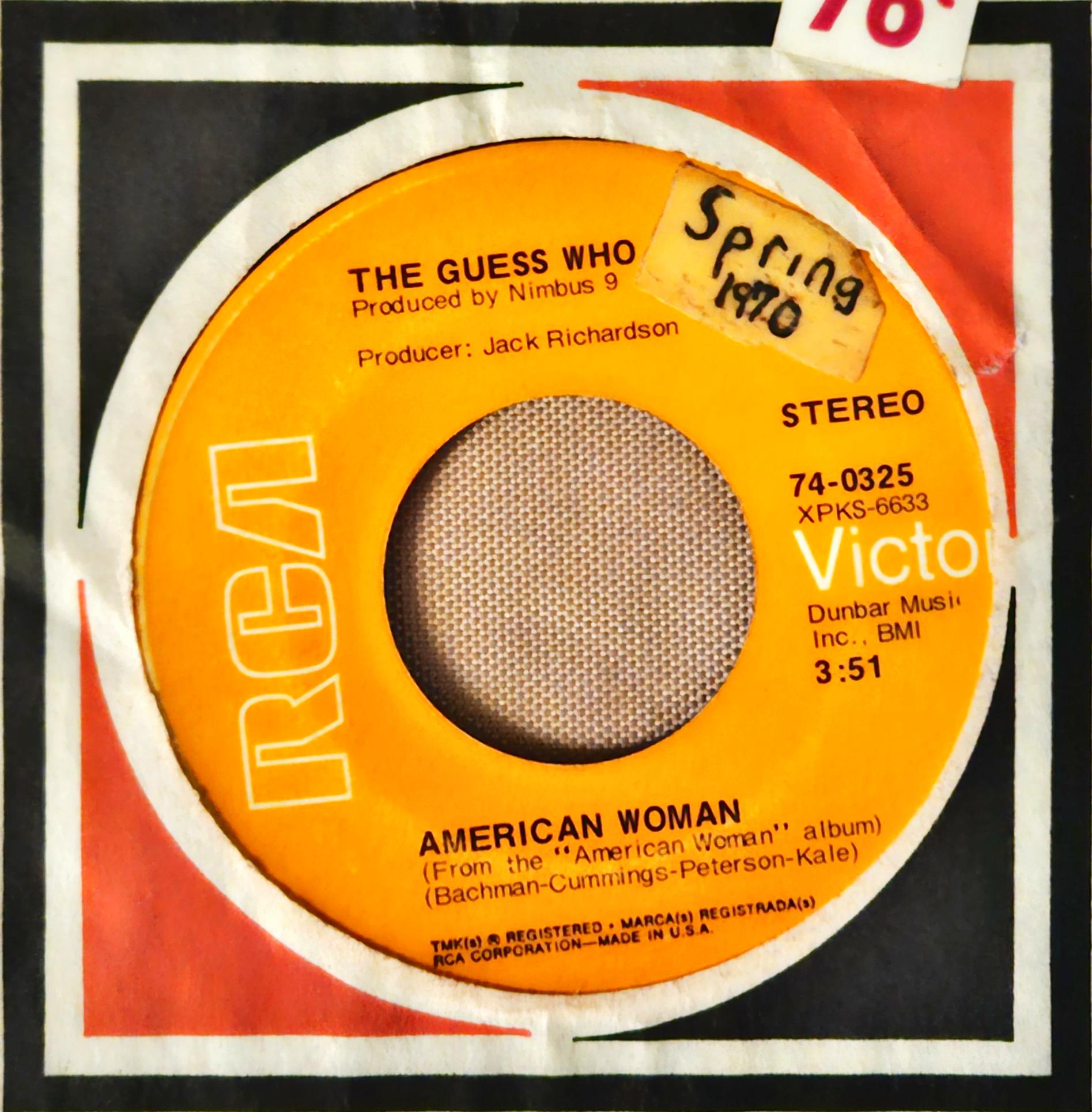
4.    American Woman & No Sugar Tonight—The Guess Who:  1970

Peak Position on Billboard Hot 100:  Both songs reached #1

These songs are found on the “American Woman” album. Released January 1970.

  • No Sugar Tonight

Released as the B-side. “No Sugar Tonight” is a stand-alone track on the 45-rpm single. However, the song is actually part of the “No Sugar Tonight/New Mother Nature” medley that is found on the Guess Who’s “American Woman” album.

Co-written by Burton Cummings and Randy Bachman. Classic rock and classic hits radio stations do not separate the “No Sugar Tonight/New Mother Nature” medley in 2025 like top 40 stations did back in 1970.

  • American Woman

Co-written by Burton Cummings, Garry Peterson, Jim Kale & Randy Bachman: According to Billboard, it was the third biggest Song of 1970 and the most popular track in the U.S. by the Canadian band.

Randy Bachman of the Guess Who stated in 2014 that “American Woman” was an anti-war protest song against the Vietnam conflict from a Canadian point of view. Of course, lyrics can also be interpreted literally as guys from Canada not wanting anything to do with women from the U.S.

3.    Wouldn’t It Be Nice & God Only Knows—The Beach Boys:  1966

Peak Positions on the Billboard Hot 100

  • Wouldn’t It Be Nice: #8
  • God Only Knows: #39

Both songs from the “Pet Sounds” album. Released May 1966

  • God Only Knows

Issued as the B-side. Co-written by Brian Wilson and Tony Asher. Like many of the songs on the Beach Boys “Pet Sounds” album, around 20 session musicians played on this orchestral masterpiece. Single is in the sub-genre Baroque pop classification.

“God Only Knows” is renowned for its beautiful harmonic structure and innovative complexity. Rolling Stone magazine ranks it at number 11 on their “500 Greatest Songs of All Time” listing and Paul McCartney proclaims the Beach Boys single to be the greatest song ever written.

  • Wouldn’t It Be Nice

 Co-written by Brian Wilson, Tony Asher & Mike Love. Wilson produced this classic “Sunshine Pop” song himself by using the “Wall of Sound” production technique, with 18 different instruments played on the track.  The Beach Boys single is considered ground-breaking and influential for future sub-genres of rock music: Power pop and progressive pop.

This track is superb and has a melodic tune and excellent vocal harmonies. Pitchfork ranks Wilson’s gem at number 7 on their “200 Best Songs of the 1960s” listing.  Without any doubt, “Wouldn’t It Be Nice” is my favorite number one, “Sunshine Pop” song of the 60s.

2.    Fortunate Son & Down on the Corner—Creedence Clearwater Revival:  1969

Peak Position on the Billboard Hot 100: Both songs reached #3.

From the “Willie & the Poor Boys” album. Released October 1969

  • Down on the Corner

Produced and written by John Fogerty.  The tune on this ditty contains a calypso beat and is a feel-good story about Willy and the Poor Boys, a fictional jug band who were street musicians. The song makes reference to a harmonica, washboard, a kazoo, a Kalamazoo guitar, and a gut bass.

Initially, “Down on the Corner” was the B-side of the CCR single. It quickly became just as popular as the A-side “Fortunate Son” song. The band came up with the name “Willie and the Poor Boys” for their 1969 album, from the lyrics to this “swamp rock” classic song.

  • Fortunate Son

Written by John Fogerty. Released in September 1969 during the peak period of American involvement in the Vietnam War, this ode quickly became an anti-war movement anthem and is considered a signature song for its author, singer-songwriter Fogerty.

The former CCR front man recently explained with a post on X, “Fortunate Son is a song I wrote during the Vietnam War, inspired by the stark contrast between those who were drafted to fight and die for their country and those who had the privilege to avoid the draft because of their wealth and connections.”

“Fortunate Son” is my favorite John Fogerty/CCR track of all-time and I rate it as the #1 best protest and social justice song of the 60s and 70s.

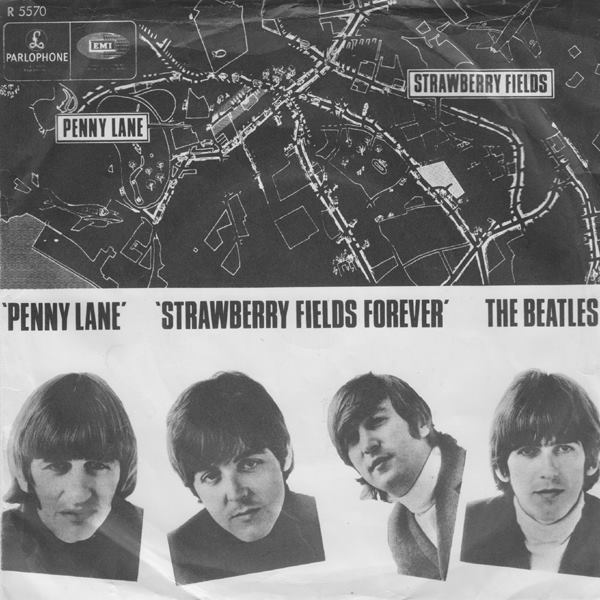
  1. Penny Lane & Strawberry Fields Forever—The Beatles:  1967

Peak Positions on Billboard Hot 100

  • Penny Lane #1
  • Strawberry Fields Forever:  #8

Both songs were placed on the “Magical Mystery Tour” (MMT) album which was divided into separate song categories:  Side 1: Soundtrack songs from “MMT” and Side 2:  Tracks from the 1967 Beatles’ non-album singles.

These songs were recorded during the “Sgt. Pepper’s Lonely Hearts Club Band” sessions but left off that 13-track album (Summer of Love 1967).

  • Strawberry Fields Forever
  • Co-written/credited as a John Lennon & Paul McCartney song.  It was primarily written by Lennon.

Double-A sided hit. John Lennon based the song on his childhood memories of playing in the garden of Strawberry Field, a Salvation Army children’s home in Liverpool, England. Musically, the sound on this song had a much different feel than any other Beatles singles released before 1967.

Strawberry Fields Gate: Liverpool, England. Photo courtesy of Dave Delaney

With a psychedelic rock sound, “Strawberry Fields Forever” was ground breaking. Beatles producer George Martin utilized diverse recording techniques such as reverse-recorded instrumentation, Mellotron flute sounds, an Indian Swarmandal (or harp), a fade-out/fade-in coda, as well as a cello and brass arrangement.

The combination of musical instruments, studio space-age sound effects and Lennon’s vocals, helped to make “Strawberry Fields Forever” a landmark recording in the psychedelic pop rock genre of music. Rolling Stone magazine ranks at #7 on their “500 Greatest Songs of All Time” list.

  • Penny Lane
  • Co-written/credited as a John Lennon & Paul McCartney song. It was primarily written by McCartney.

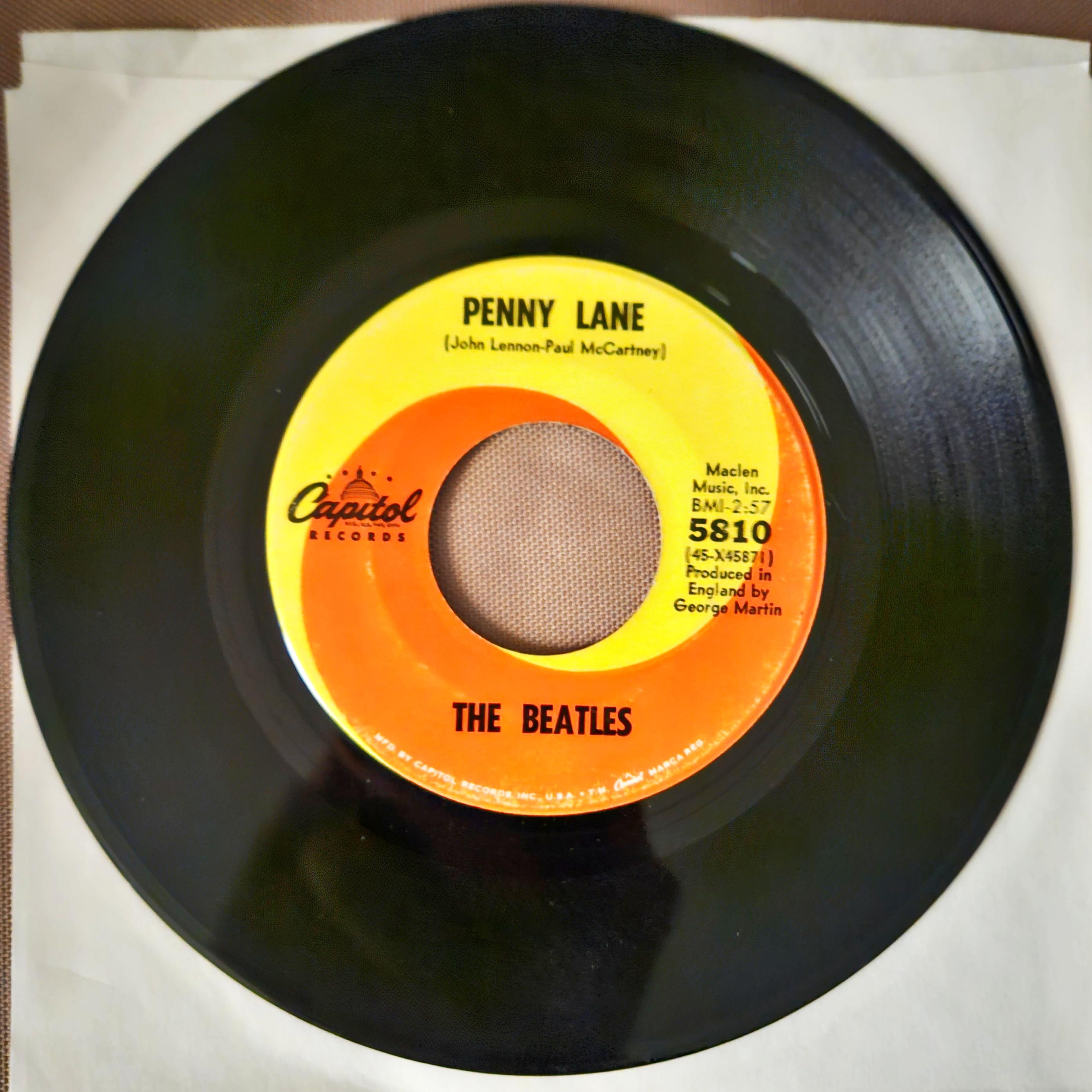
I rate “Penny Lane” as my second favorite Beatles song of all-time. The lyrics of the single refer to a street in Liverpool, and make mention of the sights and characters that Paul McCartney recalled from his upbringing in the city. 

Just like the song “Strawberry Fields Forever”, the Beatles became avant-garde pop rock composers and broke new ground with instrumentation with the recording of “Penny Lane.”  Music historians declare that the single is a cross between progressive and Baroque pop. The song was inducted into the Grammy Hall of Fame in 2011.

McCartney’s ode uses many instruments not associated with most Beatles songs: flutes, piccolos, oboes, trumpets and a flugelhorn.  It became the 13th Beatles single to peak at #1 on the Billboard Hot 100 during March 1967.

When I discovered Top 40 radio on WROV Roanoke in early 1967, the first song that I remember liking was “Penny Lane.”  Sometime in the spring of that year, I went to Sears and bought a 45-rpm single of my favorite Beatles song. It was the first vinyl record that I bought with my own money and still own it here in 2025.

Without a doubt, the Beatles, “Penny Lane/Strawberry Fields Forever” is my #1 favorite double-A sided single from the golden age of top 40 radio.

That wraps up my countdown of what I consider to be the 5 best double-sided 45 rpm singles from the golden age of Top 40 radio. I realize that my listing of songs in this category was written from my point of view and is subjective.

If you were creating a similar register of excellent double-sided singles from the 60s and 70s, your tabulation may be totally different. What do you consider to be best preeminent double-sided hit singles in this category? There are no right or wrong answers. I welcome your thoughts.

I still love all of the double-sided singles that are in my countdown above and fondly remember hearing those songs played on the radio when I was growing up. I still cherish those singles here in 2025.  Rock on!

To subscribe to my blog via email, please click the “Follow” button in the menu above.

Standard