AT40, Broadcasting, Music, Music Countdowns, Pop Music, Radio, Retro Rock, rock, Rock Music

Exceptional Rock Hits of the 90s: Not Released as Singles

Bob Dylan wrote a song called “The Times They Are a-Changin'” in the 60s about social justice issues.  In the 90s, the same type of statement could be made about pop rock music and the radio stations playing hit songs: “The times they were a changing.”

With this edition of my musical musings, I will be counting down what I consider to be the best rock hits of the 90s that were not released as singles in the United States.  My selections are from the years 1994 through 1998.

Before getting to my countdown, I will give a brief history of Top 40 radio. Looking back to 1970, Top 40 radio played a wide variety of mass appeal hits in a variation of musical genres: pop, rock, soul, R&B, country, easy listening, and adult standards.

In the early 70s, radio station playlists featured the top-selling vinyl 45-rpm singles and airplay of the 40 biggest songs. These songs were tracked nationally by Billboard and Cash Box magazines, which both published weekly surveys of the 100 biggest hits.

When the debut American Top 40 show happened on July 4th weekend in 1970, Casey Kasem aired the 40 biggest singles on the Billboard Hot 100 (BH100) chart. Criteria for this once-a-week survey: Only songs released as a 45-rpm single were eligible for charting on the BH100.

The Billboard rule of charting only songs released as singles on their Hot 100 survey was adopted in 1958 and was maintained until being eliminated in November 1998.

From 1970 until 1991, AT40 used the BH100 chart on its national weekly broadcasts.  Then in November 1991, AT40 stopped using the BH100 chart, switching first to Billboard’s “Hot 100 Airplay” chart and then finally to the “Mainstream Top 40” Billboard survey.

Both of these later Billboard charts were based solely on radio station airplay and the songs listed could be either a single or an album track.

On the weekend of January 28, 1995, the final episode of the original AT40 was broadcast. After a 3-year gap, American Top 40 returned with the second Casey Kasem era (1998-2004).

The evolution of Top 40 radio changed tremendously during the 70s and 80s. Stations went from being located primarily on the AM dial to high quality FM signals during this time period.

During the 80s, the Top 40 radio format became known as Contemporary Hit Radio (CHR). Stations utilizing the CHR format played current and recurrent popular hits that focused mostly on pop, rock, R&B and country crossover tunes.

By the 90s, newer sub-genres of pop-rock music became popular: Hip-Hop, Electronic, Urban, Grunge, Alternative and Modern Rock. This new diversity of music caused a large number of CHR stations to narrow their focus.

Instead of playing all the current top hits from the Billboard Hot 100 singles chart, many CHR formatted stations went away from playing mass appeal hits and splintered the songs they aired into smaller playlists.

The fractioning of the CHR format by the mid 90s had multiple stations in radio markets playing fewer songs and the music they aired tended to be mostly in a specific sub-genre of pop-rock music.

There were still successful traditional mainstream CHR stations functioning in radio markets that played a wide variety of hits in the 90s. One such station was in my hometown K92 (WXLK) 92.3 Roanoke, Virginia.

Above: A K92 Roanoke aircheck of David Lee Michaels: Summer 1981.

Photo inside of the K92 Roanoke studio in the early 90s courtesy of David Lee Michaels: From Left to Right: K92 DJ Eddie Haskell, English rock singer-songwriter and musician John Waite and K92 DJ David Lee Michaels.

K92 came on the air on New Year’s Day in 1980 with a Top 40 CHR format. This mainstream CHR outlet was the top-rated number one radio station in the Lynchburg/Roanoke market starting in 1980 and remained as the most listened to station into the early 90s.

Above: A K92 Roanoke audio clip of Ellis B Feaster: Summer 1989. Courtesy of Ellis B Feaster.

A photo I took of the K92 studio building on Electric Road in Roanoke County, Virginia. February 27, 2025.

Below is a listing of “main leaning” CHR formatted stations during the 90s and the music those outlets played:

  • Mainstream/Traditional CHR
  • Adult CHR
  • Rhythmic/Dance CHR
  • Urban CHR
  • Rock CHR

All chart documentation that I have reference below came from my personal copy of, “The Billboard Book of Top 40 Hits” by Joel Whitburn (9th edition).  I consider Whitburn’s book to be the “bible” of Top 40 music history and I bought my second copy of this superb music guide a few years ago.

Whitburn’s reference guide tabulates numeric positions for all Top 40 hits on multiple Billboard charts. When my countdown is viewed below, it may be surprising to some that these songs were not released as singles but actually album tracks that became radio hits.

In addition, my countdown of radio airplay hits is entirely based on my opinions: I consider those 20 rock songs as favorites from the 90s decade. My selections are songs that I deem to be culturally, historically, aesthetically significant, meaningful or relevant.

As I do with all of my countdowns, I document tracks that I considered but fell outside my top 20 selections. These album track hits are not ranked and are placed in a random order:

  • When I Come Around—Green Day
  • Crash into Me—Dave Matthews Band
  • Hand in My Pocket—Alanis Morissette  
  • Push—Matchbox 20
  • Buddy Holly—Weezer
  • A Long December—The Counting Crows
  • What I Got—Sublime
  • Champagne Supernova—Oasis
  • Spiderwebs—No Doubt
  • Daughter—Pearl Jam
  • Takes a Little Time—Amy Grant
  • 3 AM–Matchbox 20
  • Santa Monica (Watch the World Die)—Everclear
  • If You Could Only See—Tonic
  • Standing Outside a Broken Phone Booth with Money in My Hand—Primitive Radio Gods

Without further ado, my Top 20 countdown of the best non-singles radio hits begins:

20.  Zombie—The Cranberries 1995

Peak Positions on Billboard Charts: #1 Mainstream Rock, #18 Hot 100 Airplay

The Cranberries, an Irish alternative rock band, had a world-wide smash hit with “Zombie.” Written by band member/lead singer Dolores O’Riordan, her powerful lyrics are a furious anti-terrorism lament, protesting bombs exploding in England by the Irish Republican Army that killed two children.

19.  Closing Time—Semisonic 1998

Peak Positions on Billboard Charts: #1 Mainstream Rock, #4 Hot 100 Airplay

Rock band trio from, Minneapolis, Minnesota. This ballad has multiple meanings according to Semisonic’s songwriter Dan Wilson: 1.  Imagery of bouncers yelling “closing time” and people leaving bars. 2. About childbirth, with a pun on being “bounced from the womb”. Tune was nominated for a Grammy Award (Best Rock Song).

18.  Black Hole Sun—Soundgarden 1994

Peak Positions on Billboard Charts: #1 Modern Rock (7 weeks) #9 Hot 100 Airplay

Grunge Rock band from Seattle, Washington. Penned by Soundgarden’s singer-songwriter and guitarist Chris Cornell. Signature song by the band was the number 1 biggest album track on Billboard’s Modern Rock chart in 1994.

17.  Mr. Jones—The Counting Crows 1994

Peak Positions on Billboard Charts: #1 Modern Rock, #2 Hot 100 Airplay

Breakthrough hit by San Francisco, California rock band. From the album “August and Everything After.” Received a MTV Video Music Award for “Best New Artist” category with their hit.

16.  Walking on the Sun—Smash Mouth 1997

Peak positions on Billboard Charts: #1 mainstream Rock, #2 Hot 100 Airplay

Power pop rock band from San Jose, California. Debut hit was written by Smashmouth’s Greg Camp, after learning about Rodney King as a victim of police brutality in Los Angeles, California. A catchy, infectious track.

15.  Lightning Crashes—Live. 1994

Peak Positions on Billboard Charts: #1 Modern Rock (9 weeks), #1 Rock Tracks (10 weeks), #12 Hot 100 Airplay

York, Pennsylvania alternative rock band. Primarily written by lead singer Ed Kowalczyk but is credited to all 4 members of Live. The band dedicated this hit to a mutual high school friend, 19 year old Barbara Lewis who was killed by a drunk driver in 1993.

14.  Love Will Keep Us Alive—Eagles. 1994

Peak Positions on Billboard Charts: #1 Adult Contemporary (3 weeks), #22 Hot 100 Airplay

The Southern California rock band had been on hiatus since 1980 and formally reunited in 1994. This soft rock hit introduced a new generation to Eagles music. Bassist Timothy B. Schmidt is on lead vocals with a song nominated for a Grammy Award in 1995.

13.  How Bizarre—OMC. 1996

Peak Positions on Billboard Charts: #1 Mainstream Rock, #4 Hot 100 Airplay

OMC: aka (Otara Millionaires Club) was a New Zealand band. Started as a trio, then became a duo. When “How Bizarre” reached the top spot on Billboard’s Mainstream Rock survey, ONC became the first New Zealand artist ever to reach the a number 1 position with any Billboard chart. Received a MTV Video Music Award.

12.  Good Riddance (Time of Your Life)—Green Day. 1998

Peak Positions on Billboard Charts: #7 Mainstream Rock, #11 Hot 100 Airplay

Alternative California rock band switched things up for this ballad. The track was an unusual composition for Green Day: it had sparse instrumentation. Songwriter Billie Joe Armstrong plays acoustic guitar while a string arrangement was added into the mix. It has become a classic 90s folk-rock tune.

11.  Lovefool—The Cardigans. 1997

Peak Positions on Billboard Charts: #3 Hot 100 Airplay, #4 Mainstream Rock

Swedish rock band provided a pure pop song with “Lovefool.” Written by band members Nina Persson and Peter Svensson. Musically upbeat and lyrics that are sad, bittersweet and a little quirky. Billboard rates it as the 4th best hit with their “100 Best Pop Songs of 1997” listing.

10.  Interstate Love Song—Stone Temple Pilots. 1994

Peak Positions on Billboard Charts: #1 Mainstream Rock (15 Weeks), #18 Hot 100 Airplay

San Diego Grunge rock band. Track is from the album “Purple.” Written by Stone Temple Pilots singer-songwriter Scott Weiland. The signature song by the band is considered one of the best rock hits of the 90s by many music historians.

9.    Until I Fall Away—Gin Blossoms

Peak positions on Billboard Charts: #13 Mainstream Rock, #13 Hot 100 Airplay

Throwback power pop rock band from Tempe, Arizona. Musically, Gin Blossoms’ music featured chiming guitars, superb harmonies and catchy melodies. The band achieved 3 other hit songs during the 90s decade.

8.    What Would You Say—Dave Matthews Band 1994

Peak Positions on Billboard Charts: #5 Mainstream Rock, #9 Hot 100 Airplay

The first of two Dave Matthews Band songs on my countdown. Track from the “Under the Table and Dreaming” album. This track lifted the Charlottesville, Virginia rock/jazz/jam group into national prominence. Blues Traveler member John Popper plays harmonica on this tune.

7.    Torn—Natalie Imbruglia. 1998

Peak Positions on Billboard Charts: #1 Hot 100 Airplay, #1 Mainstream Rock

Natalie Imbruglia is an Australian and British singer-songwriter and actress. “Torn” was a huge international hit. It is considered a perfect acoustic pop rock track of the 90s. It received a Grammy nomination in 1999 and won a MTV Video Music Award (Best New Artist).

6.    A Change Would Do You Good—Sheryl Crow 1997

Peak Positions on Billboard Charts: #1 Mainstream Rock, #5 Hot 100 Airplay

Singer-songwriter and musician Sheryl Crow flowed easily into multiple genres of music during her career: rock, pop, folk and country. The artist plays bass and organ on this straight up, toe-tapping rock track. Additional guitars by Jeff Trott and Todd Wolfe fill out this outstanding tune.

5.    You Oughta Know—Alanis Morissette 1995

Peak Positions on Billboard Charts: #2 Mainstream Rock, #3 Hot 100 Airplay

In the mid-90s, Canadian singer-songwriter Alanis Morissette was the queen of angst rock. The track’s hard hitting confessional lyrics about an ex-boyfriend is performed with passion. It won two Grammy Awards for “Best Rock Song” and “Best Female Rock Vocal performance.” Rolling Stone magazine rates “You Oughta Know” at #103 on their “500 Greatest Songs of All Time” listing.

4.    Ants Marching—Dave Matthews Band 1995

Peak Positions on Billboard Charts: #19 Hot 100 Airplay, #21 Mainstream Rock

Virginia’s most prominent rock band of the 20th century has their second hit on my countdown. Written by Dave Matthews, the singer-songwriter considers “Ants Marching” as the official anthem for his band. The music mix of guitar, saxophone and violin is superb on this uptempo jam.

3.    Don’t Speak—No Doubt 1996

Peak Positions on Billboard Charts: #1 Hot 100 Airplay (16 Weeks), #2 Modern Rock

No Doubt was a hybrid rock band that played a combination of pop, rock, new wave, ska and alternative musical genres. Siblings Gwen and Eric Stafani wrote “Don’t Speak” which was a breakup song. It was nominated for 2 Grammy Awards and became the signature song for the California band.

2.    One Headlight—The Wallflowers 1997

Peak positions on Billboard Charts: #1 Hot 100 Airplay, #1 Mainstream Rock, #1 Adult Album Alternative

Jakob Dylan is a co-founder, lead vocalist, guitarist, and principal songwriter of the Wallflowers. His father is the legendary music icon Bob Dylan. “One Headlight” became the first song to reach #1 on all three of Billboard’s rock charts. The track won 2 Grammy Awards: for “Best Rock Song” and “Best Rock Performance.”

1.    Iris—Goo Goo Dolls. 1998

Peak Positions on Billboard Charts: #1 Hot 100 Airplay (17 Weeks), #1 Mainstream Rock (5 Weeks)

My #1 selection is “Iris” by Goo Goo Dolls. Formed in Buffalo, New York, during 1986, the alternative rock group still is a functioning as a band here in 2025. Their 1998 track is their signature song.

“Iris” is a power ballad and was featured in the film, “City of Angels.” It received 2 Grammy nominations and in 2012 Billboard ranked the track as #1 on the chart listing “Top Pop Songs: 1992-2012.”

Anyone that listened to CHR or rock formatted radio stations in 1998, would have heard this song on a regular basis. Without a doubt, “Iris” by the Goo Goo Dolls” is my #1 greatest rock hit of the 90s not released as a single.

That wraps up my countdown of what I consider to be the best rock radio hits in the 90s not released as singles.

If you have any thoughts about CHR radio and the music played on those stations during the 90s decade, please submit your comments on this topic. I look forward reading your opinions.

As always, I appreciate everyone who reads and subscribes to DJ Dave’s Musical Musings.  I am grateful.  Rock on!

To subscribe to my blog via email, please click the “Follow” button in the menu above.

Standard
Artist Profiles, Concert Reviews, Music, Virginia Artists

The Brothers Young: Virginia’s Accomplished Bluegrass Duo

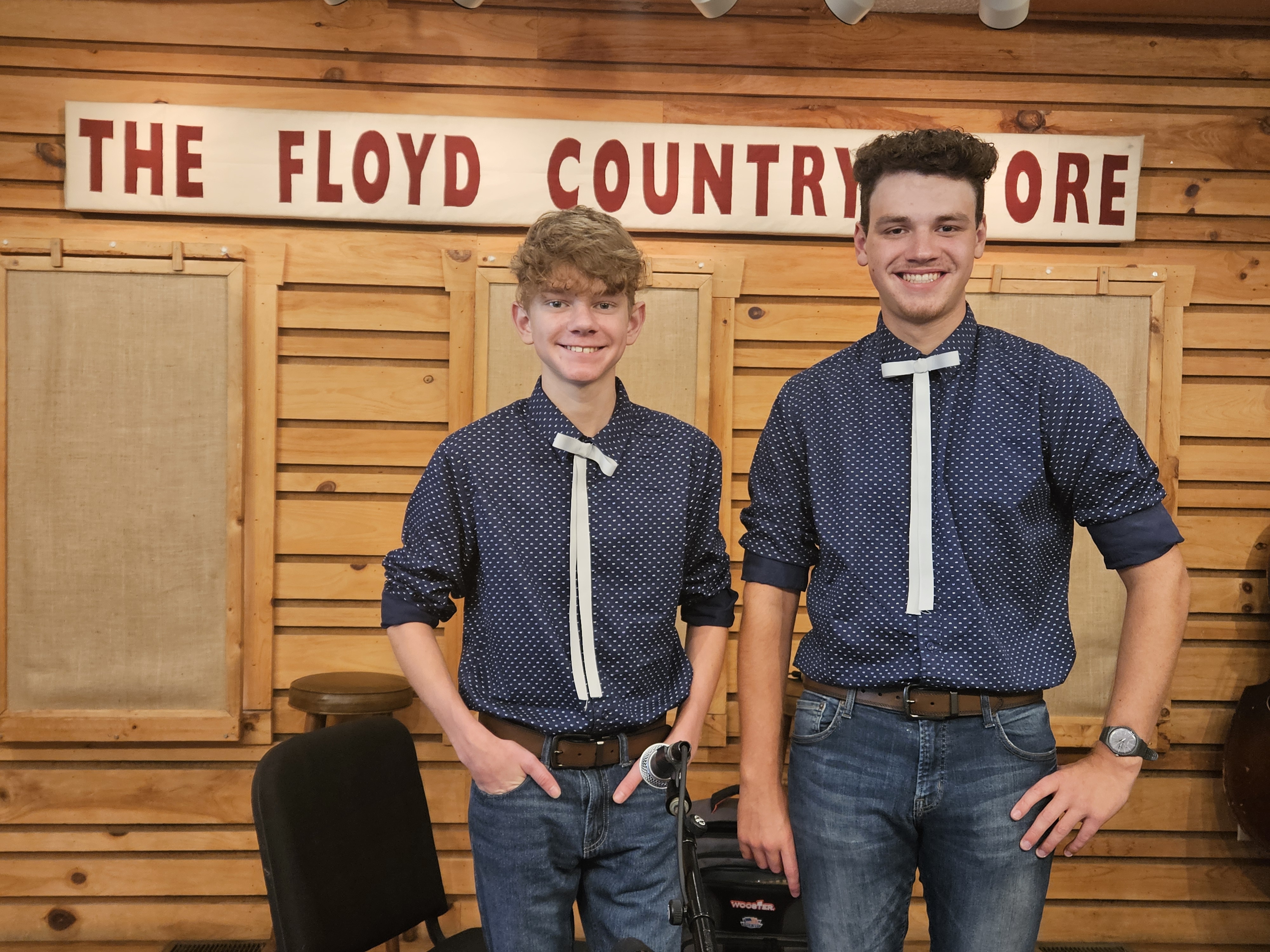
Blane and Ayden Young at the Floyd Country Store October 19, 2024. Photo by DJ Dave

Exactly 4 years ago on October 31, I published a music blog on the Brothers Young. Now with 4 additional years of musical experience, I am updating info on the outstanding classical bluegrass sibling duo based out of Roanoke, Virginia.

Earlier this month, I had the opportunity to catch the Brothers Young (TBY) in concert at the Floyd Country Store (FCC).  Located in Floyd, Virginia, this is a venue that regularly features live musical groups, bands and performers, primarily with the genres of bluegrass, folk and old-time country music.

Short video of Don Reno cover, “Follow the Leader” by TBY on 10/19/24. Clip recorded by DJ Dave

Accompanying the Brothers Young on the FCC stage were Steve Farmer on bass and Stefan Kraft playing guitar. These fellows regularly play with TBY at concerts in and around the Virginia locations.

As I watched TBY play their classic bluegrass set, I saw firsthand superb musicianship and professional excellency from the Roanoke musical brothers.

Short video of Osborne Brothers cover, “Rocky Top” by TBY on 10/19/24. Clip recorded by DJ Dave.

The Brothers Young are 18-year-old Ayden who plays banjo while 14-year-old Blane plays mandolin for their group.  TBY are also multiple instrumentalist: Both are pianists while Blane is also a drummer.

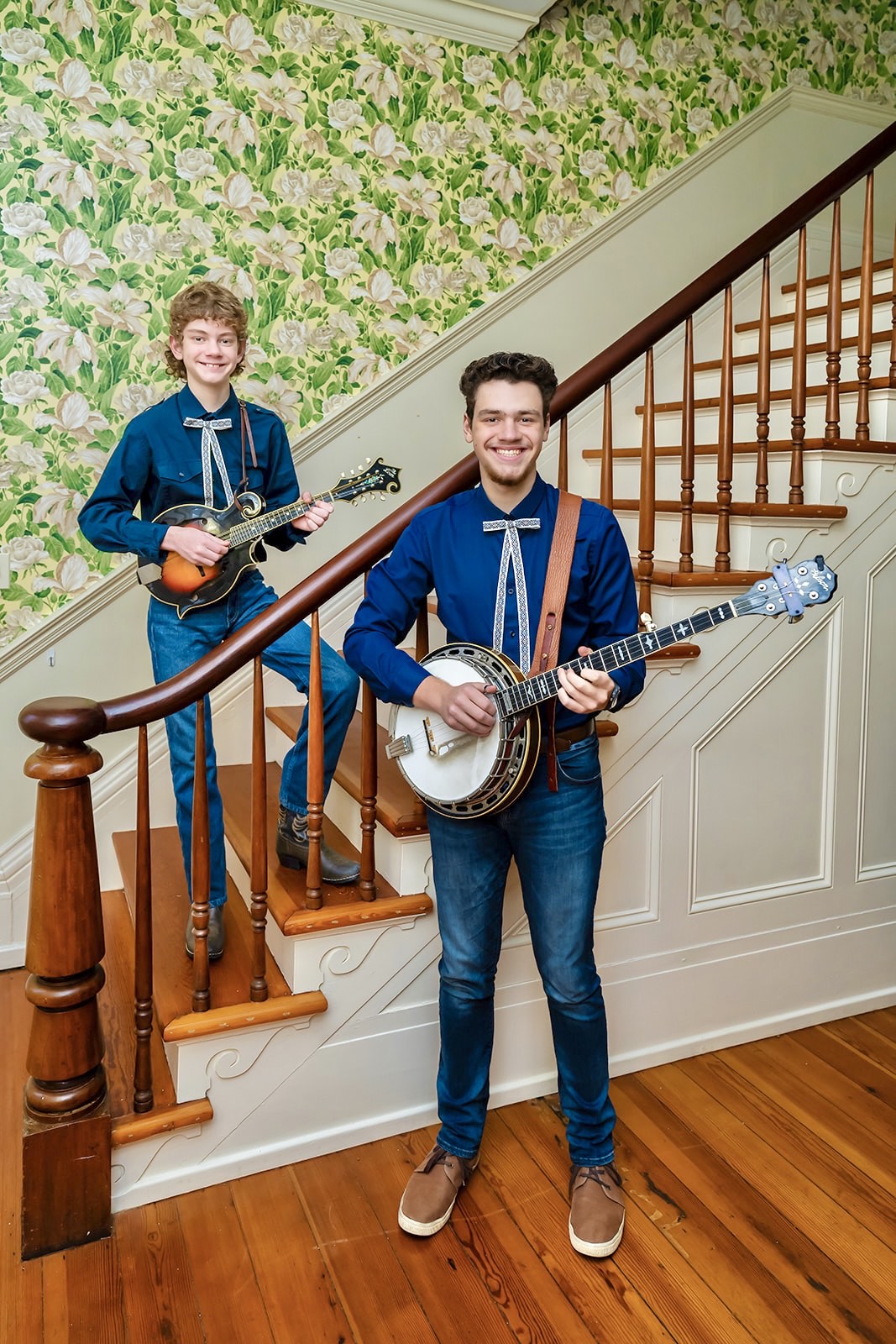
Blane and Ayden Young. Photo courtesy of Melissa Young.

The musical partnership of TBY started in August 2020 during the COVID-19 pandemic under the direction of their parents Melissa and Chad Young. Obviously, with Ayden & Blane still in their teen years, they have received strong parental support with all aspects of TBY musical endeavors.

Since TBY was founded, the fellows have played numerous gigs in and around the Roanoke Valley, as well as many other Blue Ridge Mountain towns in Virginia. The Brothers Young have also performed concerts in North Carolina and Kentucky.

 Below are just a few concert venues that TBY has performed since 2020:

•          Merlefest

•          Bristol Rhythm & Roots

•          The Floyd Country Store

•          Biltmore (Antler Hill Stage)

•          Woodsong Kids (Lexington, KY)

•          Rassawek Autumn Festival

•          WPAQ’s Merry-Go-Round

•          Virginia Museum of Transportation

•          Milepost Music – Peaks of Otter

•          Autumn Leaves Festival

Ayden and Blane also play music monthly at various local Roanoke Valley locations. Melissa Young says “her sons regularly perform at around 20+ Roanoke & Salem retirement communities, partnering with activities directors for those facilities. The residents love the classic bluegrass music and the boys!”

The Brothers Young have recorded the following music during the past 4 years:

  • Two singles with award-winning, traditional bluegrass group the Junior Sisk Band.
  • One track recorded on a gospel bluegrass album “Come Home” by Bent Mountain.
  • One full-length bluegrass album, “B is for Bluegrass.”
  • One Christmas music album, “Christmas in the Hills”, featuring piano favorites and bluegrass songs.

With the financial help of parents Chad and Melissa Young, Ayden created a home studio where he has recorded, mixed and mastered two TBY albums (CDs).  Ayden says, “It is convenient to have a studio in my own home and it has helped me to learn more about the recording process.”

Christian faith is important to TBY.  Ayden plays banjo for the worship team at Church of the Holy Spirit (CHS) an Anglican parish in southwest Roanoke County.  I am a member of the CHS congregation and I have witnessed the entire Young family serving our church body over the past few years.

Here is a quote by Ayden on being a Christian and playing music. ”Being a musician, I often have to tell myself that all of the talents and all of the opportunities we’ve had, have come from the Lord and not from ourselves. Here is a perfect verse that helps me remind myself that all the glory must not go to me, but to God.”   Psalm 115:1 “Not to us, O Lord, not to us but to Your Name be the glory, because of Your steadfast Love and Faithfulness.”

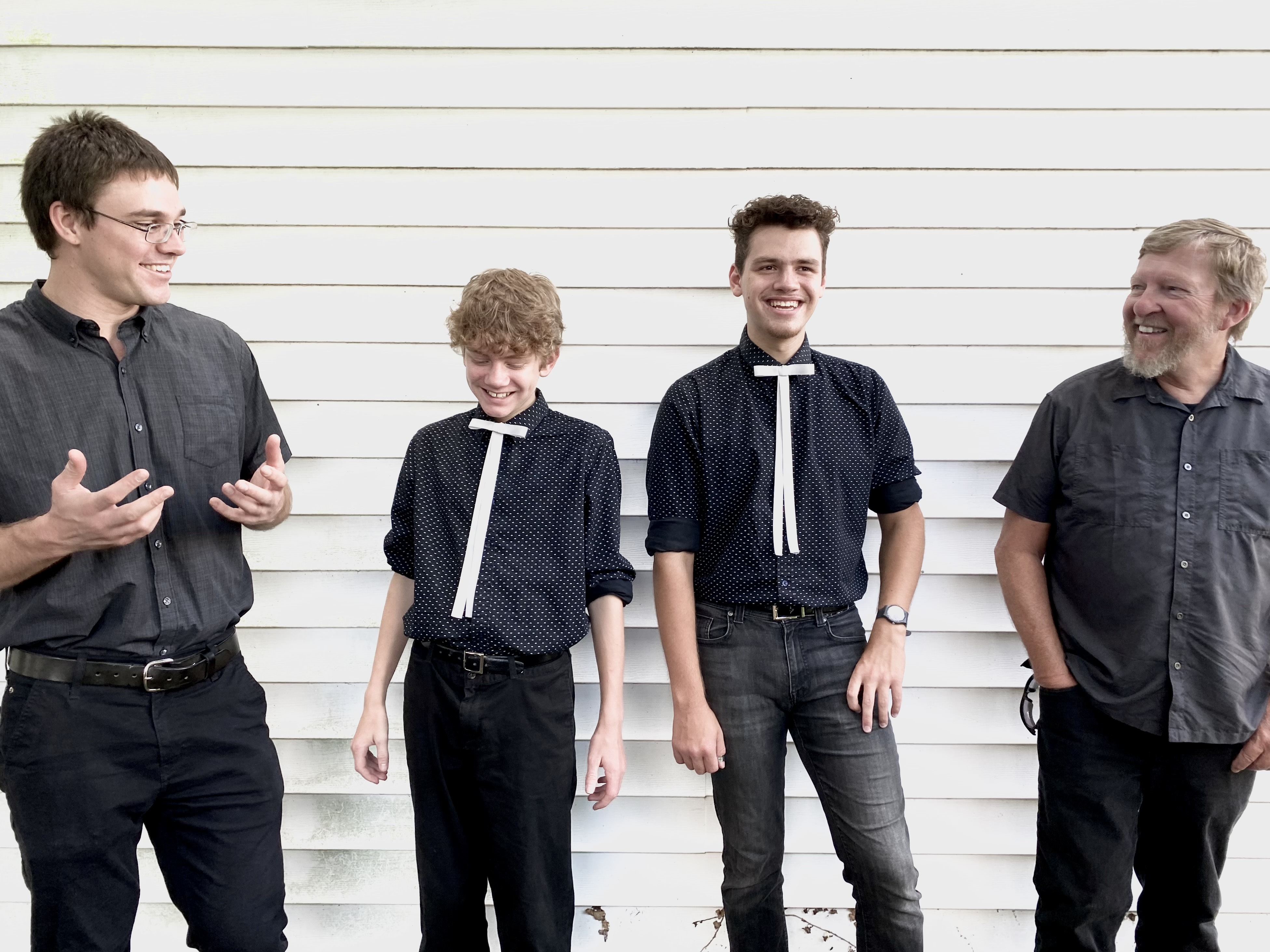
Stefan Kraft, Blane Young, Ayden Young & Steve Farmer. Courtesy of Melissa Young.

One of the musical mentors of TBY is Bishop Quigg Lawrence, who is senior pastor at Church of the Holy Spirit. Lawrence was executive producer and lyrical creator for a gospel bluegrass album released in 2021: “Come Home” by Bent Mountain.

I asked Bishop Lawrence to provide comments about his involvement with TBY on spiritual and musical supervision over the past 4 years: “What a privilege to watch two boys from Roanoke grow up playing traditional bluegrass. Ayden and Blane are some of the best kids I know. They are humble, hardworking, disciplined, funny, and just likable. I would be happy to call them my sons!”

Lawrence continues, “When I recorded a bluegrass album in 2020, the boys were on it. Ayden was older 14 years old and crushed two banjo songs. Blane was a tender ten and mainly added mando chops. Still, I was amazed at how they both entered the studio and started playing well with pro-players.”

“I went to Galax and saw them perform in 2021. Their band was #1 in the Youth Band Category. If memory serves me correctly, Ayden placed 2nd in Youth Banjo. This past year, 2024, Ayden placed 3rd in ADULT banjo, and Blane placed 2nd in youth mandolin. Many full time, well-known pro players never placed that high!”

As I mentioned above, I saw TBY perform in concert recently and I asked Blane and Ayden to answer this question:  Musically, what are attributes that you admire most about your brother? Their responses are below:

Blane:  “First off, he is an amazing banjo player!  One of the things I love about playing with my brother is that he helps the band start the songs on the right timing.  He is a good leader of the band. He encourages me after nobody laughs at my jokes. And mainly I enjoy it because I get to work with my brother.”

Blane and Ayden Young. Courtesy of Melissa Young.

Ayden:  “My brother has been gifted with nearly perfect rhythm. Whether it’s on the jazz drum kit or the mandolin, he holds down those chops! His ability to improvise and add some taste to the mix we’re going for is unchallenged.”

“The thing that impresses me the most is the fact that Blane has the perfect people person charisma. He will approach anyone and everyone and be completely interested in the conversation he’s having.”

In addition to TBY playing classic bluegrass, the siblings have also formed a jazz group called “610 Jazz.”  With this other musical venture, Ayden plays piano while Blane is on a drum kit. Both brothers enjoy the variety of performing jazz as a side project.

For those who are on the social media site Facebook, here is the link for the official Brothers Young page. Another excellent site is TBY YouTube channel.

As I spoke with Ayden and Blane at a home-schooling event in Roanoke County last Saturday, I ask them what can folks expect from the Brothers Young band in the future?

  • TBY would like to record a new album of bluegrass in 2025.
  • The siblings plan of continuing performing classic bluegrass music with as many venues as possible.
  • Blane and Ayden look forward to sharing their God given talents to everyone who attends one of their concerts.
  • Play more music with their “610 Jazz” group.

The consensus among the Brothers Young on future bluegrass career plans are unclear at this time.  Ayden graduated from high school in June. He is now teaching private banjo and piano music lessons, while also playing with other Roanoke area musicians in various recording sessions. Blane just started his 8th grade year with schooling.

Blane and Ayden are exploring various paths they may take in the future with career opportunities. Both fellows are also steadfast with their desire to be guided by God as they finish their teenage years.

Stefan Kraft, Blane Young, Ayden Young & Steve Farmer. Courtesy of Melissa Young.

Without a doubt, the TBY have grown musically over the past 4 years and these guys have matured in positive directions. I am encouraged to see the dedication and loyalty that Ayden and Blane show as they endeavor to hone their craft of playing bluegrass music together.

The Brothers Young performing at Floyd Country Store on October 19, 2024. Photo courtesy of Melissa Young.

Obviously, we do not know what the future has in store for the bluegrass teens. I am confident the Brothers Young of Roanoke will continue to be a positive force within the local Southwestern Virginia community. Rock on!

 To subscribe to my blog via email, please click the “Follow” button in the menu.

Standard
Broadcasting, Music, Music Countdowns, Pop Music, Radio, Retro Rock

1979 Stellar Top 40 Hits

During the year of 1979, I was a student at James Madison University in Harrisonburg, Virginia, getting a Bachelor’s Degree in Communication Arts.  While at JMU, I worked part-time at Public Radio station WMRA 90.7 FM, that served the Shenandoah Valley.

When I wasn’t attending classes or working at WMRA, I would spend my spare time listening to other radio stations that I could pick up in Harrisonburg. Most of my radio surfing was concentrated either on Top 40 outlets or album-oriented rock (AOR) stations.

With this music blog message, I will be counting down what I consider to be my favorite top 40 hits from 1979. My selections are 45-rpm singles that I treasured while a JMU student, and I still love these songs today.

Since I started my radio career at legendary Top 40 WROV 1240 AM Roanoke in 1974, I was drawn to listening to any radio station that featured top 40 radio during my JMU student years.

My time in Harrisonburg gave me an opportunity to hear various Top 40 stations on any given day.  The local Top 40 station that JMU students could pick up on campus was WQPO (Q101) 100.7 FM in Harrisonburg.

I was not a fan of Q101 as it was automated with no live DJs.  I preferred tuning in WWWV 97.5 FM (3WV) in Charlottesville as they were an AOR formatted station. Plus, 3WV had an excellent morning show and live DJ staff throughout the broadcast day.

To get my fix of Top 40 radio while I was at JMU, I would listen to stations out of Richmond and Washington DC radio markets.  Picking up these stations tended to be hit or miss, depending on the weather conditions. Cloudy days seemed to be the best opportunity to hear these signals coming in strong at my Harrisonburg home.

Below are the Top 40 radio signals that I could pick up on a regular basis in Harrisonburg during 1979:

WRVQ (Q94) 94.5 FM Richmond

WPGC 95.5 FM Washington DC Market

WRQX (Q107) 107.3 FM Washington DC Market

As a side note: Top 40 K92 92.3 FM Roanoke came on the air January 1, 1980. Between New Year’s Day and my JMU graduation in May 1980, I would listen to K92 on a regular basis in Harrisonburg.

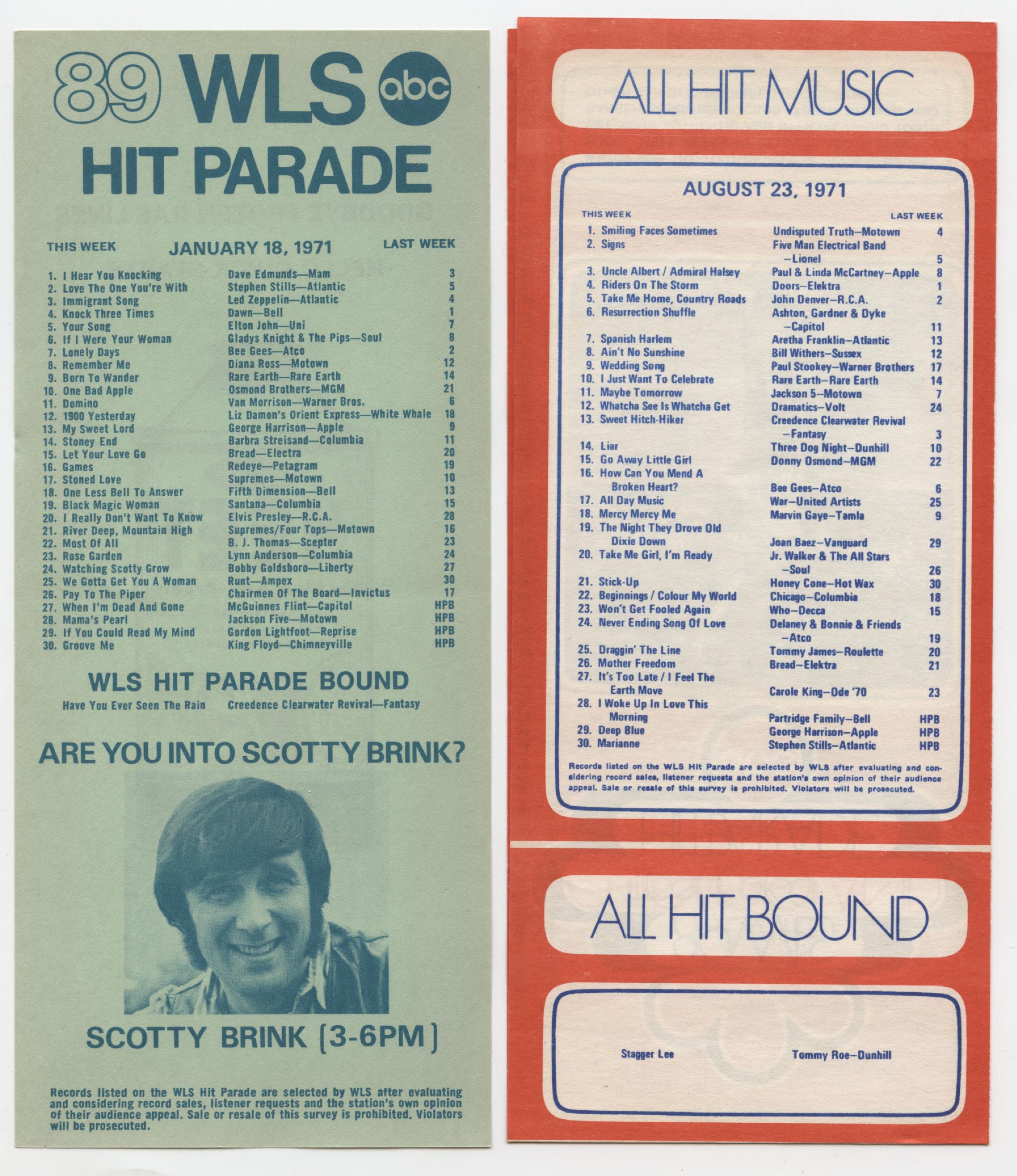
After sundown, I would also listen to a couple of high-powered 50,000 watt AM stations: WLS 890 AM Chicago and WABC 770 AM New York. Those stations always had top-notch DJs playing the hits. On the Big 89 WLS, my favorite DJs were Jeff Davis, Larry Lujack and John Records Landecker.

For the rest of this message, I will be counting down my favorite Top 25 singles from 45 years ago. The sole criterion I utilized with song tabulation for the countdown is simple: I used Billboard’s “Year-End Hot 100 singles chart for 1979.”

As I surveyed the prominent 1979 hits, the countdown is entirely based on my opinions. The songs that I selected are singles that I deem to be culturally, historically, aesthetically significant, meaningful or relevant.

For a historical reference, below are the top 15 singles of 1979, according to Billboard magazine:

1          “My Sharona” The Knack

2          “Bad Girls”      Donna Summer

3          “Le Freak”       Chic

4          “Da Ya Think I’m Sexy?”  Rod Stewart

5          “Reunited”      Peaches & Herb

6          “I Will Survive”  Gloria Gaynor

7          “Hot Stuff”      Donna Summer

8          “Y.M.C.A.”       Village People

9          “Ring My Bell” Anita Ward

10        “Sad Eyes”       Robert John

11        “Too Much Heaven”   Bee Gees

12        “MacArthur Park”       Donna Summer

13        “When You’re in Love with a Beautiful Woman”       Dr. Hook

14        “Makin’ It”      David Naughton

15        “Fire”   The Pointer Sisters

Before I start my countdown, I want to share some of my favorite top 40 singles from 45 years ago that were not ranked by Billboard on their 1979 Top 100 year-end chart.

  • Let’s Go—The Cars
  • Cruel to Be Kind—Nick Lowe
  • Crazy Love—Poco
  • Blow Away—George Harrison
  • Roxanne—The Police
  • Love Takes Time—Orleans
  • Driver’s Seat—Sniff ‘N’ the Tears
  • Serve Somebody—Bob Dylan
  • Blue Morning, Blue Day—Foreigner
  • Heart of the Night—Poco
  • Get It Right Next Time—Gerry Rafferty
  • Song on the Radio—Al Stewart
  • People of the South Wind—Kansas
  • Morning Dance—Spyro Gyra
  • Take Me to the River—Talking Heads

Next are songs that I considered for the countdown but fell just outside of my top 25.  These selections are not ranked and are placed in a random order:

  • Lady—Little River Band
  • Gold—John Stewart
  • New York Groove—Ace Frehley
  • A Little More Love—Olivia Newton John
  • Fire—The Pointer Sisters
  • Reunited—Peaches & Herb
  • The Devil Went Down to Georgia—The Charlie Daniels Band
  • I Want You to Want Me—Cheap Trick
  • Strange Way—Firefall
  • Double Vision—Foreigner
  • Dance the Night Away—Van Halen
  • The Gambler–Kenny Rogers
  • Just When I Needed You Most—Randy VanWarmer
  • Lotta Love—Nicolette Larson
  • Promises—Eric Clapton
  • I Was Made for Loving You—Kiss
  • Shake It—Ian Matthews
  • I Just Fall in Love Again–Anne Murray
  • Chuck E’s in Love—Rickie Lee Jones
  • Stumblin’ In—Suzi Quatro & Chris Norman
  • Music Box Dancer–Frank Mills
  • I Just Wanna Stop—Gino Vannelli
  • She Believes in Me–Kenny Rogers
  • Shine a Little Love—Electric Light Orchestra
  • Got to Be Real—Cheryl Lynn
  • Tragedy—The Bee Gees
  • Shake Your Groove Thing—Peaches & Herb
  • We Are Family—Sister Sledge
  • Ain’t No Stoppin’ Us Now—McFadden & Whitehead
  • Goodnight Tonight—Paul McCartney & Wings

Without further ado, my stellar singles of 1979 countdown begins:

25. I Will Survive—Gloria Gaynor

Peak positions on Billboard Charts: #1 Hot 100, 6th Biggest Song of 1979

Lyrics have become an anthem for female empowerment. Inducted into Library of Congress National Recording Registry in 2016.  “I Will Survive” received a Grammy Award for “Best Disco Recording.”

24. Don’t Stop ‘Til You Get Enough—Michael Jackson

Peak Positions on Billboard Charts: #1 Hot 100, 91st Biggest Song of 1979

Produced by Quincy Jones and written by Michael Jackson.  It was the biggest solo hit of the 70s by the “King of Pop.”  Musically, it features a six-piece horn ensemble of saxophones, trumpets and trombone.  A sterling string section also adds to the rich sound on this tune.

23. Sail On—The Commodores

Peak Positions on Billboard Charts:  #4 Hot 100, 98th Biggest Song of 1979

Commodores front man Lionel Richie wrote this country flavored ballad and provided lead vocals on this country influenced ballad. Song features superb keyboard and guitar instrumentation.

22. Rock & Roll Fantasy—Bad Company

Peak Positions on Billboard Charts: #13 Hot 100, 54th Biggest Song of 1979

Written by Bad Company’s vocalist Paul Rodgers. It was the biggest selling-single by British classic rock band. From the “Desolation Angels” album.

21. Bad Case of Loving You (Doctor, Doctor)—Robert Palmer  

Peak Positions on Billboard Charts:  #14 Hot 100, 92nd Biggest Songs of 1979

Written by singer-songwriter Moon Martin. Robert Palmer’s cover version became the biggest hit by the British artist in the 70s. The song was nominated for a Grammy Award in the category of “Best Male Rock Vocal Performance.”

20. My Sharona—The Knack

Peak Positions on Billboard Charts: #1 Hot 100, the #1 Biggest Song of 1979

New Wave band from Los Angeles, California.  The Knack came on strong during the summer of 1979. “My Sharona” spent 6 weeks at the top spot with Billboard’s Hot 100 chart and is ranked as the #1 biggest single from 45 years ago.

19. Rise—Herb Alpert

Peak Positions on Billboard Charts:  #1 Hot 100, 80th Biggest Song of 1979

Tumpeter Herb Alpert was the first artist to reach number 1 on the Billboard Hot 100 with a vocal performance as well as an instrumental production. (Artist took “This Guy’s in Love with You” to #1 in 1968). Tune received a Grammy Award for “Best Pop Instrumental Performance.”

18. After the Love Has Gone—Earth Wind & Fire

Peak Positions on Billboard Charts: #2 Hot 100, 38th Biggest Song of 1979

Composed by David Foster and Jay Graydon, with lyrics written by Bill Champlin. First of two Earth Wind & Fire songs in the countdown. Maurice White on lead vocals while Philip Bailey sings backup harmonies. Tune has superb horn section.

17. Good Times—Chic

Peak Positions on Billboard Charts: #1 Hot 100, 20th Biggest Song of 1979

Written by Chic band members Bernard Edwards and Nile Rodgers. Song has legendary bass line riff and is one of the most sampled tunes in music history.

Backing track from “Good Times” was used on the first Top 40 hip-hop hit, “Rapper’s Delight” by Sugarhill Gang.  Comes in at number 68 on Rolling Stone “Greatest Songs of All Time” list.

16. Too Much Heaven—The Bee Gees

Peak Positions on Billboard Charts:  #1 Hot 100, 11th Biggest Song of 1979

Co-written by the brothers Gibb: Barry, Robin and Maurice. Song features the Chicago horn section (James Pankow, Walter Parazaider and Lee Loughnane). Single became the fourth of six consecutive number 1 hits by the Bee Gees on the Billboard Hot 100.

15. Ooo Baby Baby—Linda Ronstadt

Peak Position on Billboard Charts: #7 Hot 100, 77th Biggest Song of 1979

A cover of Smokey Robinson & the Miracles 1965 hit. Has outstanding saxophone played by David Sanborn. Produced by Peter Asher. Linda Ronstadt also scored airplay on country and R&B/soul radio with this hit.

14. What You Won’t Do for Love—Bobby Caldwell

Peak Positions on Billboard Charts:  #9 Hot 100, 59th Biggest Song of 1979

Co-written by Bobby Caldwell and Alfons Kettner. Was Caldwell’s only top 40 hit on the Billboard singles chart. Song is now considered to be in the “yacht rock” sub-genre of music.

13. How Much I Feel—Ambrosia

Peak Positions on Billboard Charts: #3 Hot 100, 84th Biggest Song of 1979

Quintessential Yacht Rock band. “How Much I Feel” was written by the band’s guitarist/vocalist David Pack. Song is smooth featuring a jazz/R&B groove and great group harmony.

12. Every Time I Think of You—The Babys

Peak Positions on Billboard Charts: #13 Hot 100, 89th Biggest Song of 1979

British band had 3 U.S. top 40 hits. Bassist John Waite was the lead singer with group. Myrna Matthews shares singing duties on this hit. Waite had two #1 hits in the 80s: “Missing You” as a solo hit (1984) and “When I See You Smile” as singer in Bad English (1989).

11. Don’t Bring Me Down—Electric Light Orchestra

Peak Positions on Billboard Charts: #4 Hot 100, 81st Biggest Song of 1979

Produced and written by ELO front man Jeff Lynne. It was the highest-charting 45-rpm single by the British band in America. Unlike most other ELO songs, “Don’t Let Me Down” didn’t contain a string section.

10. Love is the Answer—England Dan & John Ford Coley

Peak Positions on Billboard Charts: #10 Hot 100, 68th Biggest Song of 1979

Written by Todd Rundgren. The England Dan and John Ford Coley rendition of the song reached #1 on the Billboard Adult Contemporary chart. The soft rock duo also received airplay on some Christian music radio stations during 1979.

9.   Hold the Line—Toto

Peak Positions on Billboard Charts: #5 Hot 100, 44th Biggest Song of 1979

Toto’s keyboardist David Paich wrote “Hold the Line” which became the group’s first hit record.  Lead vocals were by Bobby Kimball. This up-tempo tune remains one of the most beloved songs by the 70s and 80s pop rock band.

8.   What a Fool Believes—The Doobie Brothers

Peak Positions on Billboard Charts: #1 Hot 100, 19th Biggest Song of 1979

The only yacht rock song to receive a 100 score on the Yachtski Scale was co-written by Michael McDonald and Kenny Loggins. The second #1 hit for the Doobie Brothers.  The single received two Grammy Awards in 1980: for “Song of the Year” and “Record of the Year.”

7.   Time Passages—Al Stewart

Peak Positions on Billboard Charts: #7 Hot 100, 79th Biggest Song of 1979

Written by Al Stewart and Peter White.  Song has outstanding saxophone performance by Phil Kenzie. Produced by Alan Parsons. Spent 10 weeks on top of the Billboard Easy Listening chart and was the rated as the #1 biggest Adult Contemporary song of 1979 by the music magazine.

6.   My Life—Billy Joel

Peak Positions on Billboard Charts: #3 Hot 100, 28th Biggest Song of 1979

Singer-songwriter and “Piano Man” Billy Joel wrote “My Life” which came from the “52nd Street” album. Musically, tune has vigorous guitar and keyboards. The artist sings this hit with high energy.

5.   Renegade—Styx

Peak Positions on Billboard Charts:  #16 Hot 100, 67th Biggest Song of 1979

Styx guitarist Tommy Shaw is the songwriter of “Renegade.” The song starts cold with a cappella singing and then goes into a full-fledge blazing rock tune. Pounding drums, infectious guitar riffs and catchy hooks drive this classic rock standout.

4.   Heart of Glass—Blondie

Peak Positions on Billboard Charts: #1 Hot 100, 18th Biggest Song of 1979

Co-written by Blondie singer Debbie Harry and guitarist Chris Stein.  Single is a brilliant crossing of “New Wave” rock with a powerful disco beat. It was the first of 4 number one hits for Blondie between 1979 and 1981. Song was inducted into the Grammy Hall of Fame in 2015.

3.   Sultans of Swing—Dire Straits

Peak Positions on Billboard Charts: #4 Hot 100, 61st Biggest Song of 1979

Dire Straits lead vocalist and guitarist Mark Knopfler penned this first hit by the British group. Lyrics are about a Dixieland swing jazz band playing at a near empty bar in south “London town.” Knopfle’s phrasing of vocals and his exceptional catchy guitar riffs, made “Sultans of Swing” the most unique top 40 single of 1979.

2.   The Logical Song—Supertramp

Peak Position on Billboard Charts: #6 Hot 100, 27th Biggest Song of 1979

Supertramp’s former co-front man Roger Hodgson came up with the idea of “The Logical Song” after he spent ten years at a boarding school when he was boy. This was the biggest single by the British progressive pop-rock band.  Saxophonist John Helliwell of Supertramp is magnificent playing his woodwind instrument.

1..   September—Earth Wind & Fire

Peak Positions of Billboard Charts: #8 Hot 100, 78th Biggest Song of 1979

“September” by Earth Wind & Fire (EW&F) is a quintessential song with multiple genres of music:  R&B, Soul, Funk, Jazz, Disco and Yacht Rock. Upbeat, feel-good groove. Philip Bailey and Maurice White share lead vocals on this successful song.

Instrumentally, the single features brass instruments, woodwinds, keyboards, guitars and drums. A signature song for EW&F, it was inducted into the Library of Congress’ National Recording Registry list of sound recordings in 2018.

Without a doubt, I proclaim “September” by Earth Wind & Fire as my favorite number one single with the countdown of stellar top 40 hits from 1979.

That wraps up what I consider to be my favorite and best 1979 top 40 hits. I completely understand that my listing of songs in this category was written from my point of view and is subjective.

If you were creating a similar register of excellent 1979 singles, your tabulation may be totally different. What do you consider to be best preeminent singles from ’79? I hope you will comment below.

I have passionate memories of my college years at JMU and hearing my favorite songs played on the radio during 1979. I still cherish and fondly remember the excellent music of 45 years ago. Rock on!

To subscribe to my blog via email, please click the “Follow” button in the menu above.

Standard
Broadcasting, Music, Music Countdowns, Pop Music, Radio, Retro Rock

Sweet Saxophone Songs from Top 40 Golden Age

Without a doubt, my favorite instrument is a saxophone.  There just seems to be something magical for me whenever I hear a sax played in a song or tune, no matter what type of musical genre that is being presented.

Up until a few years ago, I had never analyzed why I loved certain songs during my youth. Then around the turn of the 21st century, I realized the common denominator with many of my beloved songs was the saxophone.

With this music blog message, I will be counting down what I consider to be my favorite songs featuring the saxophone. My selections are mostly tunes that I treasured when I was a teenager or as a young adult and I still love these songs in 2024.

My listing of superb sax songs all became hits on the Billboard Hot 100 chart during the golden age of top 40 radio.  Obviously, that means that outstanding jazz ensembles, classical masterworks, and any other genre of music outside of pop, rock and soul, are excluded with this message.

To avoid any confusion, here are the criteria that I used to narrow down my listing of outstanding sax songs:

  • My selections were aired on Top 40 radio between the years 1965 and 1985.
  • Only songs released as 45-rpm singles are listed.
  • No album tracks used on countdown.
  • Saxophone needs to be prominently heard in a song.
  • Lead sax solos on instrumental breaks on songs with lyrical singing.
  • Countdown songs peaked at #40 or higher on the Billboard Hot 100.

Some groups that feature horn sections are not included in countdown:  Blood Sweat & Tears, Earth Wind & Fire, Chicago and Tower of Power.  All of these groups utilize saxophones, trumpets and trombones, but the sound of the sax generally isn’t elevated or distinguished among various brass instruments.

“25 or 6 to 4” by Chicago is an outstanding example of a saxophone being played in a song but the sax playing simply blends in with the other instruments and is not noticeable or pronounced on the tune.

As I surveyed the prominent sax hits, the countdown is entirely based on my opinions. My selections are songs that I deem to be culturally, historically, aesthetically significant, meaningful or relevant.

Before I start the sax countdown, I am sharing some other first-class saxophone songs in a couple of different categories. I am a fan of all of the extra songs that didn’t make my favorite sax songs all-time listing.

Songs played on Top 40 and AOR (album-oriented-radio) stations but not released as 45-rpm singles:

  • Turn the Page—Bob Seger
  • Us & Them—Pink Floyd
  • Scenes From an Italian Restaurant—Billy Joel
  • Jungleland—Bruce Springsteen
  • Bad to the Bone—George Thorogood & the Destroyers
  • Back in Time—Huey Lewis & the News
  • Moondance—Van Morrison
  • Can’t You Hear Me Knocking—The Rolling Stones

This next group are songs that I considered for the sax countdown but fell outside of my top 20 selections. Singles are not ranked and are placed in a random order:

  • Frankenstein—Edgar Winter Group
  • The One Thing—INXS
  • Time Passages—Al Stewart
  • Just the Two of Us—Grover Washington Jr. & Bill Withers
  • Careless Whisper—George Michael & Wham!
  • Whatever Gets You Thru the Night—John Lennon featuring Elton John
  • Who Can It Be Now—Men at Work
  • It’s Still Rock & Roll to Me—Billy Joel
  • Young Americans—David Bowie
  • Rio—Duran Duran
  • Urgent—Foreigner
  • The Letter—Joe Cocker
  • Heart to Heart—Kenny Loggins
  • I Can’t Go for That (No Can Do)—Hall and Oates
  • Caribbean Queen—Billy Ocean
  • Freeway of Love—Aretha Franklin
  • Get It Right Next Time—Gerry Rafferty
  • Let’s Dance—David Bowie
  • On the Dark Side—John Cafferty & the Beaver Brown Band
  • You Belong to Me—Carly Simon
  • Long As I Can See the Light—Creedence Clearwater Revival
  • Waiting on a Friend—The Rolling Stones
  • Mercy Mercy Me (The Ecology)—Marvin Gaye
  • Ooo Baby Baby—Linda Ronstadt
  • The Heat is On—Glenn Frye
  • Harden My Heart—Quarterflash
  • Opus 17 (Don’t You Worry ‘Bout Me)—The Four Seasons
  • True—Spandau Ballet
  • Same Old Lang Syne—Dan Fogelberg
  • You Belong to the City—Glenn Frey
  • You’re a Friend of Mine—Clarence Clemons and Jackson Browne
  • Miracles—Jefferson Starship

Without further ado, here is my top saxophone songs countdown:

20.  Smooth Operator—Sade: 1985

Positions on Billboard Charts: #1 AC, #5 Hot 100, 62nd Biggest Song of 1985

Co-written by Sade Adu and Ray St John. Saxophone artist Stuart Matthewman. From Sade debut album “Diamond Life.”  Smooth jazz/R&B/pop. First top ten hit for Sade in the U.S.

19.  Respect—Aretha Franklin: 1967

Peak Positions on Billboard Charts:  #1 Hot 100, 13th Biggest Song of 1967

Written by Otis Redding. Saxophone artists: King Curtis and Willie Bridges. From “I Never Loved a Man the Way I Love You” album. Signature song for Franklin. Ranked the #1 best song of all-time by Rolling Stone.

18.  The Heart of Rock & Roll—Huey Lewis & the News: 1984

Peak Positions on Billboard Charts:  #5 Hot 100, #4 Album Rock Tracks, 44th Biggest Song of 1984.

Co-written by Huey Lewis and Johnny Colla. Saxophone artist Johnny Colla. The 2nd of 4 top ten hits from 1983 “Sports” album. Pop/rock.  Features excellent horn section.

17.  Just the Way You Are—Billy Joel: 1978

Peak Positions on Billboard Charts: #1 AC, #3 Hot 100, 17th Biggest Song of 1978

Written by Billy Joel. Saxophone artist Phil Woods. From album “The Stranger.”  Pop ballad/smooth jazz. Received two Grammy Awards for “Record of the Year” and “Song of the Year” in 1979.

16.  Modern Love—David Bowie: 1983

Peak Positions on Billboard Charts: #6 Mainstream Rock Tracks, #14 Hot 100

Written by David Bowie. Saxophone artists: Robert Aaron, Stan Harrison and Steve Elson. From the “Let’s Dance” album. Produced by Nile Rodgers. Video of song was a top MTV clip.

15.  Money—Pink Floyd: 1973

Peak Positions on Billboard Charts:  #13, Hot 100, #6 Mainstream Rock Tracks

Written by Roger Waters. Saxophone artist Dick Parry. From legendary 1973 “The Dark Side of the Moon” album. Outstanding chord progression on tune. First top 40 hit for Pink Floyd.

14.  Deacon Blues—Steely Dan: 1978

Peak Positions on Billboard Charts:  #19 Hot 100, 100th Biggest Song of 1978

Co-written by Walter Becker and Donald Fagen. Saxophone artist: Pete Christlieb. From “Aja” album. Jazz rock. Considered a core yacht rock song. Larry Carlton and Lee Ritenour provide superb guitar playing on tune.

13.  Fortress Around Your Heart—Sting: 1985

Peak Positions on Billboard Charts: #1 Top Rock Tracks, #8 Hot 100, 95th Biggest Song of 1985

Written by Sting. Saxophone artist Branford Marsalis. Third hit single from “The Dream of the Blue Turtles” album. Rock, pop and jazz. Melodic tune and melancholy lyrics are featured on this song.

12.  Brown Sugar—The Rolling Stones: 1971

Peak Positions on Billboard Charts: #1, Hot 100, 18th Biggest Song of 1971

Co-written by Keith Richards and Mick Jagger. Saxophone artist: Bobby Keys. From “Sticky Fingers” album. Up tempo blues rock. Recorded at Muscle Shoals Sound Studio in Sheffield, Alabama.

11.  Jazzman—Carole King: 1974

Peak Positions on Billboard Charts: #1 Ac, #2 Hot 100, 42nd Biggest Song of 1974

Co-written by Carole King and David Palmer. Saxophone artist Tom Scott. From the “Wrap Around Joy” album. Pop/jazz. King has been quoted stating that saxophonist Curtis Amy was the inspiration of her ode for a jazz man.

10.   Overkill—Men at Work: 1983

Peak Positions on Billboard Charts: #3 Hot 100, #3 Mainstream Rock Tracks, 54th Biggest Song of 1983

Written by Colin Hay. Saxophone artist Greg Ham, member of Men at Work. From “Cargo” album.  Third consecutive single by Australian band to reach #3 or higher on Billboard Hot 100. My second favorite single of 1983.

9.    What Does It Take (To Win Your Love)—Jr. Walker & the All Stars: 1969

Peak Positions on Billboard Charts:  #1 Soul, #4 Hot 100, 20th Biggest Song of 1969

Co-written by Johnny Bristol, Harvey Furqua and Vernon Bullock. Saxophone artist Junior Walker. From the “Home Cookin’” album. The Funk Brothers and the Detroit Symphony Orchestra played on tune. It was the number 1 biggest soul single of 1969, according to Billboard.

8.    The Logical Song—Supertramp: 1979

Peak Position on Billboard Charts: #6 Hot 100, 27th Biggest Song of 1979

Written by Roger Hodgson. Saxophone artist John Helliwell. From the “Breakfast in America” album. Progressive pop rock. Biggest hit single for the British band.  My second favorite single of 1979.

7.     Touch Me—The Doors: 1969

Peak Position on Cash Box and Billboard Charts:  #1 Top 100 Singles (C), #3 Hot 100 (B), 49th Biggest Song of 1969 (B)

Written by Robby Krieger. Saxophone artist Curtis Amy. From “The Soft Parade” album. Progressive pop rock. One of the first top 40 hits that included a jazz solo. Paul Harris provided orchestral arrangements on song.

6..    Year of the Cat—Al Stewart: 1977

Peak Positions on Cash Box and Billboard Charts: #4 Top 100 Singles (C), #8 Hot 100 (B), 92nd Biggest Song of 1977.

Co-written by Al Stewart and Peter Wood. Saxophone artist Phil Kenzie. From the “Year of the Cat” album. Progressive pop and classic yacht rock tune.  My 3rd favorite single of 1977.

5.     It Don’t Come Easy—Ringo Starr: 1971

Peak Positions on Cash Box and Billboard Charts: #1 Top 100 Singles (C), #4 Hot 100 (B), 43rd Biggest Song of 1971

Written by Richard Starkey (and uncredited to George Harrison). Saxophone artist Ron Cattermole. This first solo hit by the former Beatle didn’t appear on a Ringo Starr album until 1975’s “Blast From Your Past” LP. Produced by George Harrison. My second favorite single of 1971.

4.     Sir Duke—Stevie Wonder: 1977

Peak Positions on the Billboard Charts: #1 Hot 100, #1 R&B/Soul, 18th Biggest Song of 1977.

Written by Stevie Wonder. Saxophone artist Trevor Lawrence. From the “Songs in the Key of Life” album.  Lyrics are a tribute to Sir Duke Ellington, jazz pianist, composer, and leader of his own renowned jazz orchestra. My second favorite single of 1977.

3.     What’s Going On—Marvin Gaye

Peak Positions of Billboard Charts: #2 Hot 100, #2 Soul, 21st Biggest Song of 1971

Co-written by Marvin Gaye, Al Cleveland and Renaldo Benson. Saxophone artist Eli Fountain. From the “What’s Going On” album. Signature song by Marvin Gaye. My #1 favorite single of 1971 and my third most-esteemed Motown song of all-time.

2.     Born to Run—Bruce Springsteen: 1975

Peak Positions on Cash Box and Billboard Charts: #17 Top 100 Singles (C), #23 Hot 100 (B)

Written by Bruce Springsteen. Saxophone artist Clarence Clemons. From the ‘Born to Run” album.  Signature song by Bruce Springsteen.  My #1 favorite single of 1975 and the best song that I played on WROV Roanoke 49 years ago.

  1. Baker Street—Gerry Raffety: 1978

Peak Positions on Cash Box and Billboard Charts: #1 Top 100 Singles (C), #2 Hot 100 (B), 26th Biggest Song of 1978 (B)

Written by Gerry Rafferty.  Saxophone artist: Raphael Ravenscroft.  From the “City to City” album. Signature song by Gerry Rafferty. My second most-loved yacht rock song and #1 favorite single for 1978. “Baker Street” is definitely my top pick with this countdown of most-beloved sax songs.

That wraps up what I consider to be my favorite and best sax hits. I completely understand that my listing of songs in this category was written from my point of view and is subjective.

If you were creating a similar register of excellent sax hits, your tabulation may be totally different. What do you consider to be best preeminent saxophone singles?  I hope you will comment below.

Listening to music from the golden age of Top 40 radio will always have a special place in my heart.  I still cherish and fondly remember my favorite sax superfine singles of all-time. Rock on!

To subscribe to my blog via email, please click the “Follow” button in the menu above.

Standard
Broadcasting, Music, Music Countdowns, Pop Music, Radio, Retro Rock

We Are the World: The Greatest Night in Pop

“We are the world/We are the children/We are the ones who make a brighter day/So let’s start giving/There’s a choice we’re making/We’re saving our own lives/It’s true we’ll make a better day/Just you and me” Lyrics by Michael Jackson and Lionel Richie: “We Are the World” January 1985.

DJ Dave note: The day that I published this music blog article, March 7, 2024, was the 39th anniversary of when the USA for Africa single and video for “We Are the World” was released: 3/7/85.

One of the best musical documentaries that I have viewed this decade is “The Greatest Night in Pop.”  The 2024 film focuses on a charity single called “We Are the World” which was recorded over the course of a 12-hour period during late January 1985.

I want to thank my friend Jerry English for giving me the idea and inspiration for this latest music blog message. I am grateful that Jerry encouraged me to watch “The Greatest Night in Pop” film last month and I highly recommend viewing this outstanding documentary.

While I won’t be giving a review of “The Greatest Night in Pop” movie, I will be sharing about certain aspects of the film, the recording of “We Are the World”, and the songs significance in modern music history.

I also will be communicating what I consider to be the best 1980s singles by 15 of the artists who had solo vocal lines within the 1985 charity song. Every song that I will be listing was a major pop hit during the 80s.

“We Are the World” was written by Michael Jackson and Lionel Richie, with Quincy Jones and Michael Omartian producing the song which was recorded by a supergroup of pop artists called USA for Africa.

According to “The Greatest Night in Pop” documentary, over 40 pop artists assembled at A&M Recording Studios in Hollywood, California, to record final vocal tracks for the “We Are the World” song.

Michael Jackson arrived first for this historic musical event around 8:00 pm. Soon after scores of other artists came on the scene, with many coming directly from the American Music Awards happening that evening, including the host of the annual music ceremony Lionel Richie.

Around 10:30 pm, Quincy Jones gathered the vocal artists and musicians together to start the recording process. This assembled multitude worked throughout the night during their marathon recording session completing the final audiotape at 8:00 am.

Six weeks later on March 7, 1985, “We Are the World” was released as a single.  The song was an immediate hit: Reaching number 1 on three Billboard charts: R&B Singles chart, Hot Adult Contemporary Tracks listing and the Hot 100 Pop singles survey, where it spent 4 weeks at the top spot.

After “We Are the World” was released, it was honored by multiple music awards.  In 1986, the song achieved 4 Grammy Awards. The single also received awards by MTV for its music video, a People’s Choice Award and an American Music Award.

The original inspiration for artists to come together and record a song for African famine relief came from Harry Bellafonte. He is quoted on the USA for Africa website about the lasting effect of the “We Are the World” single:

“In 1985, the music industry and the world came together in an unprecedented outpouring of generosity in response to the tragic famine wreaking havoc in Africa at the time. The biggest names in music ‘checked their egos at the door’ to create what was and still is a worldwide phenomenon.”

Bellafonte continues: “The recording of the original We Are the World sold more than 7 million records worldwide. The worldwide sale of that record generated more than $60 million which has been used to assist Africa and Africans affected by the famine and other critical issues since 1985. The song became and remains the people’s anthem and continues to be revered and loved globally.”

Below are artists who sang solo parts on the “We Are the World” song:

  • Lionel Richie
  • Stevie Wonder
  • Paul Simon,
  • Kenny Rogers,
  • James Ingram
  •  Tina Turner
  •  Billy Joel
  •  Michael Jackson
  •  Diana Ross,
  •  Dionne Warwick
  •  Willie Nelson
  •  Al Jarreau
  •  Bruce Springsteen
  •  Kenny Loggins
  •  Steve Perry
  •  Daryl Hall
  •  Huey Lewis
  •  Cyndi Lauper
  •  Kim Carnes
  •  Bob Dylan
  •  Ray Charles

For the remainder of this message, I will convey what I consider to be the best and most memorable 80s pop hits, by 15 of the artists who had solo parts on the “We Are the World” recording. The songs that I have selected were all major top 40 singles from 1980 through 1989.

The top 15 songs and artists that I have picked are entirely based on my opinions. My selections are singles that I deem to be culturally, historically, aesthetically significant, meaningful or relevant.

In researching historical musical data for this article, I used “The Billboard Book of Top 40 Hits” by Joel Whitburn for documentation. The placement of singles on the countdown derives solely on my favorability of songs and not on how I rate each of the artists listed.

Now without further ado, here is my countdown of 15 outstanding singles from “We Are the World” singers:

15.  That’s What Friends Are For—Dionne Warwick: 1985

 Positions on Billboard Charts:  #1 Hot 100, The #1 biggest single of 1986

That’s What Friends Are For” was written by Burt Bacharach and Carole Bayer Sager and was recorded as a charity single for AIDS research and prevention.  The 45-rpm record label says: “Dionne and Friends” who were Elton John, Gladys Knight, and Stevie Wonder.   Won two Grammy Awards in 1986.

14.   Lady—Kenny Rogers: 1980

Positions on Billboard charts:  #1 Hot 100, 3rd biggest song of 1986

Lionel Richie wrote and produced “Lady” for Kenny Rogers. It was the first song of the 80s to chart on all four Billboard singles charts – Country, Hot 100, Adult Contemporary and Hot Soul. Rated as the 10th biggest single in the 80s decade.  Biggest selling song in Rogers’ career.

13.   On the Road Again—Willie Nelson: 1980

Positions on Billboard Charts:  #1 Hot Country, #7 Adult Contemporary, #20 Hot 100

Country crossover hit. Written by Willie Nelson for the movie “Honeysuckle Rose.” The artist also starred as the lead actor in the 1980 film. Won a Grammy Award for “Best Country Song.”  Became the 9th number one country hit for the singer-songwriter and is considered a signature song for Nelson.

12.   Upside Down—Diana Ross: 1980

Positions on Billboard Charts: #1 Hot 100, 18th Biggest song of 1980

“Upside Down” was written and produced by Nile Rodgers and Bernard Edwards, who were members of the R&B band Chic in 1980.  Big international hit for Diana Ross. Billboard ranks single at #80 on their “Hot 100, 60th Anniversary” chart.

11.   Betty Davis Eyes—Kim Carnes: 1981

Position on Billboard Charts:  #1, Hot 100, The #1 biggest single of 1981

Written in 1973 by Jackie De Shannon and Donna Weiss. Signature song for Kim Cranes. Single spent nine non-consecutive weeks at #1 on the Billboard Hot 100. Won 2 Grammys Awards for Song of the Year” and “Record of the Year.”

10.   Footloose—Kenny Loggins: 1984

Peak Positions on Billboard Charts:  #1 Hot 100, 4th Biggest Song of 1984

Kenny Loggins co-wrote “Footloose” with Dean Pitchford for a 1984 movie that shares the same name as the Loggins’ song. It was the biggest selling single for the “yacht rock” music maestro.  The first of two number 1 hits from the “Footloose” film (“Let’s Hear It for the Boy” by Denise Williams was second #1 single from movie).

9.     Girls Just Want to Have Fun–Cyndi Lauper: 1984

Peak Positions on Billboard Charts:  #2 Hot 100, 15th Biggest Song of 1984

Singer-songwriter Cyndi Lauper wrote “Girls Just Want to Have Fun” which was her debut single from the album “She So Unusual.”  Has become a feminist anthem and signature song for Lauper. Won top honors with a MTV Music Video Award and an American Video Award for this successful clip.

8.     You Can Call Me Al—Paul Simon: 1986

Peak positions with Billboard Charts:  #15 Adult Contemporary, #23 Hot 100

A world-wide hit for singer-songwriter Paul Simon who penned this song for the 2-time Grammy winning album “Graceland.”  Artist used African musicians on single, mixing pop, rock, jazz and zydeco, with musical styles that originated in South Africa. Biggest hit for Simon during the 80s.

7.     What’s Love Got to Do with It—Tina Turner: 1984

Peak Positions on Billboard Charts: #1 Hot 100, 2nd Biggest Song of 1984

Comeback song for Tina Turner and became her biggest selling single. “What’s Love Got to Do with It” received 3 Grammy Awards: for “Record of the Year”, “Song of the Year” and “Best Female Pop Vocal Performance.” Was inducted into the Grammy Hall of Fame in 1989.

6.     Oh, Sherrie—Steve Perry: 1984

Peak Positions on Billboard Charts: #3 Hot 100, 33rd Biggest Song of 1984

First solo single for Steve Perry from the album “Street Talk.”  Artist was still a member of Journey when “Oh, Sherrie” was a hit song during the summer of ’84.  Was the biggest selling solo single by the outstanding rock vocalist.

5.     Born in the USA—Bruce Springsteen: 1984

Peak Positions on Billboard Charts:  #9 Hot 100, 92nd Biggest Hit of 1984

Title track from the Bruce Springsteen 1983 album “Born in the USA.”  One of the best-known songs by the Boss. The third of 7 top ten singles on the Billboard Hot 100 from legendary LP (1983-1985).  The song is still a staple on classic rock radio stations here in 2024.

4.     We Didn’t Start the Fire—Billy Joel: 1989

Peak Positions on Billboard Charts: #1 Hot 100, 35th Biggest Song of 1989

Billy Joel wrote the lyrics of “We Didn’t Start the Fire” which document historical, political, cultural and sports highlights between the years 1948 and 1989. The “Piano Man” sings in a rapid paced manner that calls for multiple listens to comprehend all of the historical events mentioned. Joel still performs this song as the first encore selection at every one of his 2024 concerts.

3.     The Power of Love—Huey Lewis: 1985

Positions on Billboard Charts:  #1 Hot 100, 15th Biggest Song of 1985

“The Power of Love” was written by Huey Lewis, along with Lewis Hayes and Johnny Colla for the 1985 film “Back to the Future. The single is backed up by Lewis’ band the News and became that band’s first #1 chart topping song.  It was one of the biggest singles from the summer of ’85.

2.     All Night Long (All Night)—Lionel Richie: 1983

Peak Positions on Billboard Charts: #1 Hot 100, 12th Biggest Song of 1984

The most successful solo single by the former lead singer of the Commodores. Written by Lionel Richie, “All Night Long” has a diversity of musical elements: pop, rock, and R&B, mixed with a Caribbean/African beat. This Richie signature song is still a favorite to play at wedding receptions this decade.  

  1.  Man in the Mirror—Michael Jackson: 1988

Peak Positions on Billboard Charts: #1 Hot 100, 21st Biggest Song of 1988

My number 1 song on the countdown is by the “King of Pop” Michael Jackson.  “Man in the Mirror” was written by Glen Ballard and Siedah Garrett, produced by Quincy Jones and Jackson.

The Andraé Crouch Choir recorded background gospel vocals on the song and it became Jackson’s 4th consecutive single from the 1987 “Bad” album to peak at number 1 on the Billboard Hot 100.

The message of the lyrics offer encouragement: “I’m starting with the man in the mirror/I’m asking him to change his ways/And no message could have been any clearer/If you wanna make the world a better place/Take a look at yourself and then make a change.”

“Man in the Mirror” is my favorite Michael Jackson solo song of all-time and I am glad to proclaim this excellent song to be my number 1 single of outstanding pop hit by artists who had solo vocals on “We Are the World.”

That wraps up my countdown on what I consider to be the 15 best singles from the “We Are the World” solo singers.  I completely understand that my listing of 80s singles in this category was written from my point of view and is subjective.

If you were creating a similar register of excellent 80s pop hits by the same artists, your tabulation may be totally different. What do you consider to be the best singles by the “We Are the World” pop stars? I hope you will comment below.

In closing, I must ask this question:  Is the recording in late January 1985 of “We Are the World” the greatest night in pop?  Obviously, the answer to this query is debatable.

I will say that the assembly of over 40 artists for “We Are the World” has to be considered the greatest gathering ever of pop music superstars with the recording of this historic session. It may never be duplicated again.

Will there ever be another version of fundraising similar to what pop artists did with “We Are the World” in 1985? I am hoping that type of event will happen this century.  Rock on!

To subscribe to my blog via email, please click the “Follow” button in the menu above.
Standard
Artist Profiles, Broadcasting, Music, Music Countdowns, Radio, Retro Rock

Outstanding Trio Rock Bands from the 20th Century

What are the greatest rock bands in the history of popular music that featured trios?

With my latest music blog message, I will be counting down what I consider to be the ten best rock band trios from the 20th century from 1965 through 1985.

Before I share the countdown of the ten bands that I have selected for this topic, I need to state what constitutes a rock trio band.

Basically, a rock trio band features all three members playing instruments: normally an electric guitar, an electric bass guitar and drums. In some other trios, keyboards are substituted for either a guitar or a drum set.

At the same time that instruments are being played by all members, one or more of those same individuals will provide singing on songs that have vocals. These bands tend to have a full, rich sound with just three members.

The fresh electric sounds of British Invasion bands in the mid 60s such as the Beatles, the Rolling Stones and the Who, gave inspiration to those wanting to play that type of music with just 3 musicians. Soon thereafter, many new rock trio bands started forming in the United States and Great Britain.

As I did research for the topic of rock trio bands, I realized there were other types of musical groups with just 3 members.  I classify these artists as vocal pop groups, that featured 3 singers that didn’t play musical instruments.

Below are some outstanding 3-person vocal groups from the 60s and 70s. These trios performed in a variety of musical genres from pop, rock, folk and soul.

  • The Supremes
  • Three Dog Night
  • The Bee Gees
  • Peter Paul and Mary
  • The Isley Brothers
  • Martha and the Vandellas

While all of the above 3-person vocal groups produced excellent music, they are not power trio rock bands and have been excluded from consideration on my countdown. Maybe I will write and publish a separate article on outstanding 60s and 70s trio vocal groups in the future?  Stay tuned.

Here are the criteria I used in compiling my countdown of best rock trio bands:

  • Majority of album chart success between the years of 1965 and 1985.
  • Since my home country is in America, my rankings are based solely on what bands achieved in the United States.
  • In researching historical musical data for this article, I used Billboard and Cash Box magazines for documentation.
  • I also gathered artist information from the liner notes of vinyl albums that I still own in 2024.
  • Bands received significant airplay on Top 40 and Album Oriented Rock (AOR) radio in the U.S. from mid 60s through to the mid 80s.
  • Some groups listed in countdown may have had more than 3 members at some point but stayed as a trio during a majority of the band’s existence.
  • I will document main members of trio bands and may leave out part time personnel and/or people in a band whom stayed for short periods of time.

Please note that my ranking of albums and songs within the countdown of best rock trio bands is entirely based on my own opinion. My rating system reflects directly upon music that I deem to be culturally, historically, aesthetically significant, meaningful or relevant.

Without further ado, my countdown of the ten best trio rock bands begins:

10. James Gang

Main Lineup: Joe Walsh (guitars, lead vocals), Dale Peters (bass) and Jim Fox (drums).  Widely acclaimed album: “James Gang Rides Again.”  My #1 top-rated song: “Walk Away.”   Second favorite track: “Funk #49.”

Active years as a trio: 1968-1974. The front man & lead singer for American band James Gang was Joe Walsh. He left the classic rock trio in 1971 for a solo career. Walsh later joined Eagles band during late 1975 and still is a member in 2024. He and his Eagles group were inducted into the Rock & Roll Hall of Fame in 1998.

9.   Emerson Lake & Palmer

Main Lineup: Keith Emerson (keyboards), Greg Lake (Vocals and guitar) and Carl Palmer (drums and percussion).  Widely acclaimed album: “Pictures at an Exhibition.”  My #1 top-rated song: “Nut Rocker.”  Second favorite track: “Lucky Man.”

Active years as a trio: 1970-1979, 1991-1999.  Emerson Lake & Palmer (ELP) were an English progressive rock juggernaut. The band mixed genres of jazz, classical, along with pop-rock sounds together and became one of the leading bands for experimental music during the 70s.

8.    Grand Funk Railroad

Main Lineup:  Mark Farner (lead vocals, guitarist, keyboards), Mel Schacher (bassist) and Don Brewer (drummer and vocalist).  Widely acclaimed album: “Closer to Home.”  My #1 top-rated song: “We’re an American Band.”  Second favorite track: “I’m Your Captain (Closer to Home).”

Active years as trio: 1969-1976.  Grand Funk Railroad (GFR) was founded in Flint, Michigan during 1969. Labeled as arena rock, the group toured intensively and the band’s live shows were popular among concert attendees. (GFR) was inducted into the Michigan Rock and Roll Legends Hall of Fame in 2015.

7.   Rush

 Main Lineup: Geddy Lee (bass guitar, keyboards, vocalist), Alex Lifeson (guitar) and Neil Peart (drums, percussion and songwriter). Widely acclaimed album: “Moving Pictures.” My #1 top-rated song: “Tom Sawyer.” Second Favorite track: “New World Man.”

Active years as trio: 1974-2015.  Inducted into the Rock & Roll Hall of Fame in 2013. Canadian band formed in Toronto, Ontario. Musically, group is considered progressive rock. Band also is known for synthesizer pop and hard rock blues. Rush produced excellent musicianship and top-notch lyrical compositions during the 20th century.

6.   Genesis

Main Lineup: Tony Banks (keyboards, acoustic guitar), Mike Rutherford (electric guitar, bass) and Phil Collins (Drums, percussion and vocalist). Widely acclaimed album: “Abacab.”  My #1 top-rated song: “Abacab” Second favorite track: “No Reply at All.”

Active years as a trio: 1977-1996.  Genesis is considered as a pioneer progressive rock band. This English group actually started with 5 members but paired down to just 3 fellows in 1977. All 3 guys recorded side projects in the 80s, with Collins having the most success, followed by Rutherford (Mike + The Mechanics).  Band was inducted into the Rock & Roll Hall of Fame in 2010.

5.   ZZ Top

Main Lineup: Billy Gibbons (guitarist and vocalist), Frank Beard (drums) and Dusty Hill (bassist and vocalist).  Widely acclaimed album: “Tres Hombres.”  My #1 top-rated song: “La Grange.” Second favorite track: “Sharp Dressed Man.”

Active years as a trio: 1969 to 2021. The 2004 Rock & Roll Hall of Fame inductees started in Houston, Texas. During the 70s, this southern rock band played a combination of hard rock and blues. During the MTV 80s, ZZ Top switched into a synthesizer pop-rock sound which brought the band much success.  The band still performed as a trio until Hill’s death in 2021.

4.   The Jimi Hendrix Experience

Main Lineup:  Jimi Hendrix (guitarist and vocalist), Noel Redding (bass guitar) and Mitch Mitchell (drums).  Widely acclaimed album: “Are You Experienced.”  My #1 top-rated song: “All Along the Watchtower.”  Second favorite track: “Purple Haze.”

Active Years as a trio: 1966-1970: Jimi Hendrix was inducted into the Rock & Roll Hall in 1992, along with the other members of his Experience trio, drummer Mitch Mitchell and bassist Noel Redding.  Although his mainstream music career was only 4 years long, many music critics consider Hendrix to be the greatest guitarist of all-time.

3.   Crosby Stills & Nash

Main Lineup:  David Crosby (guitarist, singer-songwriter), Graham Nash (singer-songwriter, keyboardist and guitarist) and Stephen Stills (lead guitarist, bass guitar, percussion, singer-songwriter).  Widely acclaimed album: “Crosby Stills & Nash.”  My #1 top-rated song: “Suite: Judy Blue Eyes.”  Second favorite track: “Marrakesh Express.”

Active years as a trio: 1969-1970, 1973-1974, 1976-2015:  Crosby, Stills & Nash (CSN) were a superb folk-rock supergroup and in 1997 became members of the Rock & Roll Hall of Fame.  During 1970-1971 and occasionally at other select times, Neil Young joined CSN to form a quartet.  The CSN trio contributed outstanding vocal harmonies and all were first-rate singer-songwriters.

2.   The Police

Main Lineup: Sting (singer-songwriter, bass guitarist, main vocalist), Stewart Copeland (drums, percussion) and Andy Summers (guitarist). Widely acclaimed album: “Synchronicity.”  My #1 top-rated song: “Every Little Thing She Does is Magic.”  Second favorite track: “Roxanne.”

Active years as a trio: 1977-1984: English band formed in London during 1977.  This trio combined rock, pop, reggae, jazz and punk together. Considered a new wave band in the late 70s. The Police became one of the biggest bands during the 80s and got into the Rock & Roll Hall of Fame in 2003.

1.   Cream

Main Lineup: Jack Bruce (bassist chief vocalist and songwriter), Eric Clapton (guitarist, songwriter) and Ginger Baker (drums). Widely acclaimed album: “Disraeli Gears.”  My #1 top-rated song: “Sunshine of Your Love.” Second favorite track: “White Room.”

Active years as a trio: 1966–1969:   Cream is among the first supergroups in rock music history.  Eric Clapton, Ginger Baker and Jack Bruce were pioneers musically mixing blues and hard rock sounds for trios. This British band reformed temporarily in 1993 when the group were inducted into the Rock & Roll Hall of Fame.  Without a doubt, Cream is my number one best power rock trio of all-time.

That wraps up what I consider to be my favorite and best top trio rock bands.  I completely understand that my listing of songs and albums in this category was written from my point of view and is subjective.

If you were creating a similar register of excellent trio rock bands, your tabulation may be totally different. What do you consider to be the best rock groups with just 3 members from the years 1965 through 1985?  I hope you will comment below.

I still love listening rock trio bands on the radio or at home on my home stereo system. Music from the groups in my countdown will always have a special place in my heart. Long live the outstanding music of classic rock trio bands.  Rock on!

To subscribe to my blog via email, please click the “Follow” button in the menu above.

Standard