Artist Profiles, Concert Reviews, Music, Music Countdowns, Pop Music, Radio, Retro Rock, Woodstock

John Fogerty at 80: Still Rockin’ All Over the World

John Fogerty performing at the Salem Civic Center on 11/1/25. Photo courtesy of Sammy Oakey.

In 1975, John Fogerty was 30 years old and wrote the song “Rockin’ All Over the World.” Now in 2025, the former singer-songwriter, guitarist and front man for Creedence Clearwater Revival (CCR) is 80 and still performing rock concerts.

Earlier this month on November 1st, I had the pleasure of attending one of Fogerty’s concerts at the Salem Civic Center in Virginia with my wife Priscilla, daughter Amy and friend David Hollandsworth.

Photo of the record sleeve of my Double-A-sided 45-rpm “Up Around the Bend” and “Run Through the Jungle” that I bought in May 1970. These two songs were hits, and I still own the record here in 2025.

With this latest article, I will be giving a concert review of Fogerty’s Salem show and sharing short video clips of songs that I recorded.  I also have included reviews from some of my family, friends and other acquaintances who went to see the former CCR frontman on 11/1/25.

Fogerty is touring this fall to support his new 2025 solo album, “Legacy: The Creedence Clearwater Revival Years” that was released in August.  This 20-track LP features re-recordings of music that was written for his former CCR band during the years of 1968 to 1972.

The new album is also referred to as “John’s Version” in which Fogerty took a page out of Taylor Swift’s playbook with the re-recording of new versions of previously written catalog songs, (Taylor’s Version).

The backstory of how “Legacy: The Creedence Clearwater Revival Years” came about is interesting.  Fogerty’s journey to reclaim his own music that was full of trials, toils and tribulations.
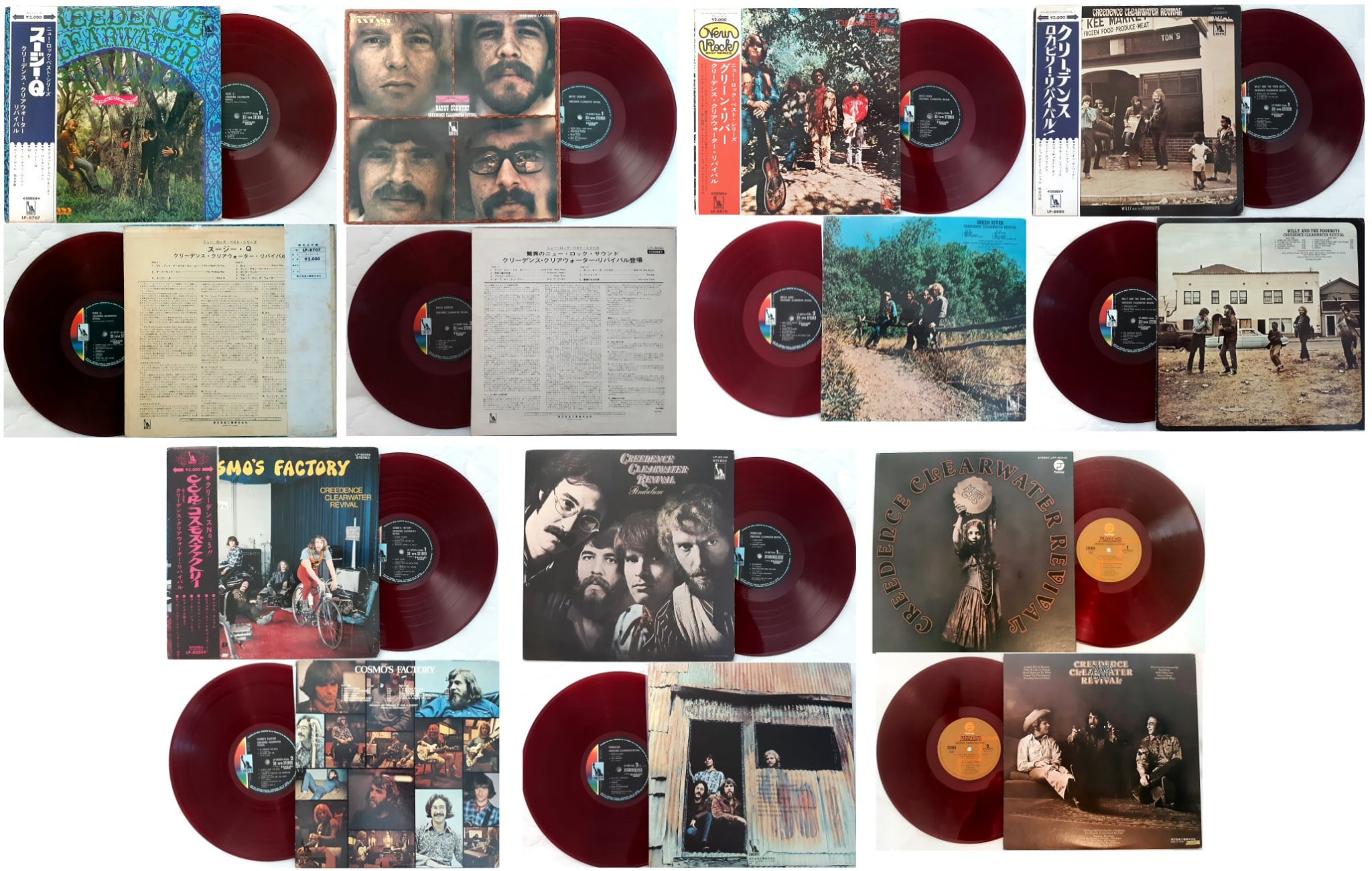
From David Hollandsworth’s music library: Photo of his various CCR vinyl albums collected from around the world.

 When CCR signed a revision of their two-year-old recording contract with Fantasy Records in 1969, Fogerty lost music publishing, songwriting, master recording rights, and copyright ownership for the songs that he had written.

After CCR broke up in 1972, Fogerty refused to play his own songs for many years. After a 50-year struggle, with multiple lawsuits to re-gain control over his music, Fogerty finally was able to purchase a majority stake in the publishing rights to his songs from Concord Records in 2023.

John Fogerty performing at the Salem Civic Center on 11/1/25. Photo courtesy of Sammy Oakey.

During his Salem, Virginia concert, Fogerty credited his wife Julie with helping to gain control of the CCR era of music that he penned. The former lead singer of CCR was genuinely happy to sing and play his beloved songs to the crowd in attendance.

Below is a video clip of Fogerty being interviewed on the Dan Patrick Show on August 22, 2025, the day “Legacy: The Creedence Clearwater Revival Years” was released.  During this video, Fogerty shares about getting his music back and how his song “Centerfield” was written.

Another recent TV appearance that Fogerty made was on the Late Show with Stephen Colbert. In the video clip below, the artist shares about getting his songwriting catalog back and other topics with the famed night time talk show host and comedian.

I became a CCR fan in 1969 and just after my birthday that year, I bought my first CCR record: the Double-A-Sided 45-rpm “Bad Moon Rising” and “Lodi” single. Later in ’69, I purchased another double-sided smash single: “Fortunate Son” and “Down on the Corner.”

Photo of my Double-A-Sided 45-rpm “Bad Moon Rising” and “Lodi” single that I purchased back in the summer of ’69 and that I still own here in 2025.

My parents also helped me to add CCR albums to my record collection.  They gifted me “Green River” for Christmas in 1969 and “Cosmos Factory” at holiday time the following year.  After Paul McCartney announced the Beatles had broken up in April ’70, CCR became my favorite rock band.

DJ Dave’s second vinyl copy of “Cosmo’s Factory.” This album was given to me by my daughters as a Father’s Day gift in 2017. Also in the photo is my dog Penny Lane who is admiring the legendary CCR LP.

Ever since my teen years, I have always loved the songs John Fogerty wrote and recorded with CCR, as well as his Blue Ridge Rangers project and music from when the singer-songwriter became a solo artist.

Seeing Fogerty performing live on stage was thrilling.  This was my second show by the former CCR lead singer:  My wife, Priscilla, and I first saw him at the historic Wolf Trap National Park Amphitheater in Vienna, Virginia during 2014.

Photo of the record sleeve of the Double-A-sided 45 rpm “Who’ll Stop the Rain” and “Travelin’ Band” single that I bought during the winter of 1970 and I still own the record here in 2025.

At the Salem show I attended, 19 songs were performed: 14 Creedence Clearwater Revival songs, 4 Fogerty solo tunes and one selection from the Golliwogs, which was the name of Fogerty’s band from 1964 to 1967 before the group changed their name to CCR. The entire listing of songs can be found here at Setlist FM Dot Com.

Video that I recorded of “Have You Ever Seen the Rain” by John Fogerty during his Salem Civic Center concert on 11/1/25.

As a side note: While I realize that Fogerty wouldn’t perform every single top 40 hit that he had made with CCR, during his 2025 tour, below are 5 songs I wished had been part of the setlist:

  • Run Through the Jungle
  • Commotion
  • Sweet Hitch-Hiker
  • Long as I Can See the Light
  • Hey Tonight
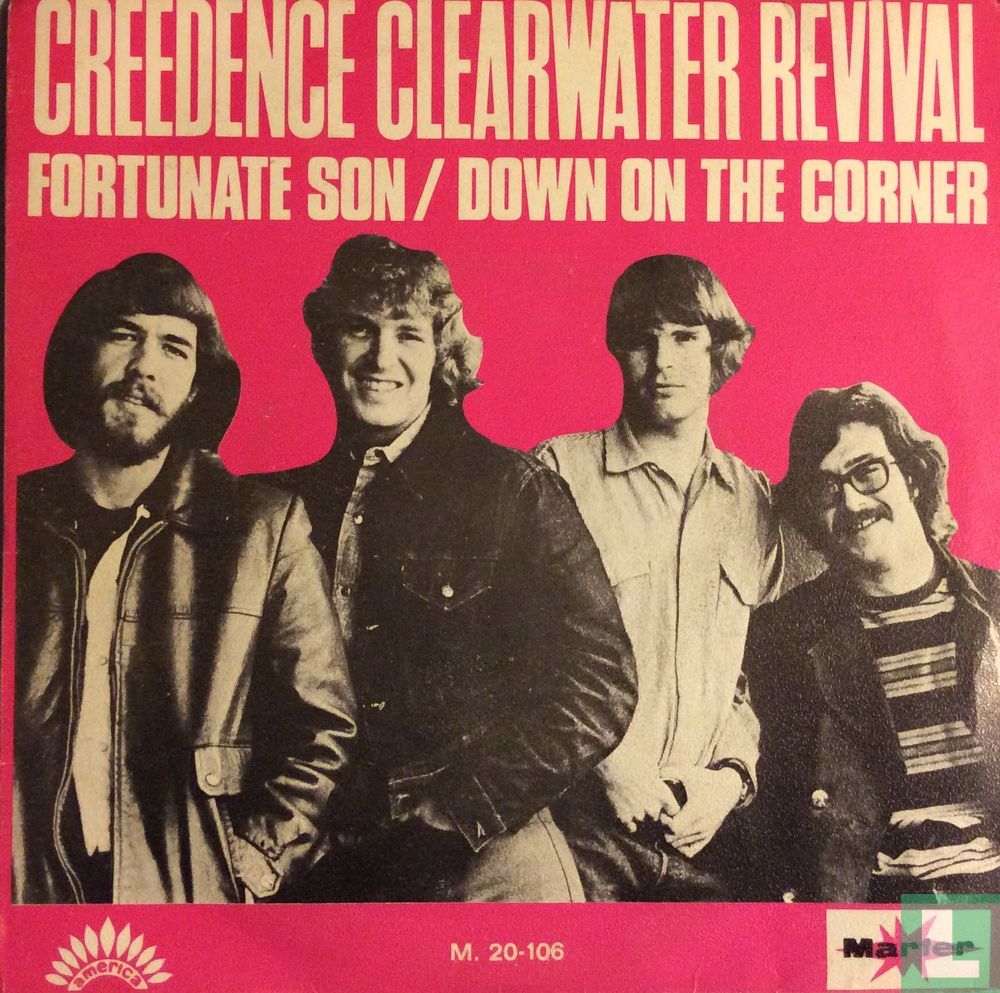
Photo of my record sleeve of the Double-A-Sided 45 rpm “Fortunate Son” and “Down on the Corner” single that I bought during the fall of 1969 and I still own the record here in 2025.

Before John took the stage in a flannel shirt and blue jeans, the band Hearty Har opened the show with a 30-minute set.  The two main members of this group are Shane and Tyler Fogerty, who are the sons of John and Julie Fogerty.

Video that I recorded of “Old Man Down the Road” by John Fogerty during his Salem Civic Center concert on 11/1/25.

As for John’s own band, it’s a family affair: Tyler and Shane Fogerty also play in their father’s ensemble. Also in attendance at this show was John’s wife, Julie Fogerty. She was on stage right while the band played, taking photos and recording videos throughout the performance.

Other members of Fogerty’s band included drummer Richard Millsap, bass guitarist Jesse Wilson, keyboardist Doug Lamothe, along with sax player Rob Stone.

John Fogerty performing at the Salem Civic Center on 11/1/25. Photo courtesy of Sammy Oakey.

Before I share my review on Fogerty’s Salem show, I am including comments below from my daughter, some friends and other acquaintances who also attended the show.

Photo of my 2nd vinyl copy of “Cosmo’s Factory” that I received as a Father’s Day gift in 2017. This is my favorite CCR album of all-time.

Amy Woodson:

“Teach your kids the classics! Growing up, my Dad played for me and my sisters a cornucopia of hits from years gone by. The songs of legends like John Fogerty and Creedence Clearwater Revival accompanied road trips, practice pick-ups, and Saturday morning shenanigans. All three of us liked to tease him and insist there was a “bathroom on the right” instead of a “Bad Moon Rising.”

For me, seeing John Fogerty live harkens back to the feeling of childhood wonderment and hearing a great tune for the first time. No song represents those emotions better than “Lookin’ Out my Backdoor,” my favorite moment of the concert. There’s something about the interplay of guitar, lyrics, and Fogerty’s nonpareil tone that stirs up my happiest imaginations. “Bother me tomorrow, today, I’ll buy no sorrows!”

Video that I recorded of “Who’ll Stop the Rain” by John Fogerty during his Salem Civic Center concert on 11/1/25.

David Hollandsworth:

“It was the summer of 1970. I had just finished 7th grade and we had recently moved to the city of Monterey, Mexico, where there was an AM pop station called XERJ that played American top 40 music. Each afternoon they had a 30-minute show featuring the most popular rock band in the world at the time – CCR.

It was there that I was introduced to CCR and would sit by the radio every afternoon. They became my favorite band. They still are. The first two CCR records I ever bought were two, 7” 33 rpm EPs with four songs each. 4 song EPs with nice picture sleeves were common in Mexico. “Cosmos Factory” had just been released that July so I bought it along with “Willy and the Poor Boys” – my first LPs! Sadly, I never got to see CCR in their heyday.”
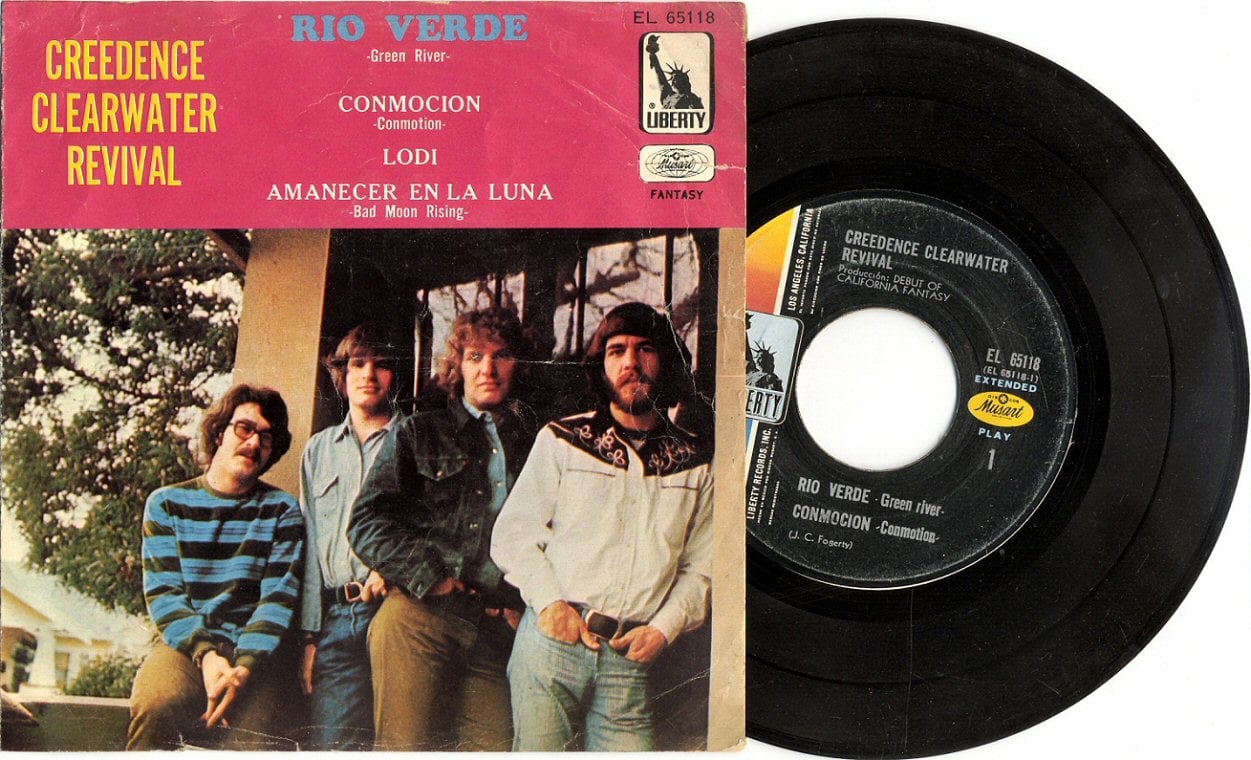
From David Hollandsworth’s music library: Photo with one of the first CCR 33 rpm EPs that he bought in 1970.

  Hollandsworth continues, “Fast forward 55 years, I was finally able to see the mastermind behind all their songs. Of all places, Fogerty came to Salem, just 10 minutes from my house! There was no way I was going to miss that! At 80 years of age, I was shocked at his energy level and how he moved around the stage like he was 30 years younger!  His voice was perhaps a little less full than in 1970 but he was still fantastic. The guy can still play a mean guitar, too! It was fun seeing him playing alongside his two sons while his wife was off to the side of the stage taking videos.

 I also noticed the many times he changed to a different guitar for different songs. It’s hard to pick a favorite song that he did that night but the crowd really responded to “Have You Ever Seen the Rain”, his most played song on Spotify. I loved the jams on “Keep on Chooglin’” and “The Old Man Down the Road” with he and his son, Shane, trading guitar solos. Looked like they were having a blast! So, yeah, it took 55 years, but I was satisfied to finally see one of my musical heroes from the past. He gave us 90 minutes of pure classic rock magic! Keep on chooglin’, John!”

From David Hollandsworth’s music library: Photo with one of the first CCR 33 rpm EPs that he bought in 1970.

Sammy Oakey:

“While I’m more of an average fan of CCR than an avid one, I know an icon when I see one, and John Fogerty’s visit to the Roanoke Valley would be an ideal time to view this rocker. He certainly didn’t disappoint, as his voice, stage banter, and movements all bellied a man half his age. Mixing up his Creedence material with his solo numbers, Fogerty had the crowd in the palm of his hand for his 90 minutes onstage. His band, which included two of his sons, were white hot and electrified the rock faithful who knew most of the lyrics of his songs. I personally enjoyed his solo material the best, and especially loved “Centerfield” (complete with a combination baseball bat/guitar!) and “Rock ‘n Roll Girls” (with a sizzling sax solo!).”

Video that I recorded of “Born on the Bayou” by John Fogerty during his Salem Civic Center concert on 11/1/25.

 Oakey continues, “Fogerty commented several times about how grateful he was to his wife for helping him regain the rights to his songs as well as finding and purchasing a guitar he had played in CCR over 55 years ago. He truly seems to be at a good place in his life, and he shared that with the Fogerty faithful who showed up. I came to the show expecting to see an aging rocker attempt to keep his career alive. I left the Salem Civic Center realizing that John Fogerty is one of those musicians who truly get better with age.

John Fogerty performing at the Salem Civic Center on 11/1/25. Photo courtesy of Sammy Oakey.

Ashley McGinnis Duffy:  Roanoke, Virginia  

I grew up listening to John Fogerty and Creedence Clearwater Revival with my dad, so their music has always been a big part of my life. I bought tickets for my dad’s birthday this year, and the concert was absolutely amazing. We loved every minute of it and especially enjoyed hearing the stories behind how some of the songs were written. My favorite song of the night was Fortunate Son. It’s one of my dad’s all-time favorites, and hearing it live together was a moment I’ll never forget.

Robert McGinnis:  Roanoke, Virginia

CCR is the best band that I’ve ever listen to. I like all of Fogerty’s songs. It was one of the best concerts I’ve ever attended. My favorite song is Fortunate Son.

John Fogerty performing at the Salem Civic Center on 11/1/25. Photo courtesy of Sammy Oakey.

Transitioning from comments by others to my own review, it was a magical night for me being at Fogerty’s show.

Before Fogerty’s entrance on stage, there was a superb video clip shown that highlighted the singer-songwriter’s musical career, chronicling the Creedence Clearwater Revival years and his solo career.  This clip was an outstanding way to start the show.

One of the things that I admired about John Fogerty that night was his genuine expressions of gratitude to the audience, giving appreciation to his fans for their dedication sticking with the artist, through trials and tribulations.

Video that I recorded of “Proud Mary” by John Fogerty during his Salem Civic Center concert on 11/1/25.

During other breaks between songs, Fogerty gave recognition and respect to his sons Shane and Tyler for being trusted musicians in his band. The former CCR singer-songwriter truly seemed extremely happy talking about his two adult sons to the audience.

John Fogerty also acknowledged his wife, Julie multiple times with praise. He credited her as his soul mate, a solid rock in their marriage of 34 years and the driving force behind helping John be successful retrieving all the songs he wrote as a member of CCR.

“Bad Moon Rising opened up the show while “Fortunate Son” was the last song before the two-song encore.  “Travelin’ Band” and “Proud Mary” capped a perfect ending to this excellent performance.

Video that I recorded of “Up Around the Bend” by John Fogerty during his Salem Civic Center concert on 11/1/25.

The CCR leader was full of high-energy, had a vibrant stage presence and provided excellent guitar playing. He ripped ripped through his CCR and solo hits with passion. His connection with the audience was genuine, as he played memorable guitar riffs and danced all around the stage like a person half his age.

I found it remarkable that Fogerty’s vocals were still strong as when he was cracking out hits with CCR in the 60s and 70s. His distinctive tenor voice was clear, rich, resonant and powerful, singing songs about sorrow, pain, anger, joy and other emotional topics.

Photo of my record sleeve of the Double-A-sided 45 rpm “Lookin’ Out My Backdoor” and “Long As I Can See the Light” single that I bought in the summer of 1970 and that I still own here in 2025.

In my humble opinion, Fogerty has written some of the greatest songs ever recorded. I loved hearing the singer-songwriter perform some of my favorite lines from his CCR penned odes.

  • “I went down Virginia, seekin’ shelter from the storm”
  • “Oh lord, I’m stuck in Lodi again”
  • “I can still hear my ol’ hound dog barkin’, chasin’ down a hoodoo there, born on the bayou”
  •  “Cleaned a lot of plates in Memphis, pumped a lot of ‘pane down in New Orleans”
  •  “737 coming out of the sky, won’t you take me down to Memphis on a midnight ride?”
Video that I made of “Travelin’ Band” by John Fogerty during his Salem Civic Center concert 11/1/25.

Hearing Fogerty’s songs in concert reminded me on how his style of music blended rock, pop, blues, folk and country together. Some music historians label the CCR sound “Swamp Rock” or “Roots Rock.” Fogerty wrote about common everyday American experiences in realistic terms.

While I won’t comment on all 19 songs performed in Salem, I will share my top favorite songs played by Fogerty’s band:  5 CCR tracks and 1 solo hit.

Video that I recorded of “Centerfield” by John Fogerty during his Salem Civic Center concert on 11/1/25.

My favorite solo John Fogerty song of all-time is “Centerfield.”  I rate this legendary sports anthem as the third best top 40 single of 1985. In 2010, Fogerty became the only musician ever to be celebrated at a National Baseball Hall of Fame Induction Ceremony when “Centerfield” was honored.

John Fogerty performing at the Salem Civic Center on 11/1/25. Photo courtesy of Sammy Oakey.

Obviously, I loved many of the CCR songs played at the show.  But I am only going to comment on my top 5 favorite CCR Fogerty songs of all-time that were performed at the show.

Another photo of DJ Dave posing with my favorite CCR LP: “Cosmo’s Factory.” This was taken in July 2020 during the 50th anniversary of this legendary album release.

5.  Lodi

“If I only had a dollar, For ev’ry song I’ve sung, Ev’ry time I’ve had to play, While people sat there drunk, You know, I’d catch the next train, Back to where I live, Oh Lord, I’m stuck in Lodi again”

Lyrics describe a struggling musician whose career has landed him playing gigs in the town of Lodi, California. After playing in local bars in that town, the musician is stuck in Lodi and doesn’t have enough money to leave that place behind.

I rate the song “Lodi” among the best county rock songs from the 60s and 70s.

Video that I made of “Lodi” by John Fogerty during his Salem Civic Center concert on 11/1/25.

4.  Bad Moon Rising

“I see the bad moon a-rising, I see trouble on the way, I see earthquakes and lightning, I see bad times today, Don’t go around tonight, Well, it’s bound to take your life, There’s a bad moon on the rise.”

I could have sworn that I heard Fogerty sing, “There’s a bathroom on the right” during one of the chorus’ on “Bad Moon Rising.”  I consider this song as one of the 10 best singles from back in the summer of ’69.

Video that I recorded of “Bad Moon Rising” by John Fogerty during his Salem Civic Center concert 11/1/25.

3.  Green River

“I can hear the bullfrog callin’ me, aw, Wonder if my rope’s still hangin’ to the tree, aw, Love to kick my feet way down the shallow water, Shoofly, dragonfly, get back to mother, Pick up a flat rock, skip it across Green River.”

Fogerty’s up-tempo rocker was played by CCR at Woodstock in August 1969. I place it as my favorite song that CCR performed at the peace & love music festival over 56 years ago.

Video that I made of “Green River” by John Fogerty during his Salem Civic Center concert 11/1/25.

2.  Lookin’ Out My Backdoor

“Forward troubles Illinois, lock the front door, oh, boy, Look at all the happy creatures dancin’ on the lawn, Bother me tomorrow, today, I’ll buy no sorrows, Doo, doo, doo, lookin’ out my back door.”

My second favorite CCR song is “Lookin’ Out My Backdoor.” And this track is on my top-rated Fogerty/CCR album of all-time: “Cosmo’s Factory.”  It is among my favorite singles of 1970.

Video that I made of “Lookin’ Out My Backdoor” by John Fogerty during his Salem Civic Center concert on 11/1/25.
  1.  Fortunate Son

“Yeah-yeah, some folks inherit star-spangled eyes, Hoo, they send you down to war, Lord, And when you ask ’em, “How much should we give?”, Hoo, they only answer, “More, more, more, more”, It ain’t me, it ain’t me, I ain’t no military son, son, Lord, It ain’t me, it ain’t me, I ain’t no fortunate one.”

My 45-rpm single of “Fortunate Son” and “Down on the Corner” that I bought in the fall of 1969 and still own this record here in 2025.

“Fortunate Son” is my favorite CCR track of all-time. This 1969 anthem became a rallying cry against the Vietnam War and individuals from affluent backgrounds. It is now considered John Fogerty’s signature song.

The first time I heard this song on WROV Roanoke in the fall of 1969, I immediately loved Fogerty’s protest anthem.  Soon thereafter, I went to Sears and bought the Double-A-Sided 45-rpm single of “Fortunate Son” and “Down on the Corner.”

Video I made of “Fortunate Son” by John Fogerty at his Salem Civic Center concert on 11/1/25.

On a music blog article that I published last December, I rated “Fortunate Son” as the number 1 best protest and social justice anthem from the 60s and 70s.  For me, “Fortunate Son” is the cream of the crop with Fogerty’s written songs.

I rate “Fortunate Son” as the #1 best protest and social justice anthem from the 60s and 70s.

Overall, it was a wonderful experience to have the opportunity to see Fogerty in concert. His Legacy tour will be continuing into 2026. I would highly recommend going to see the 1993 Rock & Roll Hall of Fame inductee in concert if you have an opportunity.

John Fogerty performing at the Salem Civic Center on 11/1/25. Photo courtesy of Sammy Oakey.

If you were at the Salem November 1, concert like myself, or any other Fogerty 2025 Legacy concerts during the past few months, I would encourage you to share a brief analysis on the show you attended. And for those who are fans of CCR, I welcome your comment on Fogerty’s music.

Without a doubt, I was thrilled to see Fogerty performing most of his CCR hits and selected solo songs. I will forever cherish the opportunity that I had to witness John Fogerty, who is still superbly performing his music at age 80. It was most excellent.  Rock on!

To subscribe to my blog via email, please click the “Follow” button in the menu above.
Standard
Broadcasting, Music, Music Countdowns, Pop Music, Radio, Retro Rock, Rock Music

Best Protest and Social Justice Anthems: Hits of the 60s and 70s

When I was growing up in the late 60s and early 70s, it was a tumultuous time in the United States and my country was dominated by political and social unrest.

During the 1965 to 1975 time period, there were 3 main protest movements that happened simultaneously in America:  Anti-war sentiments with U.S. involvement in the Vietnam conflict, Black civil rights activism and women’s rights issues.

Many in the music industry started writing songs that addressed these pressing, controversial topics by recording music that promoted hope, empowerment, love, and encouragement to press on for change.

Top 40 radio provided an outlet for artists to reach large audiences with concerns that many Americans shared from all walks of life: folks hoping that change would take place in the future.

With this edition of my musical musings, I will be counting down what I consider to be the best protest and social justice anthems that were played on Top 40 radio from 1965 to 1975.

For the rest of this message, I will be counting down my favorite Top 20 singles of protest and social justice songs.  The sole criterion I utilized with song tabulation for the countdown is that the song must have peaked at #40 or higher on the Billboard Hot 100 between the 1965 to 1975 time period.

As I surveyed the prominent songs in this category, the countdown is entirely based on my opinions. The songs that I selected are singles that I deem to be culturally, historically, aesthetically significant, meaningful or relevant.

Before I start my countdown, I want to share what I consider to be four foundational protest and social justice songs between 1960 and 1964. These selections are building blocks for songs popular from the mid 60s to mid 70s.

  • Blowin’ in the Wind—Bob Dylan

Written by Bob Dylan.  Protest song asking rhetorical questions on topic of freedom, peace and war. Made popular by Peter Paul & Mary. Their 1963 cover of ‘Blowin’ in the Wind” reached #2 on Billboard Hot 100. One of Dylan’s signature songs. Inducted into the Grammy Hall of Fame.

  • We Shall Overcome—Joan Baez 

Written by Charles Albert Tindley. Originally a gospel song.  Modern version of tune made famous by Pete Seeger. Became associated with the 60s civil rights movement. Joan Baez sang song in front of the Lincoln Memorial during the March on Washington Civil Rights protest in August 1963.

  • A Change is Gonna Come—Sam Cooke

Written by Sam Cooke.  This song is the crown jewel of all songs written by the “King of Soul.”

Lyrics were inspired by multiple real-life discrimination against Cooke during the 60s. Tune became hope for the Civil Rights Moment. It’s ranked as the third “Greatest Song of All Time” by Rolling Stone magazine.

  • Where Have All the Flowers Gone—Pete Seeger

Written By Pete Seeger.  Lyrics are an anti-war protest, highlighting death and destruction upon the effects of war.  Many artists have covered the song with Peter Paul & Mary and the Kingston Trio having the most popular versions in the 60s. Song was inducted into the Grammy Hall of Fame in 1973.

There are also two excellent protest and social justice songs that were not top 40 hits but are memorable singles I want to highlight:

  • Requiem for the Masses—The Association

Written by Terry Kirkman. A member of the Association. The song references war, racism and protesting network TV news reporting of the Vietnam conflict. The tune has requiem-style vocals that depict thousands of fallen dead soldiers coming back to the U.S. to be buried.

  • 7 O ‘Clock News/Silent Night—Simon & Garfunkel

Co-written by Josef Mohr & Franz Gruber. The Paul Simon & Art Garfunkel duo sing the traditional Christmas carol “Silent Night” while simultaneously an announcer reads actual news events that happened during the summer of 1966.  The 7 O ‘Clock dialogue features prominent news about Martin Luther King, Jr, the Civil Rights Moment and info about the Vietnam War

I have one more outstanding protest song to share before the countdown starts:

  • Signs–Five Man Electrical Band

One of my favorite singles of 1971 is a protest on the topic of signs. Musician and lead vocalist Les Emmerson from Canadian group Five Man Electrical Band, wrote this song after traveling on U.S. Route 66 in California and seeing multiple large billboards blocking the natural scenic beauty along the historic highway.

Without further ado, my Top 20 countdown of best protest and justice songs begins:

20.  Eve of Destruction—Barry McGuire  1965

Written by P.F. Sloan:  Peak Positions on Billboard Charts: #1 Hot 100, 29th Biggest song of 1965

Co-written by Dennis Lambert & Brian Potter:   This ode mentions many hot button topics: Vietnam War, drafting of soldiers, the Civil Rights Movement, Nuclear War, U.S. space program and war in the Middle East. Barry McGuire’s song is a one hit wonder. He went on to record Jesus Music in the 70s.

19.  One Tin Soldier—The Original Caste:  1969

Co-written by Dennis Lambert & Brian Potter:  Peaked by #26 on Billboard Hot 100

The Original Caste was a Canadian group and their anti-war song is about a fictional kingdom that had a great treasure. Warring tribes fight, killing and destroying all foes in order to obtain the treasure. When the treasure is conquered, the rock has a message, “Peace on earth.” Overall message of the lyrics:  The war was pointless.

18.  Sweet Cherry Wine—Tommy James & the Shondells  1969

Co-written by Richard Grasso & Tommy James:  Peaked at #7 on Billboard Hot 100

Lyrics of “Sweet Cherry Wine” had multiple meanings. It directly declares an anti-war message, as the Vietnam conflict was happening in the late 60s. Tommy James also said in 2012 that his song refers to the blood of Jesus that Christians celebrate as Holy Eucharist or Holy Communion.

17.  Inner City Blues (Make Me Wanna Holler)—Marvin Gaye  1971

Co-written by James Nyx Jr. & Marvin Gaye:  Peaked at #14 on the Billboard Hot 100

From the landmark “What’s Going On” concept album by Marvin Gaye. This song depicts horrid living conditions, extreme poverty and economic despair for people living in American inner-city ghettos.  It was the third consecutive hit by Gaye to reach #1 on the Billboard Hot R&B Singles chart in 1971.

16.  American Woman—The Guess Who. 1970

Co-written by Burton Cummings, Garry Peterson, Jim Kale & Randy Bachman:  Peak Positions on Billboard Charts: #1 Hot 100, 3rd Biggest Song of 1970.

Randy Bachman of the Guess Who stated in 2014 that “American Woman” was an anti-war protest song against the Vietnam conflict from a Canadian point of view. Of course, lyrics can also be interpreted literally as guys from Canada not wanting anything to do with women from the U.S. The single became the biggest hit on the Billboard Hot 100 by the Canadian rock band.

15.  Give Peace a Chance–John Lennon & the Plastic Ono Band  1969  

Co-written by John Lennon and Yoko Ono:  Peaked at #14 on Billboard Hot 100

During John Lennon and Yoko Ono’s honeymoon in 1969, the newly married couple held a “bed-in” peace rally in Montreal, Canada.  “Give Peace a Chance” was recorded in a hotel room with a group of friends and acquaintances. It became an anthem for the anti-war movement in America.

14.  Living for the City—Stevie Wonder:  1973

Written by Stevie Wonder:  Peak Positions on Billboard Charts:  #8 Hot 100, 45th Biggest Song of 1974

An epic story about a poor Black man from Mississippi moving to New York City who took a job with low wages. He eventually faces racial injustice, police brutality and a corrupt criminal system.  Stevie Wonder won two Grammy Awards for his written story song.

13.  People Get Ready—Curtis Mayfield & the Impressions  1965

Written by Curtis Mayfield: Peaked at #14 on the Billboard Hot 100

A gospel influenced song of social and political awareness.  After Curtis Mayfield’s song was released, Martin Luther King Jr. named “People Get Ready” as the “Unofficial Civil Right Movement Song.”  Rolling Stone rates it at #24 on their “Greatest Songs of All Time” listing.

12.  Imagine—John Lennon  1971

Co-written by John Lennon & Yoko Ono: Peaked at #3 on the Billboard Hot 100

Best-selling single in the solo career of John Lennon.  Lyrics are a call for world peace:  one world, one country, one people. “Imagine” is ranked as the third “Greatest Song of All Time” by Rolling Stone and is considered Lennon’s masterpiece signature song.

11.  Get Together—The Youngbloods  1967

Written by Chet Powers:  Peak positions on Billboard Charts:  #5 Hot 100, 16th Biggest Song of 1969

An appeal for peace, love, tranquility and brotherhood are all captured on this only top 40 hit by the Youngbloods. Originally released during the summer of love in July 1967, this folk-rock tune actually didn’t become a hit until two years later, back in the summer of ’69.

10.  Abraham Martin & John—Dion:  1968

Written by Dick Holler:  Peaked at #4 on the Billboard Hot 100

A tribute to four men who were assassinated:  Abraham Lincoln, John F Kennedy, Martin Luther King, Jr. and Robert F Kennedy.  Was written after the assassinations of MLK and RFK in the summer of 1968. All 4 leaders were icons of social change. Gone but not forgotten.

9.   Respect—Aretha Franklin   1967

Written by Otis Redding:  Peak Positions on Billboard Charts:  #1 Hot 100, 13th Biggest Song of 1967

Aretha Franklin took Otis Redding’s “Respect” and made it her own song. It became an anthem for Black Civil Rights and Women’s Rights, especially workplace equality, protection from domestic violence and sexual assault/harassment issues.  Rolling Stone magazine rates “R-E-S-P-E-C-T” as the #1 greatest song of all time.

8.   Revolution—The Beatles:  1968

Co-written/credited as a John Lennon & Paul McCartney song.  It was primarily written by Lennon. Peaked at #12 on the Billboard Hot 100

Lyrics for “Revolution” came about as some anti-war moment members were calling out for violence to achieve their goals.  Lennon, being a peace activist, believed in non-violent methods to promote peaceful transitions. The Beatles rocked with a message of social change on this hard driving tune.

7.   War—Edwin Starr. 1970

Co-written by Norman Whitfield & Barrett Strong:  Peak Positions on Billboard Charts: #1 Hot 100, 5th Biggest Song of 1970

“War, huh, yeah, What is it good for? Absolutely nothing!” is the chorus to one of the most renowned anti-war protest songs of the 20th century.  Edwin Starr delivers powerful vocals and expresses anger, frustration and moral conviction with this outstanding Motown Records gem.

6.   Ohio—Crosby Stills Nash & Young  1970

Written By Neil Young:  Peaked at #16 on the Billboard Hot 100

When Neil Young saw photos in Life Magazine about the Kent State University tragedy of 4 students being killed by National Guard soldiers, he wrote lyrics that expressed horror, rage and disgust about the May 4, 1970 event. Some music historians proclaim that “Ohio” is the greatest protest song of the 20th century.

5.   Ball of Confusion (That’s What the World is Today)—The Temptations  1970

Co-written by Norman Whitfield & Barrett Strong: Peak Positions on Billboard Charts: #2 Hot 100, 24th Biggest Song of 1970

Psychedelic soul that mentions a wide variety of topical issues. It was an age of discontent with the world spinning out of control.  “Ball of Confusion” was archetypical of social justice Motown songs that were produced in the late 60s and early 70s.

4.   For What It’s Worth—Buffalo Springfield  1967

Written by Stephen Stills:  Peak Positions on Billboard Charts: #7 Hot 100, 27th Biggest Song 1967

This protest song was originally written by Stephen Stills about curfew riots that happened at Sunset Strip in Los Angeles in November 1966.  After the tune became a hit, it was associated with Vietnam War protests, with young people clashing with police during the late 60s counterculture era.

3.   People Got to Be Free—The Rascals  1968

Co-written by Felix Cavaliere & Eddie Brigati:  Peak positions on Billboard Charts:  #5 Hot 100, 5th Biggest Song of 1968 

 Written on May 14, 1968, between the assassinations of Martin Luther King, Jr and Robert F Kennedy.  The message promoted tolerance, freedom and brotherhood of all mankind. Released during the turbulent summer of 1968, “People Got to Be Free” became an anthem of hope for young Americans.

2.   What’s Going On—Marvin Gaye  1971

Co-written by Al Cleveland, Renaldo & Marvin Gaye:  Peak Positions on Billboard Charts:  #2 Hot 100, 21st Biggest Single of 1971

1971 was a troublesome time in America.  Marvin Gaye’s socially conscious song “What’s Going On” accurately captured the pulse of turmoil that prevailed in our country.  Police brutality, violence in the streets and American involvement in the Vietnam War are all topics on this protest tune.

“What’s Going On” is among the best and most loved tunes in Motown musical history. Rolling Stone ranks it at number 6 on the, “500 Greatest Songs of All Time” listing.  Numerous other music publications place the tune among the best songs from the 20th Century. It remains a crown jewel of the best songs ever recorded by Gaye.

  1. Fortunate Son—Creedence Clearwater Revival  1969

Written by John Fogerty:  Peaked at #3 on the Billboard Hot 100

My #1 protest and social justice song is “Fortunate Son” by Creedence Clearwater Revival (CCR).  Released in September 1969 during the peak period of American involvement in the Vietnam War, this ode quickly became an anti-war movement anthem and is considered a signature song for its author, singer-songwriter John Fogerty.

As Fogerty explained with a post on X, “Fortunate Son is a song I wrote during the Vietnam War, inspired by the stark contrast between those who were drafted to fight and die for their country and those who had the privilege to avoid the draft because of their wealth and connections.”

In 2013, Fogerty’s song was added to the National Recording Registry by the Library of Congress and it is widely regarded as the best overall song ever written by Fogerty. Without a doubt, I rate “Fortunate Son” as my favorite John Fogerty/CCR track of all-time and it is the #1 best protest and social justice song on my 60s and 70s countdown.

That wraps up what I consider to be my favorite and best 60s and 70s protest and social justice songs.  I completely understand that my listing of songs in this category was written from my point of view and is subjective.

If you were creating a similar register of excellent protest and social justice singles, your tabulation may be totally different. What do you consider to be best preeminent singles in this category?

I have passionate memories of the protest and social justice songs that I have shared in this article.  Without a doubt, I still cherish and fondly remember my countdown singles to this day.  Rock on!

To subscribe to my blog via email, please click the “Follow” button in the menu above.

Standard