Broadcasting, Music, Music Countdowns, Pop Music, Radio, Retro Rock, Rock Music

Best Protest and Social Justice Anthems: Hits of the 60s and 70s

When I was growing up in the late 60s and early 70s, it was a tumultuous time in the United States and my country was dominated by political and social unrest.

During the 1965 to 1975 time period, there were 3 main protest movements that happened simultaneously in America:  Anti-war sentiments with U.S. involvement in the Vietnam conflict, Black civil rights activism and women’s rights issues.

Many in the music industry started writing songs that addressed these pressing, controversial topics by recording music that promoted hope, empowerment, love, and encouragement to press on for change.

Top 40 radio provided an outlet for artists to reach large audiences with concerns that many Americans shared from all walks of life: folks hoping that change would take place in the future.

With this edition of my musical musings, I will be counting down what I consider to be the best protest and social justice anthems that were played on Top 40 radio from 1965 to 1975.

For the rest of this message, I will be counting down my favorite Top 20 singles of protest and social justice songs.  The sole criterion I utilized with song tabulation for the countdown is that the song must have peaked at #40 or higher on the Billboard Hot 100 between the 1965 to 1975 time period.

As I surveyed the prominent songs in this category, the countdown is entirely based on my opinions. The songs that I selected are singles that I deem to be culturally, historically, aesthetically significant, meaningful or relevant.

Before I start my countdown, I want to share what I consider to be four foundational protest and social justice songs between 1960 and 1964. These selections are building blocks for songs popular from the mid 60s to mid 70s.

  • Blowin’ in the Wind—Bob Dylan

Written by Bob Dylan.  Protest song asking rhetorical questions on topic of freedom, peace and war. Made popular by Peter Paul & Mary. Their 1963 cover of ‘Blowin’ in the Wind” reached #2 on Billboard Hot 100. One of Dylan’s signature songs. Inducted into the Grammy Hall of Fame.

  • We Shall Overcome—Joan Baez 

Written by Charles Albert Tindley. Originally a gospel song.  Modern version of tune made famous by Pete Seeger. Became associated with the 60s civil rights movement. Joan Baez sang song in front of the Lincoln Memorial during the March on Washington Civil Rights protest in August 1963.

  • A Change is Gonna Come—Sam Cooke

Written by Sam Cooke.  This song is the crown jewel of all songs written by the “King of Soul.”

Lyrics were inspired by multiple real-life discrimination against Cooke during the 60s. Tune became hope for the Civil Rights Moment. It’s ranked as the third “Greatest Song of All Time” by Rolling Stone magazine.

  • Where Have All the Flowers Gone—Pete Seeger

Written By Pete Seeger.  Lyrics are an anti-war protest, highlighting death and destruction upon the effects of war.  Many artists have covered the song with Peter Paul & Mary and the Kingston Trio having the most popular versions in the 60s. Song was inducted into the Grammy Hall of Fame in 1973.

There are also two excellent protest and social justice songs that were not top 40 hits but are memorable singles I want to highlight:

  • Requiem for the Masses—The Association

Written by Terry Kirkman. A member of the Association. The song references war, racism and protesting network TV news reporting of the Vietnam conflict. The tune has requiem-style vocals that depict thousands of fallen dead soldiers coming back to the U.S. to be buried.

  • 7 O ‘Clock News/Silent Night—Simon & Garfunkel

Co-written by Josef Mohr & Franz Gruber. The Paul Simon & Art Garfunkel duo sing the traditional Christmas carol “Silent Night” while simultaneously an announcer reads actual news events that happened during the summer of 1966.  The 7 O ‘Clock dialogue features prominent news about Martin Luther King, Jr, the Civil Rights Moment and info about the Vietnam War

I have one more outstanding protest song to share before the countdown starts:

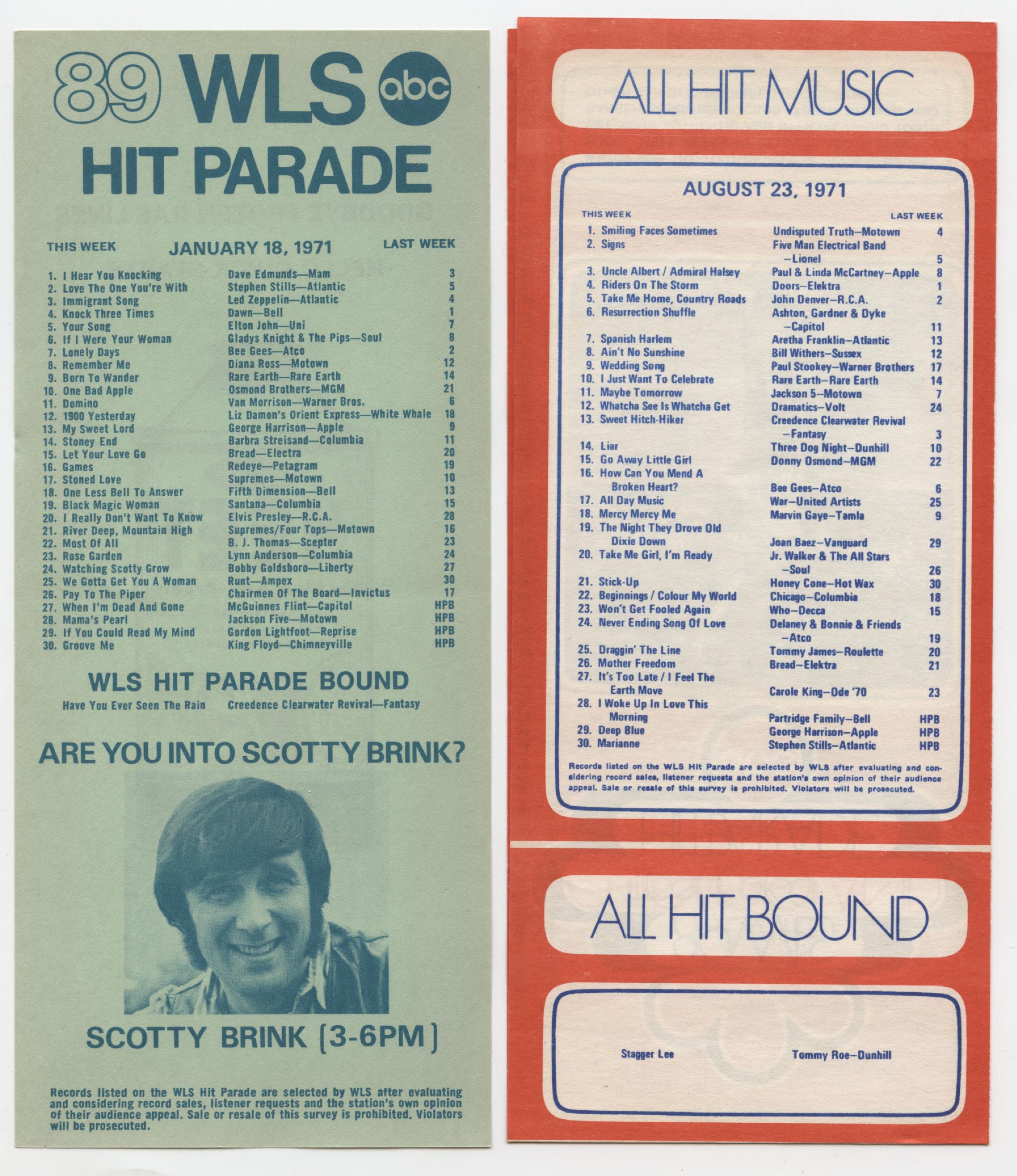
  • Signs–Five Man Electrical Band

One of my favorite singles of 1971 is a protest on the topic of signs. Musician and lead vocalist Les Emmerson from Canadian group Five Man Electrical Band, wrote this song after traveling on U.S. Route 66 in California and seeing multiple large billboards blocking the natural scenic beauty along the historic highway.

Without further ado, my Top 20 countdown of best protest and justice songs begins:

20.  Eve of Destruction—Barry McGuire  1965

Written by P.F. Sloan:  Peak Positions on Billboard Charts: #1 Hot 100, 29th Biggest song of 1965

Co-written by Dennis Lambert & Brian Potter:   This ode mentions many hot button topics: Vietnam War, drafting of soldiers, the Civil Rights Movement, Nuclear War, U.S. space program and war in the Middle East. Barry McGuire’s song is a one hit wonder. He went on to record Jesus Music in the 70s.

19.  One Tin Soldier—The Original Caste:  1969

Co-written by Dennis Lambert & Brian Potter:  Peaked by #26 on Billboard Hot 100

The Original Caste was a Canadian group and their anti-war song is about a fictional kingdom that had a great treasure. Warring tribes fight, killing and destroying all foes in order to obtain the treasure. When the treasure is conquered, the rock has a message, “Peace on earth.” Overall message of the lyrics:  The war was pointless.

18.  Sweet Cherry Wine—Tommy James & the Shondells  1969

Co-written by Richard Grasso & Tommy James:  Peaked at #7 on Billboard Hot 100

Lyrics of “Sweet Cherry Wine” had multiple meanings. It directly declares an anti-war message, as the Vietnam conflict was happening in the late 60s. Tommy James also said in 2012 that his song refers to the blood of Jesus that Christians celebrate as Holy Eucharist or Holy Communion.

17.  Inner City Blues (Make Me Wanna Holler)—Marvin Gaye  1971

Co-written by James Nyx Jr. & Marvin Gaye:  Peaked at #14 on the Billboard Hot 100

From the landmark “What’s Going On” concept album by Marvin Gaye. This song depicts horrid living conditions, extreme poverty and economic despair for people living in American inner-city ghettos.  It was the third consecutive hit by Gaye to reach #1 on the Billboard Hot R&B Singles chart in 1971.

16.  American Woman—The Guess Who. 1970

Co-written by Burton Cummings, Garry Peterson, Jim Kale & Randy Bachman:  Peak Positions on Billboard Charts: #1 Hot 100, 3rd Biggest Song of 1970.

Randy Bachman of the Guess Who stated in 2014 that “American Woman” was an anti-war protest song against the Vietnam conflict from a Canadian point of view. Of course, lyrics can also be interpreted literally as guys from Canada not wanting anything to do with women from the U.S. The single became the biggest hit on the Billboard Hot 100 by the Canadian rock band.

15.  Give Peace a Chance–John Lennon & the Plastic Ono Band  1969  

Co-written by John Lennon and Yoko Ono:  Peaked at #14 on Billboard Hot 100

During John Lennon and Yoko Ono’s honeymoon in 1969, the newly married couple held a “bed-in” peace rally in Montreal, Canada.  “Give Peace a Chance” was recorded in a hotel room with a group of friends and acquaintances. It became an anthem for the anti-war movement in America.

14.  Living for the City—Stevie Wonder:  1973

Written by Stevie Wonder:  Peak Positions on Billboard Charts:  #8 Hot 100, 45th Biggest Song of 1974

An epic story about a poor Black man from Mississippi moving to New York City who took a job with low wages. He eventually faces racial injustice, police brutality and a corrupt criminal system.  Stevie Wonder won two Grammy Awards for his written story song.

13.  People Get Ready—Curtis Mayfield & the Impressions  1965

Written by Curtis Mayfield: Peaked at #14 on the Billboard Hot 100

A gospel influenced song of social and political awareness.  After Curtis Mayfield’s song was released, Martin Luther King Jr. named “People Get Ready” as the “Unofficial Civil Right Movement Song.”  Rolling Stone rates it at #24 on their “Greatest Songs of All Time” listing.

12.  Imagine—John Lennon  1971

Co-written by John Lennon & Yoko Ono: Peaked at #3 on the Billboard Hot 100

Best-selling single in the solo career of John Lennon.  Lyrics are a call for world peace:  one world, one country, one people. “Imagine” is ranked as the third “Greatest Song of All Time” by Rolling Stone and is considered Lennon’s masterpiece signature song.

11.  Get Together—The Youngbloods  1967

Written by Chet Powers:  Peak positions on Billboard Charts:  #5 Hot 100, 16th Biggest Song of 1969

An appeal for peace, love, tranquility and brotherhood are all captured on this only top 40 hit by the Youngbloods. Originally released during the summer of love in July 1967, this folk-rock tune actually didn’t become a hit until two years later, back in the summer of ’69.

10.  Abraham Martin & John—Dion:  1968

Written by Dick Holler:  Peaked at #4 on the Billboard Hot 100

A tribute to four men who were assassinated:  Abraham Lincoln, John F Kennedy, Martin Luther King, Jr. and Robert F Kennedy.  Was written after the assassinations of MLK and RFK in the summer of 1968. All 4 leaders were icons of social change. Gone but not forgotten.

9.   Respect—Aretha Franklin   1967

Written by Otis Redding:  Peak Positions on Billboard Charts:  #1 Hot 100, 13th Biggest Song of 1967

Aretha Franklin took Otis Redding’s “Respect” and made it her own song. It became an anthem for Black Civil Rights and Women’s Rights, especially workplace equality, protection from domestic violence and sexual assault/harassment issues.  Rolling Stone magazine rates “R-E-S-P-E-C-T” as the #1 greatest song of all time.

8.   Revolution—The Beatles:  1968

Co-written/credited as a John Lennon & Paul McCartney song.  It was primarily written by Lennon. Peaked at #12 on the Billboard Hot 100

Lyrics for “Revolution” came about as some anti-war moment members were calling out for violence to achieve their goals.  Lennon, being a peace activist, believed in non-violent methods to promote peaceful transitions. The Beatles rocked with a message of social change on this hard driving tune.

7.   War—Edwin Starr. 1970

Co-written by Norman Whitfield & Barrett Strong:  Peak Positions on Billboard Charts: #1 Hot 100, 5th Biggest Song of 1970

“War, huh, yeah, What is it good for? Absolutely nothing!” is the chorus to one of the most renowned anti-war protest songs of the 20th century.  Edwin Starr delivers powerful vocals and expresses anger, frustration and moral conviction with this outstanding Motown Records gem.

6.   Ohio—Crosby Stills Nash & Young  1970

Written By Neil Young:  Peaked at #16 on the Billboard Hot 100

When Neil Young saw photos in Life Magazine about the Kent State University tragedy of 4 students being killed by National Guard soldiers, he wrote lyrics that expressed horror, rage and disgust about the May 4, 1970 event. Some music historians proclaim that “Ohio” is the greatest protest song of the 20th century.

5.   Ball of Confusion (That’s What the World is Today)—The Temptations  1970

Co-written by Norman Whitfield & Barrett Strong: Peak Positions on Billboard Charts: #2 Hot 100, 24th Biggest Song of 1970

Psychedelic soul that mentions a wide variety of topical issues. It was an age of discontent with the world spinning out of control.  “Ball of Confusion” was archetypical of social justice Motown songs that were produced in the late 60s and early 70s.

4.   For What It’s Worth—Buffalo Springfield  1967

Written by Stephen Stills:  Peak Positions on Billboard Charts: #7 Hot 100, 27th Biggest Song 1967

This protest song was originally written by Stephen Stills about curfew riots that happened at Sunset Strip in Los Angeles in November 1966.  After the tune became a hit, it was associated with Vietnam War protests, with young people clashing with police during the late 60s counterculture era.

3.   People Got to Be Free—The Rascals  1968

Co-written by Felix Cavaliere & Eddie Brigati:  Peak positions on Billboard Charts:  #5 Hot 100, 5th Biggest Song of 1968 

 Written on May 14, 1968, between the assassinations of Martin Luther King, Jr and Robert F Kennedy.  The message promoted tolerance, freedom and brotherhood of all mankind. Released during the turbulent summer of 1968, “People Got to Be Free” became an anthem of hope for young Americans.

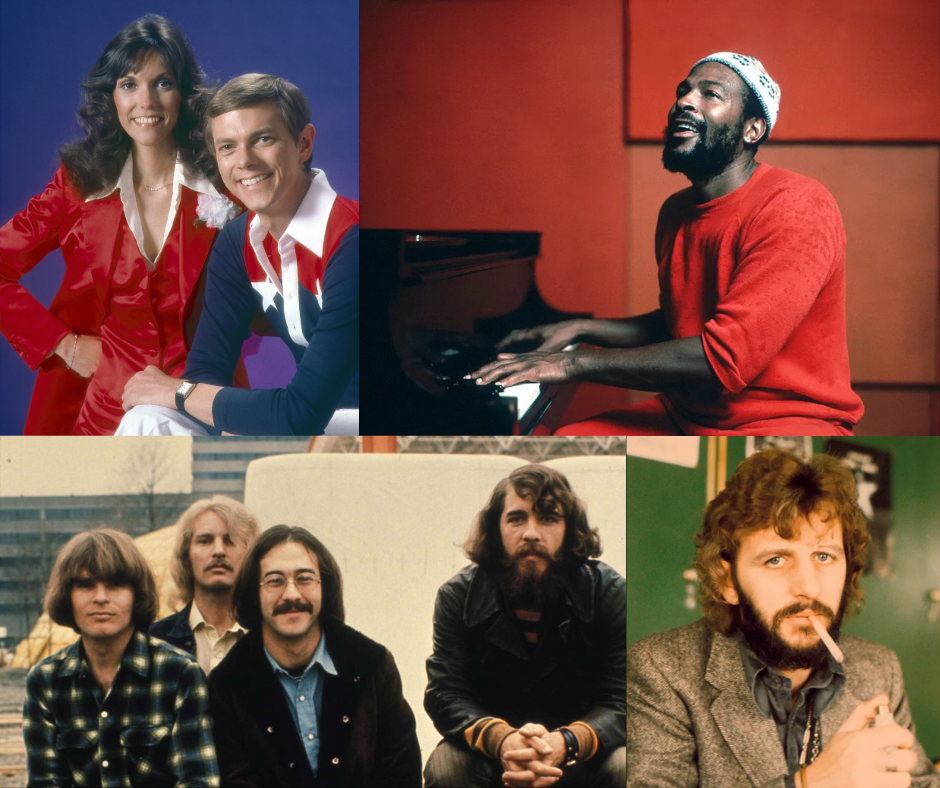
2.   What’s Going On—Marvin Gaye  1971

Co-written by Al Cleveland, Renaldo & Marvin Gaye:  Peak Positions on Billboard Charts:  #2 Hot 100, 21st Biggest Single of 1971

1971 was a troublesome time in America.  Marvin Gaye’s socially conscious song “What’s Going On” accurately captured the pulse of turmoil that prevailed in our country.  Police brutality, violence in the streets and American involvement in the Vietnam War are all topics on this protest tune.

“What’s Going On” is among the best and most loved tunes in Motown musical history. Rolling Stone ranks it at number 6 on the, “500 Greatest Songs of All Time” listing.  Numerous other music publications place the tune among the best songs from the 20th Century. It remains a crown jewel of the best songs ever recorded by Gaye.

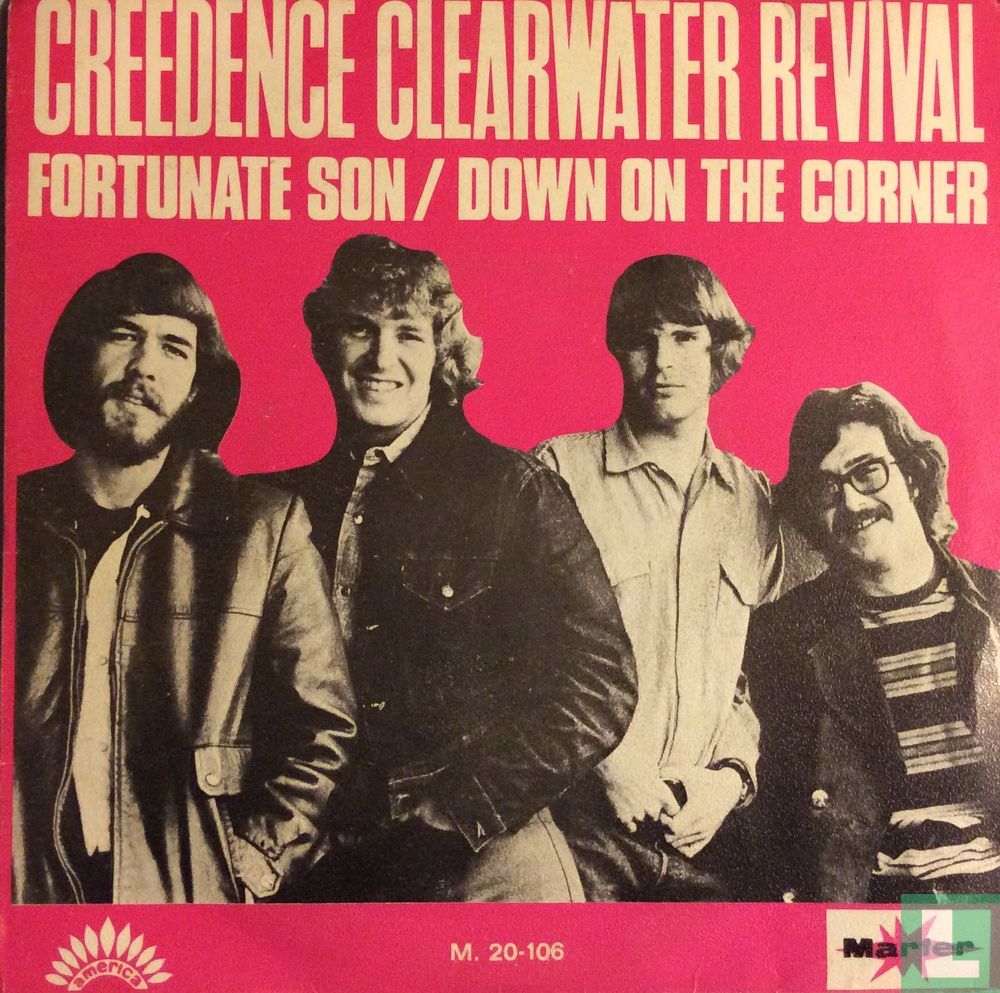
  1. Fortunate Son—Creedence Clearwater Revival  1969

Written by John Fogerty:  Peaked at #3 on the Billboard Hot 100

My #1 protest and social justice song is “Fortunate Son” by Creedence Clearwater Revival (CCR).  Released in September 1969 during the peak period of American involvement in the Vietnam War, this ode quickly became an anti-war movement anthem and is considered a signature song for its author, singer-songwriter John Fogerty.

As Fogerty explained with a post on X, “Fortunate Son is a song I wrote during the Vietnam War, inspired by the stark contrast between those who were drafted to fight and die for their country and those who had the privilege to avoid the draft because of their wealth and connections.”

In 2013, Fogerty’s song was added to the National Recording Registry by the Library of Congress and it is widely regarded as the best overall song ever written by Fogerty. Without a doubt, I rate “Fortunate Son” as my favorite John Fogerty/CCR track of all-time and it is the #1 best protest and social justice song on my 60s and 70s countdown.

That wraps up what I consider to be my favorite and best 60s and 70s protest and social justice songs.  I completely understand that my listing of songs in this category was written from my point of view and is subjective.

If you were creating a similar register of excellent protest and social justice singles, your tabulation may be totally different. What do you consider to be best preeminent singles in this category?

I have passionate memories of the protest and social justice songs that I have shared in this article.  Without a doubt, I still cherish and fondly remember my countdown singles to this day.  Rock on!

To subscribe to my blog via email, please click the “Follow” button in the menu above.

Standard
Broadcasting, Music, Music Countdowns, Pop Music, Radio, Retro Rock

1979 Stellar Top 40 Hits

During the year of 1979, I was a student at James Madison University in Harrisonburg, Virginia, getting a Bachelor’s Degree in Communication Arts.  While at JMU, I worked part-time at Public Radio station WMRA 90.7 FM, that served the Shenandoah Valley.

When I wasn’t attending classes or working at WMRA, I would spend my spare time listening to other radio stations that I could pick up in Harrisonburg. Most of my radio surfing was concentrated either on Top 40 outlets or album-oriented rock (AOR) stations.

With this music blog message, I will be counting down what I consider to be my favorite top 40 hits from 1979. My selections are 45-rpm singles that I treasured while a JMU student, and I still love these songs today.

Since I started my radio career at legendary Top 40 WROV 1240 AM Roanoke in 1974, I was drawn to listening to any radio station that featured top 40 radio during my JMU student years.

My time in Harrisonburg gave me an opportunity to hear various Top 40 stations on any given day.  The local Top 40 station that JMU students could pick up on campus was WQPO (Q101) 100.7 FM in Harrisonburg.

I was not a fan of Q101 as it was automated with no live DJs.  I preferred tuning in WWWV 97.5 FM (3WV) in Charlottesville as they were an AOR formatted station. Plus, 3WV had an excellent morning show and live DJ staff throughout the broadcast day.

To get my fix of Top 40 radio while I was at JMU, I would listen to stations out of Richmond and Washington DC radio markets.  Picking up these stations tended to be hit or miss, depending on the weather conditions. Cloudy days seemed to be the best opportunity to hear these signals coming in strong at my Harrisonburg home.

Below are the Top 40 radio signals that I could pick up on a regular basis in Harrisonburg during 1979:

WRVQ (Q94) 94.5 FM Richmond

WPGC 95.5 FM Washington DC Market

WRQX (Q107) 107.3 FM Washington DC Market

As a side note: Top 40 K92 92.3 FM Roanoke came on the air January 1, 1980. Between New Year’s Day and my JMU graduation in May 1980, I would listen to K92 on a regular basis in Harrisonburg.

After sundown, I would also listen to a couple of high-powered 50,000 watt AM stations: WLS 890 AM Chicago and WABC 770 AM New York. Those stations always had top-notch DJs playing the hits. On the Big 89 WLS, my favorite DJs were Jeff Davis, Larry Lujack and John Records Landecker.

For the rest of this message, I will be counting down my favorite Top 25 singles from 45 years ago. The sole criterion I utilized with song tabulation for the countdown is simple: I used Billboard’s “Year-End Hot 100 singles chart for 1979.”

As I surveyed the prominent 1979 hits, the countdown is entirely based on my opinions. The songs that I selected are singles that I deem to be culturally, historically, aesthetically significant, meaningful or relevant.

For a historical reference, below are the top 15 singles of 1979, according to Billboard magazine:

1          “My Sharona” The Knack

2          “Bad Girls”      Donna Summer

3          “Le Freak”       Chic

4          “Da Ya Think I’m Sexy?”  Rod Stewart

5          “Reunited”      Peaches & Herb

6          “I Will Survive”  Gloria Gaynor

7          “Hot Stuff”      Donna Summer

8          “Y.M.C.A.”       Village People

9          “Ring My Bell” Anita Ward

10        “Sad Eyes”       Robert John

11        “Too Much Heaven”   Bee Gees

12        “MacArthur Park”       Donna Summer

13        “When You’re in Love with a Beautiful Woman”       Dr. Hook

14        “Makin’ It”      David Naughton

15        “Fire”   The Pointer Sisters

Before I start my countdown, I want to share some of my favorite top 40 singles from 45 years ago that were not ranked by Billboard on their 1979 Top 100 year-end chart.

  • Let’s Go—The Cars
  • Cruel to Be Kind—Nick Lowe
  • Crazy Love—Poco
  • Blow Away—George Harrison
  • Roxanne—The Police
  • Love Takes Time—Orleans
  • Driver’s Seat—Sniff ‘N’ the Tears
  • Serve Somebody—Bob Dylan
  • Blue Morning, Blue Day—Foreigner
  • Heart of the Night—Poco
  • Get It Right Next Time—Gerry Rafferty
  • Song on the Radio—Al Stewart
  • People of the South Wind—Kansas
  • Morning Dance—Spyro Gyra
  • Take Me to the River—Talking Heads

Next are songs that I considered for the countdown but fell just outside of my top 25.  These selections are not ranked and are placed in a random order:

  • Lady—Little River Band
  • Gold—John Stewart
  • New York Groove—Ace Frehley
  • A Little More Love—Olivia Newton John
  • Fire—The Pointer Sisters
  • Reunited—Peaches & Herb
  • The Devil Went Down to Georgia—The Charlie Daniels Band
  • I Want You to Want Me—Cheap Trick
  • Strange Way—Firefall
  • Double Vision—Foreigner
  • Dance the Night Away—Van Halen
  • The Gambler–Kenny Rogers
  • Just When I Needed You Most—Randy VanWarmer
  • Lotta Love—Nicolette Larson
  • Promises—Eric Clapton
  • I Was Made for Loving You—Kiss
  • Shake It—Ian Matthews
  • I Just Fall in Love Again–Anne Murray
  • Chuck E’s in Love—Rickie Lee Jones
  • Stumblin’ In—Suzi Quatro & Chris Norman
  • Music Box Dancer–Frank Mills
  • I Just Wanna Stop—Gino Vannelli
  • She Believes in Me–Kenny Rogers
  • Shine a Little Love—Electric Light Orchestra
  • Got to Be Real—Cheryl Lynn
  • Tragedy—The Bee Gees
  • Shake Your Groove Thing—Peaches & Herb
  • We Are Family—Sister Sledge
  • Ain’t No Stoppin’ Us Now—McFadden & Whitehead
  • Goodnight Tonight—Paul McCartney & Wings

Without further ado, my stellar singles of 1979 countdown begins:

25. I Will Survive—Gloria Gaynor

Peak positions on Billboard Charts: #1 Hot 100, 6th Biggest Song of 1979

Lyrics have become an anthem for female empowerment. Inducted into Library of Congress National Recording Registry in 2016.  “I Will Survive” received a Grammy Award for “Best Disco Recording.”

24. Don’t Stop ‘Til You Get Enough—Michael Jackson

Peak Positions on Billboard Charts: #1 Hot 100, 91st Biggest Song of 1979

Produced by Quincy Jones and written by Michael Jackson.  It was the biggest solo hit of the 70s by the “King of Pop.”  Musically, it features a six-piece horn ensemble of saxophones, trumpets and trombone.  A sterling string section also adds to the rich sound on this tune.

23. Sail On—The Commodores

Peak Positions on Billboard Charts:  #4 Hot 100, 98th Biggest Song of 1979

Commodores front man Lionel Richie wrote this country flavored ballad and provided lead vocals on this country influenced ballad. Song features superb keyboard and guitar instrumentation.

22. Rock & Roll Fantasy—Bad Company

Peak Positions on Billboard Charts: #13 Hot 100, 54th Biggest Song of 1979

Written by Bad Company’s vocalist Paul Rodgers. It was the biggest selling-single by British classic rock band. From the “Desolation Angels” album.

21. Bad Case of Loving You (Doctor, Doctor)—Robert Palmer  

Peak Positions on Billboard Charts:  #14 Hot 100, 92nd Biggest Songs of 1979

Written by singer-songwriter Moon Martin. Robert Palmer’s cover version became the biggest hit by the British artist in the 70s. The song was nominated for a Grammy Award in the category of “Best Male Rock Vocal Performance.”

20. My Sharona—The Knack

Peak Positions on Billboard Charts: #1 Hot 100, the #1 Biggest Song of 1979

New Wave band from Los Angeles, California.  The Knack came on strong during the summer of 1979. “My Sharona” spent 6 weeks at the top spot with Billboard’s Hot 100 chart and is ranked as the #1 biggest single from 45 years ago.

19. Rise—Herb Alpert

Peak Positions on Billboard Charts:  #1 Hot 100, 80th Biggest Song of 1979

Tumpeter Herb Alpert was the first artist to reach number 1 on the Billboard Hot 100 with a vocal performance as well as an instrumental production. (Artist took “This Guy’s in Love with You” to #1 in 1968). Tune received a Grammy Award for “Best Pop Instrumental Performance.”

18. After the Love Has Gone—Earth Wind & Fire

Peak Positions on Billboard Charts: #2 Hot 100, 38th Biggest Song of 1979

Composed by David Foster and Jay Graydon, with lyrics written by Bill Champlin. First of two Earth Wind & Fire songs in the countdown. Maurice White on lead vocals while Philip Bailey sings backup harmonies. Tune has superb horn section.

17. Good Times—Chic

Peak Positions on Billboard Charts: #1 Hot 100, 20th Biggest Song of 1979

Written by Chic band members Bernard Edwards and Nile Rodgers. Song has legendary bass line riff and is one of the most sampled tunes in music history.

Backing track from “Good Times” was used on the first Top 40 hip-hop hit, “Rapper’s Delight” by Sugarhill Gang.  Comes in at number 68 on Rolling Stone “Greatest Songs of All Time” list.

16. Too Much Heaven—The Bee Gees

Peak Positions on Billboard Charts:  #1 Hot 100, 11th Biggest Song of 1979

Co-written by the brothers Gibb: Barry, Robin and Maurice. Song features the Chicago horn section (James Pankow, Walter Parazaider and Lee Loughnane). Single became the fourth of six consecutive number 1 hits by the Bee Gees on the Billboard Hot 100.

15. Ooo Baby Baby—Linda Ronstadt

Peak Position on Billboard Charts: #7 Hot 100, 77th Biggest Song of 1979

A cover of Smokey Robinson & the Miracles 1965 hit. Has outstanding saxophone played by David Sanborn. Produced by Peter Asher. Linda Ronstadt also scored airplay on country and R&B/soul radio with this hit.

14. What You Won’t Do for Love—Bobby Caldwell

Peak Positions on Billboard Charts:  #9 Hot 100, 59th Biggest Song of 1979

Co-written by Bobby Caldwell and Alfons Kettner. Was Caldwell’s only top 40 hit on the Billboard singles chart. Song is now considered to be in the “yacht rock” sub-genre of music.

13. How Much I Feel—Ambrosia

Peak Positions on Billboard Charts: #3 Hot 100, 84th Biggest Song of 1979

Quintessential Yacht Rock band. “How Much I Feel” was written by the band’s guitarist/vocalist David Pack. Song is smooth featuring a jazz/R&B groove and great group harmony.

12. Every Time I Think of You—The Babys

Peak Positions on Billboard Charts: #13 Hot 100, 89th Biggest Song of 1979

British band had 3 U.S. top 40 hits. Bassist John Waite was the lead singer with group. Myrna Matthews shares singing duties on this hit. Waite had two #1 hits in the 80s: “Missing You” as a solo hit (1984) and “When I See You Smile” as singer in Bad English (1989).

11. Don’t Bring Me Down—Electric Light Orchestra

Peak Positions on Billboard Charts: #4 Hot 100, 81st Biggest Song of 1979

Produced and written by ELO front man Jeff Lynne. It was the highest-charting 45-rpm single by the British band in America. Unlike most other ELO songs, “Don’t Let Me Down” didn’t contain a string section.

10. Love is the Answer—England Dan & John Ford Coley

Peak Positions on Billboard Charts: #10 Hot 100, 68th Biggest Song of 1979

Written by Todd Rundgren. The England Dan and John Ford Coley rendition of the song reached #1 on the Billboard Adult Contemporary chart. The soft rock duo also received airplay on some Christian music radio stations during 1979.

9.   Hold the Line—Toto

Peak Positions on Billboard Charts: #5 Hot 100, 44th Biggest Song of 1979

Toto’s keyboardist David Paich wrote “Hold the Line” which became the group’s first hit record.  Lead vocals were by Bobby Kimball. This up-tempo tune remains one of the most beloved songs by the 70s and 80s pop rock band.

8.   What a Fool Believes—The Doobie Brothers

Peak Positions on Billboard Charts: #1 Hot 100, 19th Biggest Song of 1979

The only yacht rock song to receive a 100 score on the Yachtski Scale was co-written by Michael McDonald and Kenny Loggins. The second #1 hit for the Doobie Brothers.  The single received two Grammy Awards in 1980: for “Song of the Year” and “Record of the Year.”

7.   Time Passages—Al Stewart

Peak Positions on Billboard Charts: #7 Hot 100, 79th Biggest Song of 1979

Written by Al Stewart and Peter White.  Song has outstanding saxophone performance by Phil Kenzie. Produced by Alan Parsons. Spent 10 weeks on top of the Billboard Easy Listening chart and was the rated as the #1 biggest Adult Contemporary song of 1979 by the music magazine.

6.   My Life—Billy Joel

Peak Positions on Billboard Charts: #3 Hot 100, 28th Biggest Song of 1979

Singer-songwriter and “Piano Man” Billy Joel wrote “My Life” which came from the “52nd Street” album. Musically, tune has vigorous guitar and keyboards. The artist sings this hit with high energy.

5.   Renegade—Styx

Peak Positions on Billboard Charts:  #16 Hot 100, 67th Biggest Song of 1979

Styx guitarist Tommy Shaw is the songwriter of “Renegade.” The song starts cold with a cappella singing and then goes into a full-fledge blazing rock tune. Pounding drums, infectious guitar riffs and catchy hooks drive this classic rock standout.

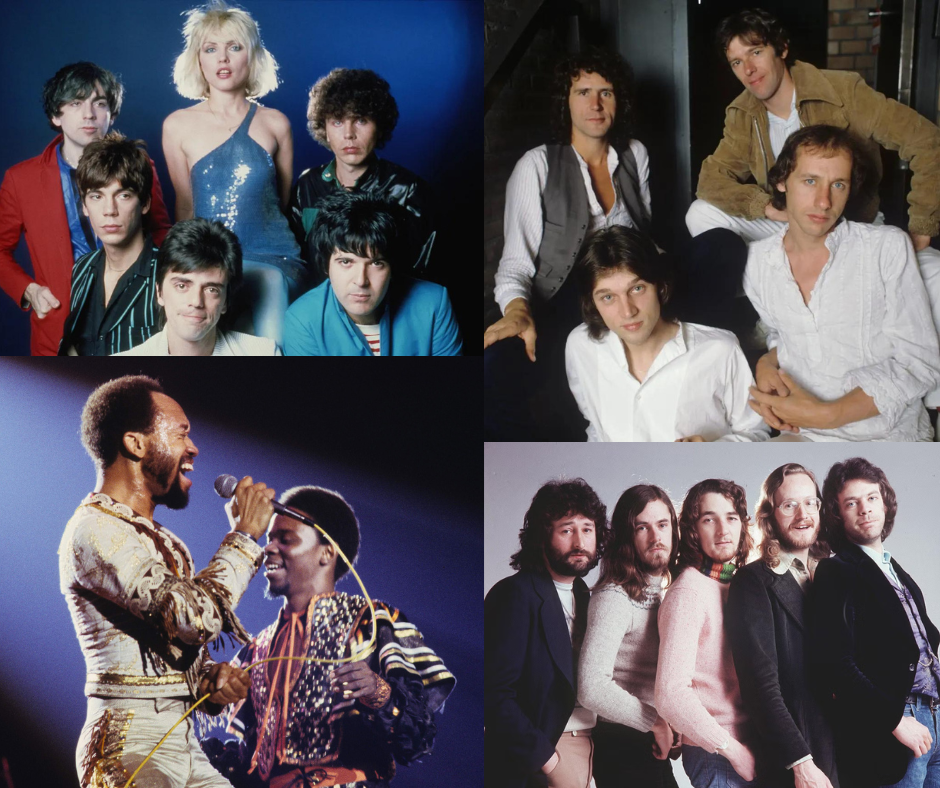
4.   Heart of Glass—Blondie

Peak Positions on Billboard Charts: #1 Hot 100, 18th Biggest Song of 1979

Co-written by Blondie singer Debbie Harry and guitarist Chris Stein.  Single is a brilliant crossing of “New Wave” rock with a powerful disco beat. It was the first of 4 number one hits for Blondie between 1979 and 1981. Song was inducted into the Grammy Hall of Fame in 2015.

3.   Sultans of Swing—Dire Straits

Peak Positions on Billboard Charts: #4 Hot 100, 61st Biggest Song of 1979

Dire Straits lead vocalist and guitarist Mark Knopfler penned this first hit by the British group. Lyrics are about a Dixieland swing jazz band playing at a near empty bar in south “London town.” Knopfle’s phrasing of vocals and his exceptional catchy guitar riffs, made “Sultans of Swing” the most unique top 40 single of 1979.

2.   The Logical Song—Supertramp

Peak Position on Billboard Charts: #6 Hot 100, 27th Biggest Song of 1979

Supertramp’s former co-front man Roger Hodgson came up with the idea of “The Logical Song” after he spent ten years at a boarding school when he was boy. This was the biggest single by the British progressive pop-rock band.  Saxophonist John Helliwell of Supertramp is magnificent playing his woodwind instrument.

1..   September—Earth Wind & Fire

Peak Positions of Billboard Charts: #8 Hot 100, 78th Biggest Song of 1979

“September” by Earth Wind & Fire (EW&F) is a quintessential song with multiple genres of music:  R&B, Soul, Funk, Jazz, Disco and Yacht Rock. Upbeat, feel-good groove. Philip Bailey and Maurice White share lead vocals on this successful song.

Instrumentally, the single features brass instruments, woodwinds, keyboards, guitars and drums. A signature song for EW&F, it was inducted into the Library of Congress’ National Recording Registry list of sound recordings in 2018.

Without a doubt, I proclaim “September” by Earth Wind & Fire as my favorite number one single with the countdown of stellar top 40 hits from 1979.

That wraps up what I consider to be my favorite and best 1979 top 40 hits. I completely understand that my listing of songs in this category was written from my point of view and is subjective.

If you were creating a similar register of excellent 1979 singles, your tabulation may be totally different. What do you consider to be best preeminent singles from ’79? I hope you will comment below.

I have passionate memories of my college years at JMU and hearing my favorite songs played on the radio during 1979. I still cherish and fondly remember the excellent music of 45 years ago. Rock on!

To subscribe to my blog via email, please click the “Follow” button in the menu above.
Standard
Broadcasting, Music, Music Countdowns, Pop Music, Radio, Retro Rock

We Are the World: The Greatest Night in Pop

“We are the world/We are the children/We are the ones who make a brighter day/So let’s start giving/There’s a choice we’re making/We’re saving our own lives/It’s true we’ll make a better day/Just you and me” Lyrics by Michael Jackson and Lionel Richie: “We Are the World” January 1985.

DJ Dave note: The day that I published this music blog article, March 7, 2024, was the 39th anniversary of when the USA for Africa single and video for “We Are the World” was released: 3/7/85.

One of the best musical documentaries that I have viewed this decade is “The Greatest Night in Pop.”  The 2024 film focuses on a charity single called “We Are the World” which was recorded over the course of a 12-hour period during late January 1985.

I want to thank my friend Jerry English for giving me the idea and inspiration for this latest music blog message. I am grateful that Jerry encouraged me to watch “The Greatest Night in Pop” film last month and I highly recommend viewing this outstanding documentary.

While I won’t be giving a review of “The Greatest Night in Pop” movie, I will be sharing about certain aspects of the film, the recording of “We Are the World”, and the songs significance in modern music history.

I also will be communicating what I consider to be the best 1980s singles by 15 of the artists who had solo vocal lines within the 1985 charity song. Every song that I will be listing was a major pop hit during the 80s.

“We Are the World” was written by Michael Jackson and Lionel Richie, with Quincy Jones and Michael Omartian producing the song which was recorded by a supergroup of pop artists called USA for Africa.

According to “The Greatest Night in Pop” documentary, over 40 pop artists assembled at A&M Recording Studios in Hollywood, California, to record final vocal tracks for the “We Are the World” song.

Michael Jackson arrived first for this historic musical event around 8:00 pm. Soon after scores of other artists came on the scene, with many coming directly from the American Music Awards happening that evening, including the host of the annual music ceremony Lionel Richie.

Around 10:30 pm, Quincy Jones gathered the vocal artists and musicians together to start the recording process. This assembled multitude worked throughout the night during their marathon recording session completing the final audiotape at 8:00 am.

Six weeks later on March 7, 1985, “We Are the World” was released as a single.  The song was an immediate hit: Reaching number 1 on three Billboard charts: R&B Singles chart, Hot Adult Contemporary Tracks listing and the Hot 100 Pop singles survey, where it spent 4 weeks at the top spot.

After “We Are the World” was released, it was honored by multiple music awards.  In 1986, the song achieved 4 Grammy Awards. The single also received awards by MTV for its music video, a People’s Choice Award and an American Music Award.

The original inspiration for artists to come together and record a song for African famine relief came from Harry Bellafonte. He is quoted on the USA for Africa website about the lasting effect of the “We Are the World” single:

“In 1985, the music industry and the world came together in an unprecedented outpouring of generosity in response to the tragic famine wreaking havoc in Africa at the time. The biggest names in music ‘checked their egos at the door’ to create what was and still is a worldwide phenomenon.”

Bellafonte continues: “The recording of the original We Are the World sold more than 7 million records worldwide. The worldwide sale of that record generated more than $60 million which has been used to assist Africa and Africans affected by the famine and other critical issues since 1985. The song became and remains the people’s anthem and continues to be revered and loved globally.”

Below are artists who sang solo parts on the “We Are the World” song:

  • Lionel Richie
  • Stevie Wonder
  • Paul Simon,
  • Kenny Rogers,
  • James Ingram
  •  Tina Turner
  •  Billy Joel
  •  Michael Jackson
  •  Diana Ross,
  •  Dionne Warwick
  •  Willie Nelson
  •  Al Jarreau
  •  Bruce Springsteen
  •  Kenny Loggins
  •  Steve Perry
  •  Daryl Hall
  •  Huey Lewis
  •  Cyndi Lauper
  •  Kim Carnes
  •  Bob Dylan
  •  Ray Charles

For the remainder of this message, I will convey what I consider to be the best and most memorable 80s pop hits, by 15 of the artists who had solo parts on the “We Are the World” recording. The songs that I have selected were all major top 40 singles from 1980 through 1989.

The top 15 songs and artists that I have picked are entirely based on my opinions. My selections are singles that I deem to be culturally, historically, aesthetically significant, meaningful or relevant.

In researching historical musical data for this article, I used “The Billboard Book of Top 40 Hits” by Joel Whitburn for documentation. The placement of singles on the countdown derives solely on my favorability of songs and not on how I rate each of the artists listed.

Now without further ado, here is my countdown of 15 outstanding singles from “We Are the World” singers:

15.  That’s What Friends Are For—Dionne Warwick: 1985

 Positions on Billboard Charts:  #1 Hot 100, The #1 biggest single of 1986

That’s What Friends Are For” was written by Burt Bacharach and Carole Bayer Sager and was recorded as a charity single for AIDS research and prevention.  The 45-rpm record label says: “Dionne and Friends” who were Elton John, Gladys Knight, and Stevie Wonder.   Won two Grammy Awards in 1986.

14.   Lady—Kenny Rogers: 1980

Positions on Billboard charts:  #1 Hot 100, 3rd biggest song of 1986

Lionel Richie wrote and produced “Lady” for Kenny Rogers. It was the first song of the 80s to chart on all four Billboard singles charts – Country, Hot 100, Adult Contemporary and Hot Soul. Rated as the 10th biggest single in the 80s decade.  Biggest selling song in Rogers’ career.

13.   On the Road Again—Willie Nelson: 1980

Positions on Billboard Charts:  #1 Hot Country, #7 Adult Contemporary, #20 Hot 100

Country crossover hit. Written by Willie Nelson for the movie “Honeysuckle Rose.” The artist also starred as the lead actor in the 1980 film. Won a Grammy Award for “Best Country Song.”  Became the 9th number one country hit for the singer-songwriter and is considered a signature song for Nelson.

12.   Upside Down—Diana Ross: 1980

Positions on Billboard Charts: #1 Hot 100, 18th Biggest song of 1980

“Upside Down” was written and produced by Nile Rodgers and Bernard Edwards, who were members of the R&B band Chic in 1980.  Big international hit for Diana Ross. Billboard ranks single at #80 on their “Hot 100, 60th Anniversary” chart.

11.   Betty Davis Eyes—Kim Carnes: 1981

Position on Billboard Charts:  #1, Hot 100, The #1 biggest single of 1981

Written in 1973 by Jackie De Shannon and Donna Weiss. Signature song for Kim Cranes. Single spent nine non-consecutive weeks at #1 on the Billboard Hot 100. Won 2 Grammys Awards for Song of the Year” and “Record of the Year.”

10.   Footloose—Kenny Loggins: 1984

Peak Positions on Billboard Charts:  #1 Hot 100, 4th Biggest Song of 1984

Kenny Loggins co-wrote “Footloose” with Dean Pitchford for a 1984 movie that shares the same name as the Loggins’ song. It was the biggest selling single for the “yacht rock” music maestro.  The first of two number 1 hits from the “Footloose” film (“Let’s Hear It for the Boy” by Denise Williams was second #1 single from movie).

9.     Girls Just Want to Have Fun–Cyndi Lauper: 1984

Peak Positions on Billboard Charts:  #2 Hot 100, 15th Biggest Song of 1984

Singer-songwriter Cyndi Lauper wrote “Girls Just Want to Have Fun” which was her debut single from the album “She So Unusual.”  Has become a feminist anthem and signature song for Lauper. Won top honors with a MTV Music Video Award and an American Video Award for this successful clip.

8.     You Can Call Me Al—Paul Simon: 1986

Peak positions with Billboard Charts:  #15 Adult Contemporary, #23 Hot 100

A world-wide hit for singer-songwriter Paul Simon who penned this song for the 2-time Grammy winning album “Graceland.”  Artist used African musicians on single, mixing pop, rock, jazz and zydeco, with musical styles that originated in South Africa. Biggest hit for Simon during the 80s.

7.     What’s Love Got to Do with It—Tina Turner: 1984

Peak Positions on Billboard Charts: #1 Hot 100, 2nd Biggest Song of 1984

Comeback song for Tina Turner and became her biggest selling single. “What’s Love Got to Do with It” received 3 Grammy Awards: for “Record of the Year”, “Song of the Year” and “Best Female Pop Vocal Performance.” Was inducted into the Grammy Hall of Fame in 1989.

6.     Oh, Sherrie—Steve Perry: 1984

Peak Positions on Billboard Charts: #3 Hot 100, 33rd Biggest Song of 1984

First solo single for Steve Perry from the album “Street Talk.”  Artist was still a member of Journey when “Oh, Sherrie” was a hit song during the summer of ’84.  Was the biggest selling solo single by the outstanding rock vocalist.

5.     Born in the USA—Bruce Springsteen: 1984

Peak Positions on Billboard Charts:  #9 Hot 100, 92nd Biggest Hit of 1984

Title track from the Bruce Springsteen 1983 album “Born in the USA.”  One of the best-known songs by the Boss. The third of 7 top ten singles on the Billboard Hot 100 from legendary LP (1983-1985).  The song is still a staple on classic rock radio stations here in 2024.

4.     We Didn’t Start the Fire—Billy Joel: 1989

Peak Positions on Billboard Charts: #1 Hot 100, 35th Biggest Song of 1989

Billy Joel wrote the lyrics of “We Didn’t Start the Fire” which document historical, political, cultural and sports highlights between the years 1948 and 1989. The “Piano Man” sings in a rapid paced manner that calls for multiple listens to comprehend all of the historical events mentioned. Joel still performs this song as the first encore selection at every one of his 2024 concerts.

3.     The Power of Love—Huey Lewis: 1985

Positions on Billboard Charts:  #1 Hot 100, 15th Biggest Song of 1985

“The Power of Love” was written by Huey Lewis, along with Lewis Hayes and Johnny Colla for the 1985 film “Back to the Future. The single is backed up by Lewis’ band the News and became that band’s first #1 chart topping song.  It was one of the biggest singles from the summer of ’85.

2.     All Night Long (All Night)—Lionel Richie: 1983

Peak Positions on Billboard Charts: #1 Hot 100, 12th Biggest Song of 1984

The most successful solo single by the former lead singer of the Commodores. Written by Lionel Richie, “All Night Long” has a diversity of musical elements: pop, rock, and R&B, mixed with a Caribbean/African beat. This Richie signature song is still a favorite to play at wedding receptions this decade.  

  1.  Man in the Mirror—Michael Jackson: 1988

Peak Positions on Billboard Charts: #1 Hot 100, 21st Biggest Song of 1988

My number 1 song on the countdown is by the “King of Pop” Michael Jackson.  “Man in the Mirror” was written by Glen Ballard and Siedah Garrett, produced by Quincy Jones and Jackson.

The Andraé Crouch Choir recorded background gospel vocals on the song and it became Jackson’s 4th consecutive single from the 1987 “Bad” album to peak at number 1 on the Billboard Hot 100.

The message of the lyrics offer encouragement: “I’m starting with the man in the mirror/I’m asking him to change his ways/And no message could have been any clearer/If you wanna make the world a better place/Take a look at yourself and then make a change.”

“Man in the Mirror” is my favorite Michael Jackson solo song of all-time and I am glad to proclaim this excellent song to be my number 1 single of outstanding pop hit by artists who had solo vocals on “We Are the World.”

That wraps up my countdown on what I consider to be the 15 best singles from the “We Are the World” solo singers.  I completely understand that my listing of 80s singles in this category was written from my point of view and is subjective.

If you were creating a similar register of excellent 80s pop hits by the same artists, your tabulation may be totally different. What do you consider to be the best singles by the “We Are the World” pop stars? I hope you will comment below.

In closing, I must ask this question:  Is the recording in late January 1985 of “We Are the World” the greatest night in pop?  Obviously, the answer to this query is debatable.

I will say that the assembly of over 40 artists for “We Are the World” has to be considered the greatest gathering ever of pop music superstars with the recording of this historic session. It may never be duplicated again.

Will there ever be another version of fundraising similar to what pop artists did with “We Are the World” in 1985? I am hoping that type of event will happen this century.  Rock on!

To subscribe to my blog via email, please click the “Follow” button in the menu above.

Standard